
MAHA and MAGA Divide Over Pesticides
Air Date: Week of December 5, 2025
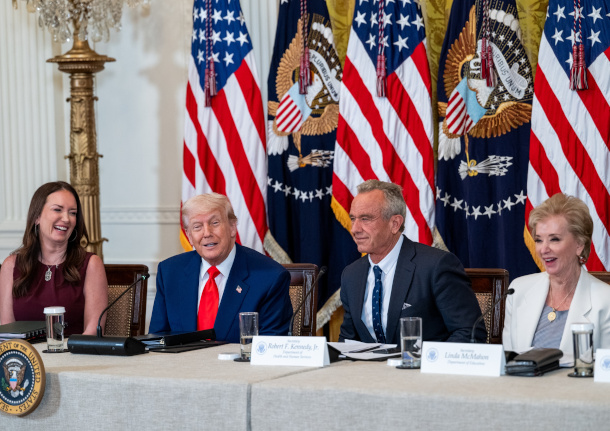
From left to right: U.S. Secretary of Agriculture Brooke Collins, President Donald Trump, U.S. Secretary of Health and Human Services Robert F. Kennedy and physician Deborah Birx. On May 22, 2025, the President announced his MAHA (Make America Healthy Again) Commission in the East Room of the White House. (Photo: Joyce N. Boghosian, Official White House Photo, Public Domain)
The Make America Healthy Again or MAHA movement has pinpointed some health concerns backed up by credible research, including concerns about pesticides such as the probable carcinogen glyphosate, the key ingredient in Monsanto’s Roundup. But after agribusiness lobbying the Trump Administration erased pesticides from its MAHA Commission report. Investigative journalist Carey Gillam, author of The Monsanto Papers: Deadly Secrets, Corporate Corruption, and One Man’s Search for Justice, joins Host Steve Curwood to discuss.
Transcript
DOERING: It’s Living on Earth, I’m Jenni Doering.
CURWOOD: And I’m Steve Curwood.
America is deep in a health crisis, with rising cancer incidence among children, according to the National Cancer Institute. And the CDC reports a majority of Americans now suffer from some form of chronic disease. Though concerns about the health crisis are not new, the Trump administration promised to address them through the Make America Healthy Again or “MAHA” commission chaired by Bobby Kennedy, Jr., who is also US Secretary of Health and Human Services. The MAHA movement includes concerns over health impacts from pesticides, and in 2018 Bobby Kennedy publicly supported a successful multi-million-dollar lawsuit against Monsanto by a groundskeeper who claimed he had contracted cancer from exposure to glyphosate, the key ingredient in Roundup. While the World Health Organization found glyphosate is a probable carcinogen in 2015, today the Trump Administration is asking the US Supreme Court to block a wave of further lawsuits against Bayer, which purchased Monsanto, saying the EPA has not found glyphosate can cause cancer. And there are also bills in Congress to block such lawsuits. Here to discuss the MAHA Commission’s recent actions on agrochemicals is Carey Gillam, an investigative journalist and the author of The Monsanto Papers: Deadly Secrets, Corporate Corruption, and One Man’s Search for Justice. Carey welcome back to Living on Earth!
GILLAM: Thank you, thanks for having me.
CURWOOD: So we're going to talk about MAHA today, the Make America Healthy Again. So first, what is the history of the Make America Healthy Again Commission. What made it come to life?
GILLAM: Well, I think really that varies based on who you are talking to, right? I mean the formality of Make America Healthy Again and the Make America Healthy Again Commission came about through Bobby Kennedy, RFK Jr., Bobby Kennedy and his presidential campaign, and then when he was appointed to the Trump administration to head up HHS, they formally formed this commission, Make America Healthy Again, MAHA, you know, kind of a play on Make America Great Again, right the MAGA movement that is so associated with Trump. But for me, I think and many other people, this MAHA movement, this sort of distrust of big food, Big Ag, Big Pharma, this movement for cleaner living, cleaner food, pushing food companies to get rid of artificial dyes and to reduce chemicals in the foods, and you know, that's been going on for a really long, long time. So I certainly don't think it's new that people and groups have organized and come together. You know, I'm thinking of Moms Across America, for instance, as one group, but there have been an increasing number of people becoming aware of the health effects, the problematic health effects of all of these different things that are put into our food and that are put into our children's bodies, rising rates of chronic disease and cancers, and they have been increasing their voices and trying to make them heard over the years. I do think this is the first time I've really seen it translate into a pretty powerful political movement, and certainly we haven't seen it at this level in the White House or any other presidential administration. They're seemingly having some success. I think it really powered Bobby Kennedy into, and powered the Trump re-election, by having this kind of movement and association with Bobby Kennedy, who has been talking about these issues for many, many years himself. So I think it's just this joining of forces in this really unique moment and sort of ironic culmination where we have people who are really interested in trying to make our world healthier, aligned or cooperating or trying to coordinate with an administration that, in many ways, is working to make our world far less healthy and far more polluted and dangerous.
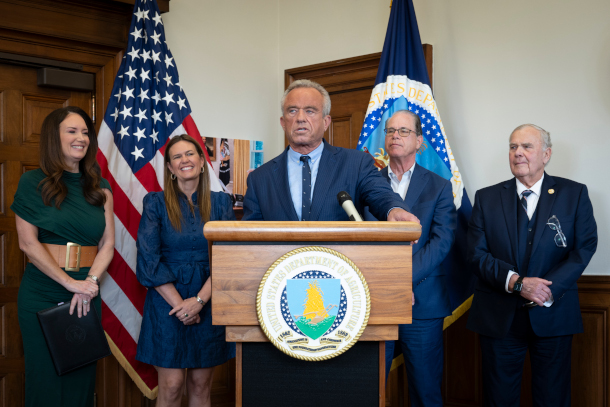
From left to right: U.S. Secretary of Agriculture Brooke Rollins, Governor of Arkansas Sarah Huckabee Sanders, U.S. Secretary of Health and Human Services Robert F. Kennedy Jr., Governor of Indiana Mike Braun, and Rep. Jim Baird (R-IN). On June 10, 2025, this group met at the USDA in Washington, D.C. to discuss the Make America Healthy Again Commission and remove sugary drinks from qualifying under SNAP benefits. (Photo: Tom Witham, USDA, Public Domain)
CURWOOD: So who are the people supporting MAHA?
GILLAM: Well a recent poll that came out in the middle of October took a look at that, and they, you know, asked thousands of people, sort of what their participation was in MAHA and what their beliefs were, and they showed that 38% of parents, like across partisan lines, 38% identified as supporters of MAHA, which I thought was really surprising. Sixty two percent of them were Republicans, 17% Democrats and 34% independents, and not all of them aligned with MAGA necessarily, they were seen as distinct. So, you know, I think it's an interesting movement. A lot of people that identified with MAHA had different positions on vaccines, but when it came to food and food additives and children's health and concerns about chronic disease, these people were locked in.
CURWOOD: Carey, from a food and chemical lens, just how unhealthy is America these days?
GILLAM: Oh my gosh, it's pretty bad. We have 76% of Americans now suffering from at least one chronic disease, and about half suffering from multiple chronic diseases.
CURWOOD: How is MAHA proposing to change agriculture and chemical regulation across the United States?
GILLAM: Well, gosh, if you read the MAHA commission report, it covers a whole range of areas, you know, from childhood depression and use of cell phones and antidepressants and too much screen time. And there's a lot of things packed in there, food additives, chemicals in the food, types of food people are eating. But if you look at pesticides in agriculture, which is what we're looking at today here, in the initial report, they were really trying to focus on a couple of the pesticides that are known to be most dangerous, glyphosate and atrazine. Atrazine was just last month declared a probable human carcinogen by the World Health Organization. Both of these chemicals are used liberally in our development of food, production of food, the residues are found on our food. The MAHA Commission, in its early April report targeted those chemicals specifically and talked about a need to reduce pesticide use overall. In the most final report that came out in September, they eliminated all discussion of those pesticides, and in fact, talked about what a great job the EPA was doing in terms of regulating pesticides. So I think there's some wins and some losses so far in the MAHA commission, and we're not really sure yet how far we're going to, we're going to see this movement go.
Common herbicides used in the United States include glyphosate, and 2,4-D. While there is no universal ban on products like glyphosate, some countries, states and localities have implemented their own restrictions citing health concerns. (Photo: Josephine v G, Wikimedia Commons, CC BY SA 4.0)
CURWOOD: So what's going on Capitol Hill to really reduce the exposure of these chemical companies to getting sued by consumers. What are they trying to do legislatively?
GILLAM: Yeah, it's a huge, huge push by the agricultural industry led by Bayer, a company that bought Monsanto in 2018. Bayer has formed the Modern Ag Alliance, they've pulled together dozens and dozens, they say, about 100 different ag organizations, and they are heavily lobbying Congress. They're marching around Capitol Hill, talking to legislators. A lot of money is flowing, a lot of advertising, trying to pass not only state laws, but get language into the farm bill and into appropriations and standalone bills to try to essentially, any way they can, to get legislation passed that would block consumers from being able to sue over a failure to warn, over the labeling. They're saying, we shouldn't be required to put anything on a label. Consumers shouldn't be able to sue us as long as the EPA has approved the product and approved the label.
CURWOOD: The State of California, course, has been fairly aggressive on going after some of these chemicals. To what extent is this legislation aimed at telling California, “shut up”?
GILLAM: I think they really want California to shut up, right? California has been very aggressive on many fronts, right, and trying to restrict and control and to better understand where and how and how much pesticides are being used. This would preempt, you know, state moves, localities, states, counties, would preempt a lot of things that are trying to be done outside of Washington, DC to try to better protect people from pesticide use. This is what the companies say they need. I mean, Bayer is telling us and telling lawmakers, that if you don't protect us from lawsuits, if you don't protect us from restrictions on our chemicals, we're not going to sell them anymore and if we don't sell them anymore, farmers won't be able to grow enough food, people will go hungry, grocery prices will rise, calamity will rain down upon us all. They're saying these things are essential to feed the world.
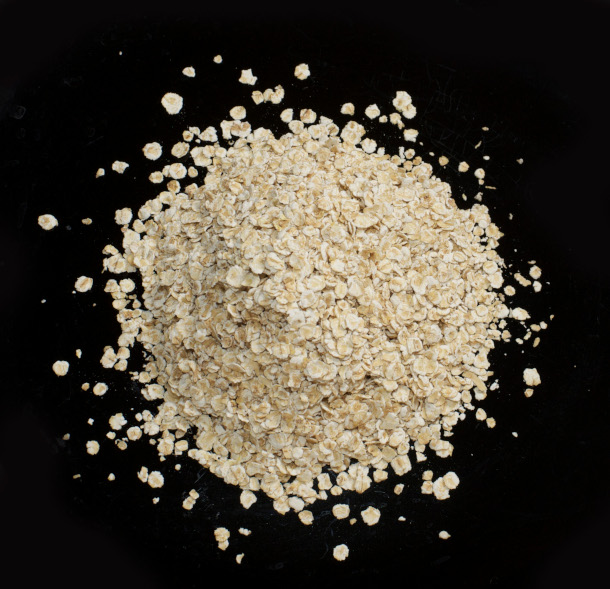
Oats are among the many products grown in the United States sometimes sprayed with glyphosate. (Photo: Wikimedia Commons, Bill Ebbesen, Free Use)
CURWOOD: It's ironic, isn't it, that a lot of American commodity crops can't be sold in many places because some countries tend to be more stringent on what chemicals they allow to be used on crops.
GILLAM: Yeah, there are many countries around the world that have restrictions, import bans, on bringing things in that might have residues of different pesticides on them, GMO crops as well. You know, there are a lot of countries that really don't want what the US is selling, which is why the US is such a very important market for these pesticide companies to protect.
CURWOOD: Now there's also what's called the Pesticide Accountability Act, introduced by New Jersey Senator Cory Booker. What does this legislation champion?
GILLAM: Well, Cory Booker essentially tried to flip the you know, script on these people and embed it into law that people could sue that this was a fundamental right, that people could try to hold these companies accountable. He hasn't gotten very far with that, unfortunately.
CURWOOD: You know, I believe the Trump Administration has approved new pesticides, including a couple of PFAS, and that the EPA, of course, has fired thousands of scientists from the Office of Research and Development, which looks at the impact of chemicals on human health and rolled back some programs at the USDA. I mean, talk to me about these actions and where they fall within the overall MAHA commission plan?
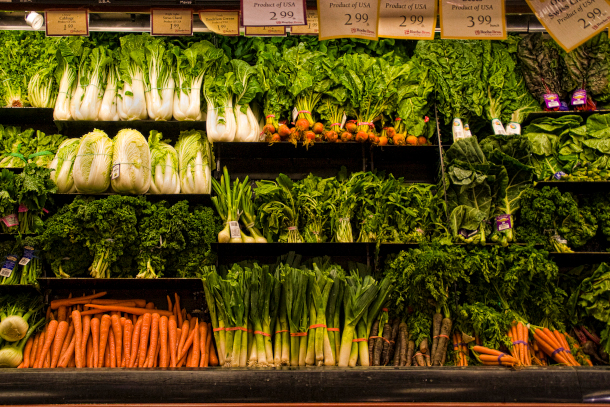
According to the Environmental Working Group’s 2019 analysis of US Department of Agriculture data about 70% of fresh produce sold in the US has pesticide residues on it even after it is washed. (Photo: Flickr, Liz West, CC BY 2.0)
GILLAM: Yeah, it really is paradoxical to see this movement, MAHA and Kennedy trying to address, why are our children sicker? Why are we sick? You know, how are we going to make America healthy again? How are we going to make our food healthy and our environment? And at the very same time, you have the Trump administration, as you said, sort of rolling back, making the environment much more dangerous for our children. They're not only introducing or approving new pesticides, but they are rolling back regulations on clean air, you know, tracking air emissions. They're rolling back clean water rules. They're allowing for more CAFOs, more runoff, toxic runoff from large, confined animal operations, more pesticide discharge into waterways. They say they're doing this in the name of helping business and helping the economy and spurring growth and jobs, but they're, you know, there's just a lot of concern out there that what they're doing is just making the environment much more deadly and toxic for all of us.
CURWOOD: Carey, you've been reporting on the agrochemical industry for years. From your perspective, why is it so hard to regulate chemicals in the United States?
GILLAM: So many reasons, right? I think the thing that comes to my mind most immediately is just the corruption that we've seen, the collusion, the corruption, the power that the agricultural industry wields over the EPA, wields over lawmakers. We have, is it four or five now, I can't keep track of industry officials, agricultural industry leaders who have been brought in now under the Trump administration to help run the EPA and help oversee what chemicals are going to be approved or not approved. These are people who've worked in the industry for their whole lives, pushing these chemicals, and they're now sitting in our top regulatory authority. And that's not new to the Trump administration. We've seen that over and over and over again, the sort of revolving door of people coming in and people coming out, and we have so many internal documents and messages from company leaders to EPA leaders, talking about how they're going to work together, you know, and Monsanto, the famous memos about talking about the EPA official who oversaw glyphosate, being a real friend and being someone who was helpful to them, and their defense of glyphosate. We got numerous whistleblowers who've come out of the EPA saying they won't let us publish true science, they're corrupting our science, they're hiding information about harmful effects of these chemicals. I mean, it's a corrupt agency, as I think corruption runs through many of our federal agencies, unfortunately.
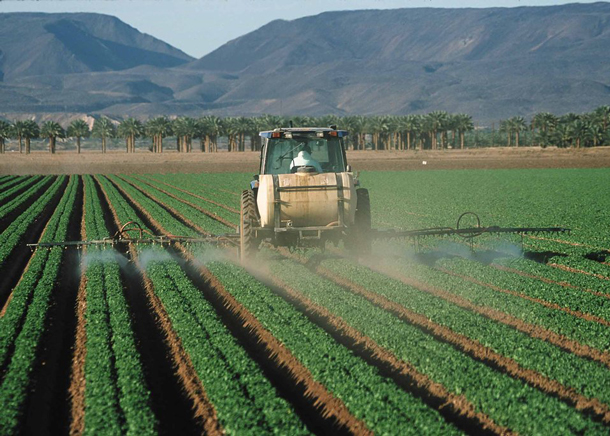
Glyphosate is a common ingredient in chemical herbicides and widely used in commercial agriculture. (Photo: Jeff Vanuga, NRCS)
CURWOOD: Stepping back a distance, what about the concept of chemical regulation in this country? In many places around the world, there is the precautionary principle to not approve chemicals unless you can prove that they are safe. In the United States, I believe it's the other way around.
GILLAM: Yeah.
CURWOOD: A chemical is considered innocent unless and until it's proven guilty. How well is that system working for us do you think?
GILLAM: You're right. I mean, I mean, I think you've explained it very well. There is much more a precautionary approach overseas, in Europe and other countries. Let's prove it's safe before it's on the market. Here, it's presumed to be safe. The companies bring in all of their scientific studies, and they say, here, we've shown this to the EPA, this is safe, let's go ahead and approve it, and in the majority of cases, they do. Our federal law does require that when they look at doing any sort of regulation of a pesticide, that they take into account the economic impact of that chemical being on the market, the jobs that it creates, you know, all of the money that farmers will be spending and pesticide companies will be getting and the yields that farmers will get from it. So that's sort of at the heart of it, and I think that that's been a real problem too, because you do have chemicals that have been out there, used on our food, used in farming, that have been shown for years, decades, to be dangerous to our health in scientific studies. And then you'll see, like in the case of chlorpyrifos, and it will take so long until the EPA eventually says, yeah, I guess we should do something about that, you know, but we'll have this chemical on the market for years and years.

Carey Gillam is an investigative journalist and author of the Monsanto Papers: Deadly Secrets, Corporate Corruption, and One Man's Search for Justice. (Photo: Carey Gillam)
CURWOOD: You've been in contact with a number of the voices within the MAHA movement. I'm thinking of Zen Honeycutt, the Executive Director of Moms Across America, what's been their reaction to the Commission's involvement with the big ag industry?
GILLAM: Well, a lot of them, you know, were very disappointed, of course, angry, frustrated when the MAHA commission sort of kneeled, bowed down to the agricultural industry, editing out the criticism of pesticides in its final report that came out in September. They were not happy with that at all, but I don't know that they're deterred. I think it, you know, just means they're saying they have to work a little bit harder and they're keeping at it. The first round might have gone to the agricultural industry, but they certainly are not giving up the fight yet.
CURWOOD: Carey Gillam is an investigative journalist and the author of the Monsanto Papers: Deadly Secrets, Corporate Corruption and One Man's Search for Justice. Carey, thanks so much for taking the time with us today.
GILLAM: Thanks for having me.
CURWOOD: We reached out to the Trump Administration and the Make America Healthy Again Commission for comment but did not receive responses in time for this broadcast.
Links
Read the Make America Healthy Commission Report from May 16, 2025
Read the Make America Healthy Commission Strategy Report from September 9, 2025
Living on Earth wants to hear from you!
Living on Earth
62 Calef Highway, Suite 212
Lee, NH 03861
Telephone: 617-287-4121
E-mail: comments@loe.org
Newsletter [Click here]
Donate to Living on Earth!
Living on Earth is an independent media program and relies entirely on contributions from listeners and institutions supporting public service. Please donate now to preserve an independent environmental voice.
NewsletterLiving on Earth offers a weekly delivery of the show's rundown to your mailbox. Sign up for our newsletter today!
 Sailors For The Sea: Be the change you want to sea.
 The Grantham Foundation for the Protection of the Environment: Committed to protecting and improving the health of the global environment.
 Contribute to Living on Earth and receive, as our gift to you, an archival print of one of Mark Seth Lender's extraordinary wildlife photographs. Follow the link to see Mark's current collection of photographs.
 Buy a signed copy of Mark Seth Lender's book Smeagull the Seagull & support Living on Earth
© Copyright World Media Foundation. All Rights Reserved
Home | Contact | RSS | Donate | Newsletter