
Blocking New UK Oil and Gas
Air Date: Week of May 15, 2026
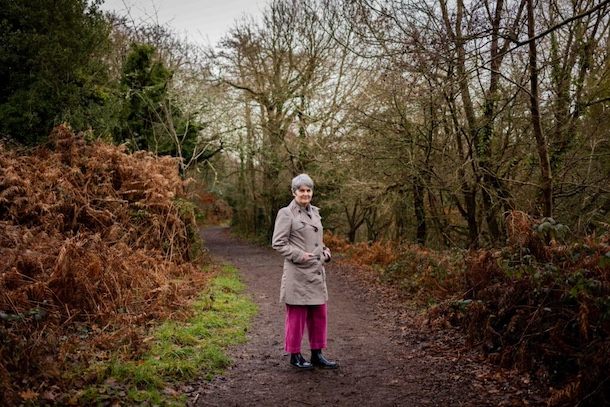
Sarah Finch and the Weald Action Group have fought successfully against oil and gas drilling in the Horse Hill area of the Weald and secured a ruling that will force planners to consider the downstream environmental impact throughout the United Kingdom. (Photo: Goldman Environmental Prize)
Great Britain is Europe’s third largest oil and gas producer, even with a commitment to a net-zero economy by 2050. A small group of climate activists is helping the UK meet that target by winning a Supreme Court decision that’s blocking any new UK oil and gas projects that don’t assess climate impacts. Sarah Finch of Surrey, near London led the fight against proposed oil and gas drilling in the region known as the Weald, and she’s been recognized with the 2026 Goldman Environmental Prize for Europe. She joins Host Steve Curwood.
Transcript
O’NEILL: From PRX and the Jennifer and Ted Stanley Studios at the University of Massachusetts Boston, this is Living on Earth, I’m Aynsley O’Neill.
CURWOOD: And I’m Steve Curwood.
Great Britain was the birthplace of the Industrial Revolution back in the 18th century, and into the 20th century it burned some 30 gigatons of coal as it built a massive empire. Coal is no longer king, but Britain is still deep in fossil fuel, extracting oil and gas from the North Sea as Europe’s third largest oil and gas producer, even with a commitment to have a net-zero economy by 2050. A small group of climate activists is helping the UK meet that target by winning a major court decision that’s blocking any new UK oil and gas projects that don’t assess climate impacts. Sarah Finch of Surrey, near London led a group of local activists in a fight against proposed oil and gas drilling in the region known as the Weald. The Weald Action Group eventually appealed all the way to the UK Supreme Court to win a major victory based on climate concerns. On the line now is Sarah Finch, and she's winner of the 2026 Goldman Environmental Prize for Europe – Congratulations!
FINCH: Thank you
CURWOOD: And welcome to Living On Earth.
FINCH: Oh, thank you for inviting me.
CURWOOD: Today, you live in Surrey, England, near Weald. What makes this area so special to you and your neighbors there and the local action group?
FINCH: Okay, well, so the Weald, it covers three counties in southeast England. It's close to London, so it's a very developed, densely populated area, but it's also very wooded. It's the most wooded county in England. There's lots of small villages, small towns, isolated farms, with woodland all around, but as well as being kind of rural and beautiful, we're also sitting on top of a huge oil field there. So there's tensions between the rural way of life and the desire to industrialize it.
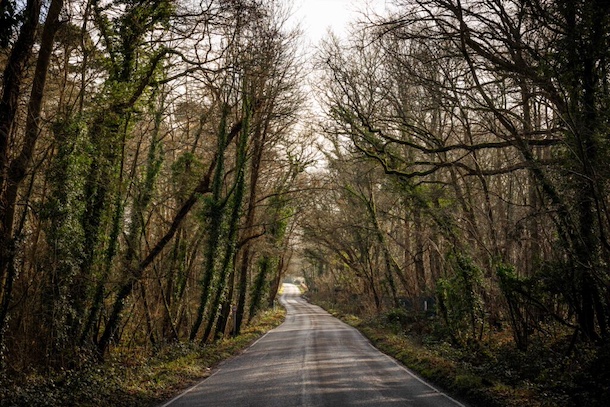
The Weald is a 500-square-mile, heavily wooded region in southeastern England. The basin is estimated to contain several billion barrels of oil. UK Oil and Gas has shared a vision for “back-to-back” wells across the Weald, approximately 2,400 oil wells in 100 locations, in order to transform the region into a “new Texas.” (Photo: Goldman Environmental Prize)
CURWOOD: Imagine that oil field underneath you there is related to what's out in the North Sea, huh?
FINCH: It's a particular kind of tight geology that we have. So it's not easy to extract the oil from the Weald by conventional means. It requires kind of fracking type technologies. So it's very small scale compared with the North Sea. So I think 98 percent of British oil comes out of the sea. It's only 2 percent comes from these small onshore sites dotted around the countryside. So it's not really very significant in terms of energy security, but it is significant in terms of the damage that it potentially can do.
CURWOOD: Yeah, I don't imagine that one would want a fracking well right in your neighborhood.
FINCH: Nobody does. So it's in the 2010s when these new technologies sort of became available coming from America, that there was a rash of applications for fracking type operations across the Weald and so in all of the towns and villages where there was a prospect that locals got organized to resist it, and then we came together, and that's when we formed the Weald Action Group.
CURWOOD: So Sarah, in 2010 in fact, you see a newspaper notice about a company planning to explore for oil. What, just six miles from your home there in Surrey? There have been some gas drilling nearby before that. What made this project so alarming in your mind?
FINCH: So I was actually shocked when I saw that notice. I couldn't believe it. I thought, what oil wells in Surrey. It just seemed really strange, but then looking into it, I did find out there were similar applications all around the area.
CURWOOD: Hmm. Now, UK Oil and Gas has touted a vision to transform your region into a new Texas. What does that vision look like to you?
FINCH: Well, yeah, they published this brochure setting out the many billions of barrels of oil that were in the area, and the fact it would need several thousand wells all closely packed together to exploit it all. So they were painting a vision of a very industrialized operation. It would have meant very large numbers of tankers on our narrow, kind of winding country roads, potentially huge local air pollution, water pollution, noise at night, light at night would be 24-hour drilling. So the prospect was alarming. And over and above all that, all of those local impacts, of course, there's the climate issue that we know now that it's the burning of fossil fuels like oil, gas and coal that have led to the rising temperatures that we're experiencing that are causing, you know, extreme weather dangers and threats to us. So over and above, all of the local industrialization issues with the knowledge that we just don't need to be drilling for new oil at this time. We're in a climate emergency. You know, this is not a time to be opening up new sources of oil anywhere, not in the Weald, but not anywhere else either.
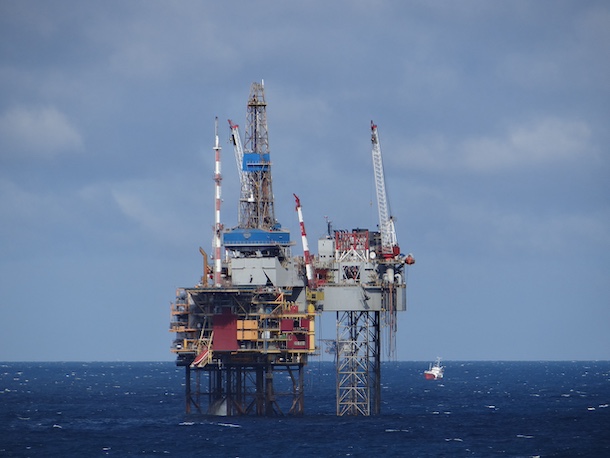
In August 2024, citing the Finch Ruling, the UK government pulled its support for two major North Sea oil developments. The UK is the third largest producer of oil and gas in Europe thanks to its vast reserves in the North Sea. (Photo: Gary Bembridge, Wikipedia Commons, CC BY 2.0)
CURWOOD: So in the fight to stop oil and gas exploration in the Weald, your group lost a number of court decisions along the way. What kept you going?
FINCH: Yeah, so I have to say we did have some successes in the Weald as well. There were a number of sites that we did manage to get turned down or the operators withdrew their applications. But this one site nearest to my home, Horse Hill, they applied for successive planning permission. So they got two permissions approved for exploratory drilling. And then in 2019, they got permission for 20 years of production, so they already had two wells by that stage. And then they applied for four more wells and 20 years of production, and at that point, when that was approved, we just thought, no, we can't accept that this decision was right. And we went to court and yeah, it was a long battle. We got our application to have a decision refused twice, but we persisted, and then we had a court case and lost it. We went to the Court of Appeal, lost again. But we were powered all the time by just the conviction that we were right. That the particular argument we were making was that when Surrey County Council approved this plan, they didn't look at the climate impact of burning the oil that was to be produced. They looked at the small amount of greenhouse gas emissions that would be produced on the site itself, but not when the oil was taken off elsewhere, refined and burnt. And we argued that under our Environmental Impact Assessment Law, they needed to have looked at those emissions. And it was just the conviction that we were right, and then also that it didn't just apply to this one site, but this was a bigger problem of other oil and gas and coal operations that had been approved across the country, so including a new coal mine that had been permitted. You know, it would have been the U.K.'s first new deep coal mine in 30 years, but it had been approved without any assessment of the climate impact of burning the coal. Similarly, two large oil fields in the North Sea approved without any consideration of their climate impact. And so we knew that this case, we were fighting over one relatively small site in Surrey actually would affect the whole of the U.K. oil and gas and coal sector.
CURWOOD: So this is interesting that you were looking really at the whole nation. What was different about the local judges that said, no, no, no, this is we don't have to worry about this. And then the highest court says, Oh, wait, we do. What made the difference, do you think?
FINCH: As we climbed higher up the court system, the judges were looking at it in a different way. So the first judge in the High Court treated it very much as a planning matter, and sort of looked at planning law, which planning policy, at that time we felt was out of date and out of step with climate policy. But when we got to the Supreme Court judges, they were just looking at as a very simple matter of, you know, the common sense reasoning, they understanding the scale of the climate emergency and looking at the wording of the law that the decision makers have to look at the full, all of the expected direct and indirect impacts of their development. And it all really came down to whether or not these greenhouse gas emissions from burning oil are an indirect effect of producing it, which we always argued that they were. And I think the Supreme Court judges took a very common sense approach to that decision. And we felt so vindicated when we won in the Supreme Court. Just thought, yes, this is exactly what we've been saying for five years, and now the highest judges in the land agree with us.
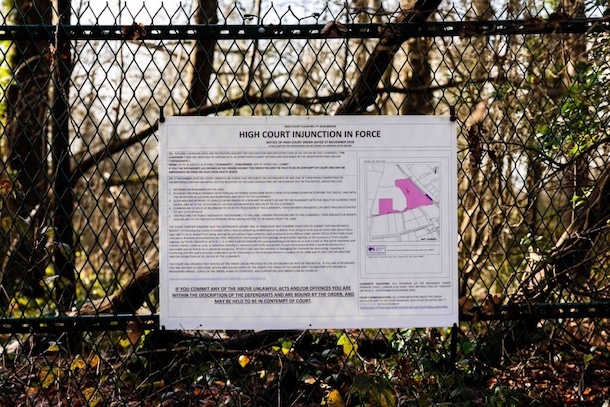
In December 2018, HHDL applied to the Surrey (UK) County Council for planning permission to begin producing oil from two existing wells at Horse Hill and drill four additional wells, projecting more than 24 million barrels of oil from six wells over 25 years. The development was viewed as a test case for the expansion of drilling across the Weald, employing unconventional methods of extraction, like acid fracking. In 2024, the UK Supreme Court blocked the proposal on the grounds that authorities must consider the downstream impact of burning coal, oil and gas when they decide whether to approve projects. (Photo: Goldman Environmental Prize)
CURWOOD: So let me see if I have this right. The decision you got which, by the way, the first named party in the decision is a Finch, so you're named, I guess, in British law, going forward from today. What exactly is the national implication of this decision? Does this mean that can't drill for oil anymore in the North Sea, can't extract coal from Newcastle or any place else?
FINCH: No, it doesn't mean that, because it's a procedural matter rather than a decision making one. So it means that when plans are being considered to drill for oil or gas or coal, before the decision can be made, there has to be a full assessment of the climate impact of the use of the end product, not just of the production process itself. So that's a big change. And so after we won that case, immediately, sort of like knocking over dominoes, a number of other big sites were found unlawful. So the coal mine that I mentioned, the Rose Bank oil field, which is the biggest undeveloped oil field in the North Sea, and several other projects as a result, were then found unlawful and sent back to the drawing board, and the government realized it had to rewrite the guidance for developers to tell them exactly what they had to do to comply with this, yeah, the Finch Ruling, as it's called. And just to be clear, it's not a new law. The Supreme Court didn't create a new law. They just clarified what the existing law said that hadn't been being followed properly.
CURWOOD: So just to make it clear, what the U.K. Supreme Court ruled is that the downstream impact of burning coal and oil and gas must be considered in the process of any sort of approval.
FINCH: Yeah, exactly.
CURWOOD: And that makes it pretty tough, if you look at the downstream effect of burning fossil fuels and what's going on with the climate emergency. I mean, how does a company get around the climate emergency?
FINCH: Well, we have yet to see if they will, but the arguments they've been making are that if you look at the climate impacts of any one development in isolation, then of course, it is a drop in the ocean of all of the emissions that are being produced around the world all the time. So they try to argue that it's insignificant because it's small in comparison with total emissions. But the government, in its new guidance to developers, has said that they can't do that. They have to look at it in conjunction with all other existing and planned projects. Another argument that the industry uses is that, well, if you open a new oil field here, another one's going to close down. But that's not the way it happens. So they're not allowed to pretend that there's a ways of mitigating a new oil field. If they want to say that the emissions will be captured by carbon capture and storage, as some do they, they are now required to actually say where and when this will happen and where precisely that infrastructure is to capture those emissions, which, in reality, doesn't actually exist at scale anywhere in the world now. I'm optimistic that this ruling has made it effectively impossible for anyone to approve new oil and gas in the U.K., but we have to wait and see and there are arguments being made by pro-fossil fuel forces, and it has become something of a culture war, with politicians on the right of the divide being very pro-new UK oil and gas and others against. So yeah, although it seems to many of us a matter of kind of logic and morality that you don't produce more oil and gas in a climate emergency, there's always politics getting in the way that we have to deal with too.
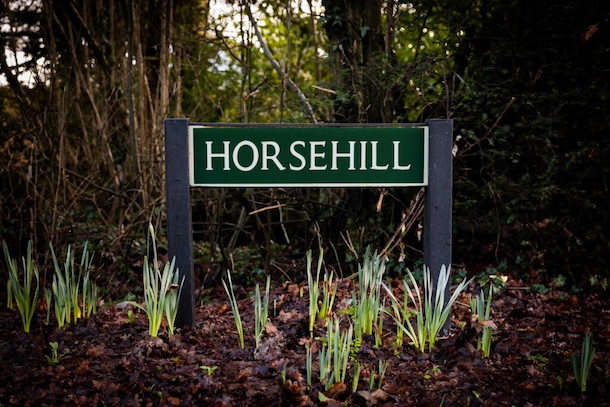
In June 2024, nearly five years after the initial county council decision, the United Kingdom Supreme Court handed down a 3-2 decision in the Weald Action Group’s favor. The decision stated that the Surrey County Council had acted unlawfully in approving the development at Horse Hill because the project’s environmental impact assessment failed to consider the climate impacts of burning the oil to be extracted there. (Photo: Goldman Environmental Prize)
CURWOOD: Tell me, what's the most important lesson that local communities can learn about trying to stop fossil fuel exploration that threatens their quality of life, that threatens the planet?
FINCH: Well, I think our story is just very encouraging in that basically we were a small group of concerned ordinary people, and we spent years fighting those oil fields in the Weald through various means, through protest and other means. And then eventually we won through a legal challenge. We're just ordinary people, and we managed to achieve a huge change, even against something as big as climate change. So change is possible. And I think what I've seen along the way is we have far more allies than I realized. The oil and gas industry is very powerful. You know, it has friends in high places, but it's not invincible.
CURWOOD: Sarah Finch is an environmental activist, and right here from Surrey, England, part of the Weald Action Group, and she's the 2026 Goldman Environmental Prize Winner for Europe. Sarah, thanks so much for talking with us.
FINCH: Thank you.
Links
Sarah Finch’s profile at The Goldman Environmental Prize
The Goldman Environmental Prize
Watch The Goldman Environmental Prize video profile of Sarah Finch
Living on Earth wants to hear from you!
Living on Earth
62 Calef Highway, Suite 212
Lee, NH 03861
Telephone: 617-287-4121
E-mail: comments@loe.org
Newsletter [Click here]
Donate to Living on Earth!
Living on Earth is an independent media program and relies entirely on contributions from listeners and institutions supporting public service. Please donate now to preserve an independent environmental voice.
NewsletterLiving on Earth offers a weekly delivery of the show's rundown to your mailbox. Sign up for our newsletter today!
 Sailors For The Sea: Be the change you want to sea.
 The Grantham Foundation for the Protection of the Environment: Committed to protecting and improving the health of the global environment.
 Contribute to Living on Earth and receive, as our gift to you, an archival print of one of Mark Seth Lender's extraordinary wildlife photographs. Follow the link to see Mark's current collection of photographs.
 Buy a signed copy of Mark Seth Lender's book Smeagull the Seagull & support Living on Earth
© Copyright World Media Foundation. All Rights Reserved
Home | Contact | RSS | Donate | Newsletter