

China Making Green Aluminum
Air Date: Week of May 15, 2026
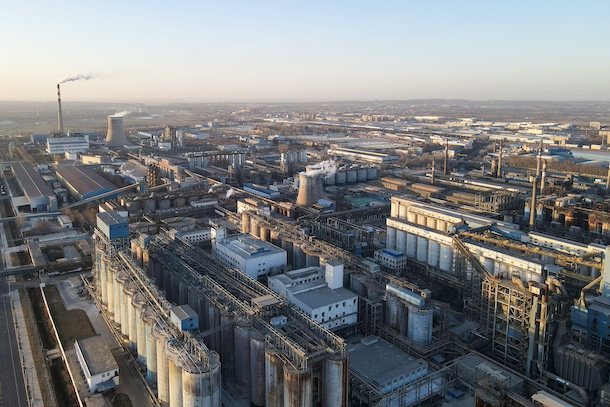
Pictured above is a CHINALCO Mining Co. Ltd. plant in Shangjie District, Zhengzhou. According to a report by Fitch Ratings, Aluminum Corporation of China (Chinalco) is a major Chinese state-owned enterprise, serving as the world's largest producer of alumina and the third-largest provider of primary aluminum. As a country, China is responsible for about 60% of the world’s aluminum output. (Photo: Windmemories, Wikimedia Commons, CC BY-SA 4.0)
As China rapidly builds out renewable energy, it’s using some of that clean energy to power industrial activities like making aluminum, which is in high demand from data center and electrification projects. China produces 60% of the world’s aluminum, and smelting the metal uses massive amounts of electricity. Energy and climate journalist Alexander Kaufman joins Host Aynsley O’Neill to explain how Chinese aluminum is going green.
Transcript
O’NEILL: During the recent summit meeting of US President Donald Trump and Chinese President Xi Jinping in Beijing, the two leaders looked for common ground on trade, the war in Iran and more. But when it comes to green tech, the US and China still seem to be moving farther and farther apart. While the US has opted out of reducing global warming emissions on the federal level, China has committed to reductions of at least seven percent by 2035 and is already greening its economy. An analysis from Carbon Brief showed that in 2025, solar power, electric vehicles and other clean-energy technologies powered more than a third of China’s GDP growth. And one field next in line for decarbonization is China's aluminum production, which accounts for around 60% of the world’s aluminum output, and smelting the metal uses notorious amounts of electricity. Alexander Kaufman is an energy and climate journalist who wrote about this for Canary Media, and he’s here to discuss. Alexander, welcome to Living on Earth!
KAUFMAN: Thank you for having me.
O'NEILL: So starting with the basics, how much demand is there for aluminum in today's modern society? Where do we see it being used the most?
KAUFMAN: Demand for aluminum is soaring right now, in particular because of electrification projects. This is both from data centers that are building out a lot of infrastructure and need the power to keep them supplied, and this is from the general electrification that we're seeing in a lot of economies as countries in Europe and in China move away from fossil fuels and embrace more renewables, but we are seeing record demand right now, in particular in China, even as demand for things like steel sank to a seven year low.
O'NEILL: And now, as I understand it, one of the ways that China is looking to make its aluminum production more eco-friendly is through mandating that aluminum smelters run on a clean energy source, like a hydropower or a solar. So how exactly would that switch work? How easy is it? How fast is it for China to make something like that happen?
KAUFMAN: So China has an unrivaled ability to swiftly move things from a central government edict to changes on the ground. What's happening in this case is there are incentives for these smelters to move to provinces with high volumes of excess clean power. And so this means looking at provinces such as Sichuan, where there is a large amount of hydropower, Northwestern states in China, where there might not be large amount of hydropower, but where you're seeing huge arrays of solar panels and wind turbines being put up.
China’s aluminum production is hitting new records — just as policies start steering the industry away from coal.https://t.co/wgeig09sF7
— Canary Media (@CanaryMediaInc) March 4, 2026
O'NEILL: To what extent do you think this effort to green aluminum production is driven by, say, China's own climate goals versus an interest in meeting international trade standards? Where do you think the motivations lie?
KAUFMAN: You know, as with so much of Chinese industrial policy, it's difficult to ascribe the intent to just one thing. China has very short supplies of natural gas and oil, so its shift toward greener production is something that is really for their own national security and their own energy security. At the same time, the Chinese Communist Party gains a lot of its authority to rule in uncontested way by the steady improvement of lives in China, and for many decades, that was this historic project to lift hundreds of millions of people out of poverty successfully. Now, really, for the last decade and a half, it's been focused on improving some of the living conditions that really degraded amid that industrial build-out that we saw in the late 20th century. So the scene of smog-choked Beijing is, if you've been to Beijing anytime recently, no longer the case. It's really quite clean, enviably clean, from my perspective as a New Yorker. And lastly, you're right that there is a push to respond to global trading conditions we have seen also at the beginning of this year, the implementation of the world's first carbon tariff in the European Union, the carbon border adjustment mechanism, and we saw already last summer, China schedule its first shipment of green steel. Makes perfect sense that they would seek to do the same thing with aluminum.
O'NEILL: And there's a factor here that we haven't talked about yet, which is that the Chinese government caps their aluminum production. What is the situation there?
KAUFMAN: So the Chinese government does cap its aluminum production. This is part of a concern over overcapacity. There are questions about whether there's a possibility China could raise its cap. But in the meantime, what this signifies is that China is indeed looking to clean up its industry with some of these pushes into green aluminum, as opposed to augmenting its demand with more green aluminum, while maintaining the existing incumbent production.
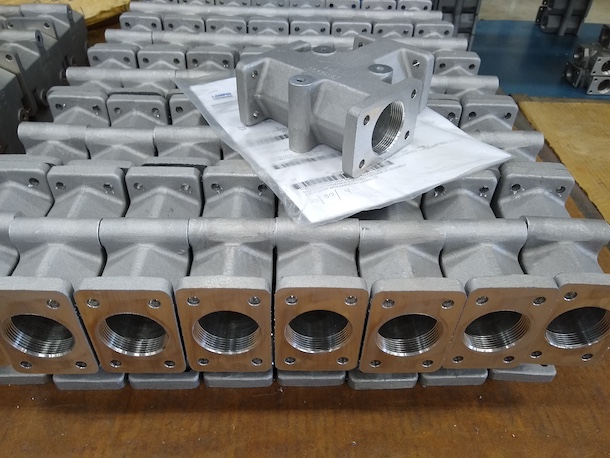
China is “greening” its aluminum production by shifting to the use of renewable electricity sources, producing fewer carbon emissions compared to traditional coal-powered smelting. (Photo: Whoisjohngalt, Wikimedia Commons, CC-BY-SA-4.0)
O'NEILL: And there's a possibility, right, that China would start exporting aluminum production overseas, so to places that might not be using these same green standards. What do you make of that?
KAUFMAN: That's right. Because of the cap that's in place, there could be an incentive for Chinese manufacturers to shift their production instead of to a Chinese province with a lot of hydro power, to a rural province in Indonesia, for example, where there is plenty of coal and plenty of room to build another coal plant alongside a smelter. And so this could be the real downside of Chinese policy, that it creates this loophole whereby you may see Chinese companies simply shifting some of that dirtier production to countries that would welcome it.
O'NEILL: And now I want to zoom out here. How does all this fit into the overall global landscape of metal production? How close are we to greening the production of other metals? How does this all fit?
KAUFMAN: Greening aluminum production is a unique process insofar as aluminum is so dependent on electricity as its main feedstock, and so you are maybe able to make those changes faster as long as you have the available supply of green electricity. Keep in mind, for example, that a lot of aluminum historically was, in fact, green simply because the steadiest and cheapest forms of electricity were hydroelectric dams. So it's not a terribly difficult process, but it is a process that requires a lot of investment and planning. At the same time that all of this is happening, you have a massive shift in global supply chains for all kinds of different metals and minerals. There is a push to reclaim some of the supply chains of critical minerals like rare earths and lithium and copper away from China and its allies, and it can be difficult to prioritize the cleanness and the carbon intensity of production if your biggest issue is wanting to find a cheap source of domestic supply and reduce the leverage that China or another competitor has over your supply.
O'NEILL: Alexander Kaufman is a journalist writing about energy and climate. Alexander, thank you so much for taking the time with me today.
KAUFMAN: Thank you for having me.
Links
Canary Media | “China Could Be on the Cusp of a Green Aluminum Boom”
Financial Times | “China’s Aluminum Smelters Embark on Green Long March”
Living on Earth wants to hear from you!
Living on Earth
62 Calef Highway, Suite 212
Lee, NH 03861
Telephone: 617-287-4121
E-mail: comments@loe.org
Newsletter [Click here]
Donate to Living on Earth!
Living on Earth is an independent media program and relies entirely on contributions from listeners and institutions supporting public service. Please donate now to preserve an independent environmental voice.
NewsletterLiving on Earth offers a weekly delivery of the show's rundown to your mailbox. Sign up for our newsletter today!
 Sailors For The Sea: Be the change you want to sea.
 The Grantham Foundation for the Protection of the Environment: Committed to protecting and improving the health of the global environment.
 Contribute to Living on Earth and receive, as our gift to you, an archival print of one of Mark Seth Lender's extraordinary wildlife photographs. Follow the link to see Mark's current collection of photographs.
 Buy a signed copy of Mark Seth Lender's book Smeagull the Seagull & support Living on Earth
© Copyright World Media Foundation. All Rights Reserved
Home | Contact | RSS | Donate | Newsletter