

June 12, 2026
Air Date: June 12, 2026
FULL SHOW
SEGMENTS
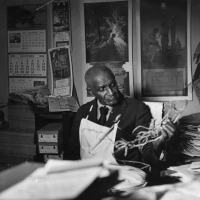
George Washington Carver--Healing Cotton-Ravaged Soil
View the page for this story
George Washington Carver was born into slavery but went on to become a famous agronomist and helped poor people in the South improve their lives and soils by planting peanuts and other legumes. This week, he comes back from the past in the form of actor and playwright Paxton Williams. As “George Washington Carver” Williams talks to Host Steve Curwood about the future of modern-day agriculture and intersections between racial dynamics and agricultural development. (14:45)
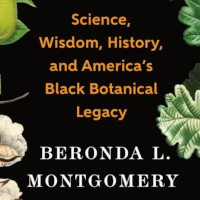
When Trees Testify: Science, Wisdom, History and America's Black Botanical Legacy
View the page for this story
When plant biologist Beronda Montgomery sat down to write what became a personal memoir mixed with a botanical history of African Americans, she found her research as a PhD lab scientist had brought her squarely into the world of social science as well. From her studies of how plants respond to light during photosynthesis, she started shining a light on the history of extensive plant cultivation by African Americans, including those who endured forced labor. Beronda Montgomery joins Host Steve Curwood to discuss her book, When Trees Testify: Science, Wisdom, History and America’s Black Botanical Legacy. (18:20)
Freedom Trees and The Pecan Master
View the page for this story
Host Steve Curwood and author Beronda Montgomery continue their conversation about her book, When Trees Testify: Science, Wisdom, History and America’s Black Botanical Legacy. They discuss abolitionist Harriet Tubman’s use of the sycamore tree to help guide enslaved people to freedom, how an enslaved man named Antoine made a breakthrough to graft a successful variety of pecan tree, and the significance of trees as physical companions and powerful metaphors for resilience as we celebrate Juneteenth and remember the end of slavery. (14:33)
Show Credits and Funders
Show Transcript
260612 Transcript
HOSTS: Steve Curwood
GUESTS: Beronda Montgomery, Paxton Williams
[THEME]
CURWOOD: From PRX – this is the Juneteenth Special of Living On Earth.
[THEME]
CURWOOD: I’m Steve Curwood.
Freedom from slavery freed a brilliant mind for modern agronomy.
WILLIAMS: I knew that if we could find ways to increase the health of the soil, we can increase the health and living conditions of the farmers there. I sought to find ways to add more nutrients to the soil. I tried to come up with creative ways to use different farm byproducts.
CURWOOD: George Washington Carver, and even more beyond the famed peanut has been documented by plant biologist Beronda Montgomery.
MONTGOMERY: it's known that the first grafted pecan tree, which was one that was the basis of the commercial pecan industry, was actually obtained at the hands of an enslaved man named Antoine.
CURWOOD: Celebrating black and brown stewards of the green earth on Juneteenth. That’s this week on Living on Earth, stick around!
[NEWSBREAK MUSIC: Boards Of Canada “Zoetrope” from “In A Beautiful Place Out In The Country” (Warp Records 2000)]
[THEME]
George Washington Carver--Healing Cotton-Ravaged Soil
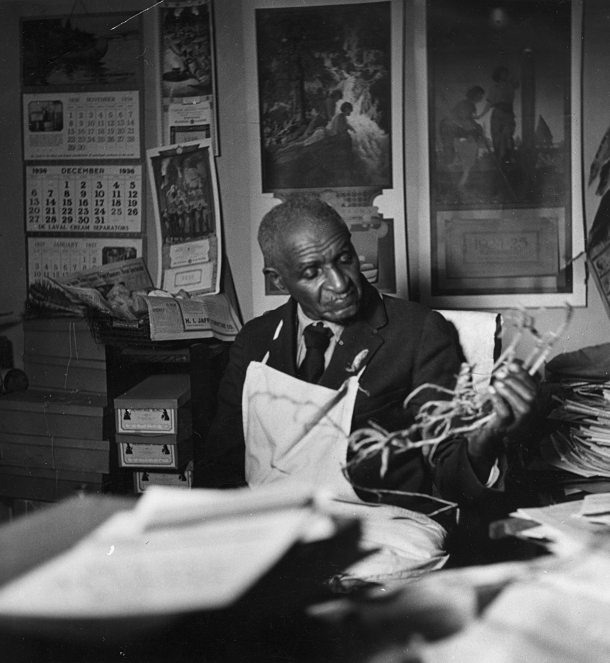
Soil scientist George Washington Carver lived from 1864 to 1943 and began working at the Tuskegee Institute in 1896. His reputation rose to fame during the early 1920s. (Photo: National Archives and Records Administration, Flickr, Public Domain)
CURWOOD: From PRX and the Jennifer and Ted Stanley Studios at the University of Massachusetts Boston, this is a special Juneteenth edition of Living on Earth, I’m Steve Curwood.
Four score and nine years after the birth of the United States the Jubilee of freedom finally came to enslaved African Americans in Texas. It was June 19th of 1865, belated for two and half years after slaves had been liberated in the rebelling states. The sun was high in the sky that day less than 48 hours before the summer solstice, and black and brown people danced in the streets as the light lingered. The next year African Americans started yearly commemoration of that day of deliverance of Jubilee and freedom, calling it Juneteenth. When enslaved, most of the four million African Americans worked in the fields. Freedom finally let them keep the fruits of their labor.
Minds were freed as well, so what black and brown folk knew about agronomy started to get credit as scientific understanding.
[RADIO STATIC]
[MUSIC: Caratini Jazz Ensemble, “West End Blues” on Darling Nellie Gray (Variations sur la musique de Louis Armstrong), Label Bleu]
CURWOOD: Dr. George Washington Carver born a year before the abolition of slavery is remembered as a legendary champion of sustainable farming. Cotton had ravaged the land when he arrived in Alabama to direct the Tuskegee Institute's Department of Agriculture. But with his benevolent attitude and profound religious faith, Carver devoted his time to projects that encouraged farmers to plant soybeans and peanuts to restore the soil. He developed over 300 derivative products from peanuts to expand the commercial market and he educated poor farmers.
WILLIAMS: Hello, hello. How are you doing today?
CURWOOD; What– What's that? Am I hearing something? Dr. Carver?
WILLIAMS: Yes, sir. It is me.
CURWOOD: Wow, how are you here?
WILLIAMS: I like to return from time to time to see how things are going, and I figured I'd spend a little time with you now.
CURWOOD: That's the magic of radio, I guess. This is such a great honor. What was it like in your time to be a pioneering figure and, and a black man in the agricultural field? I mean, how much was this a natural step forward from your childhood love for plants and animals?
WILLIAMS: Let me begin by saying I really appreciate that question. You see, the majority of my life, I've always been doing the same things. When I was a little boy growing up in southwest Missouri, I tried to explore my imagination. I tried to be creative. I tried to find ways to help people. And as I grew older, I learned that I could do that with science and agriculture and farming and, and working with folks. And so the work that I've done, for the majority of the time, I've been here at the Tuskegee Institute in Tuskegee, Alabama, I've really been doing the same thing. I've been working with folks, I've been finding ways to bring people together. And it's all been a continuation of something that I started a long, long time ago.
CURWOOD: I see. Now Dr. Carver, when you just graduated and started your work, there was no great conservation movement like we have in the United States here today. So tell me, what did conservation mean to you? And and how did other people around you view your work at this time?
WILLIAMS: Conservation meant to me what it means to me now. It means to put things to good use. To not waste. I first graduated with my bachelor's degree in 1894. I wasn't exactly certain what I want to do. But the folks there asked me to stick around. And then in 1896, I received a letter from Mr. Booker T. Washington, asking me to come teach at the Tuskegee Institute. That ideas I learned about farming and agriculture, I knew that many of the folks in the south could benefit from. I have always said, where the land is poor, the people are poor. And I knew that if we could find ways to increase the health of the soil, we can increase the health and living conditions of the farmers there. I sought to find ways to add more nutrients to the soil. I tried to come up with creative ways to use different farm byproducts. There are many uses if we use our creativity, we can find many uses for things that heretofore we hadn't even thought about.
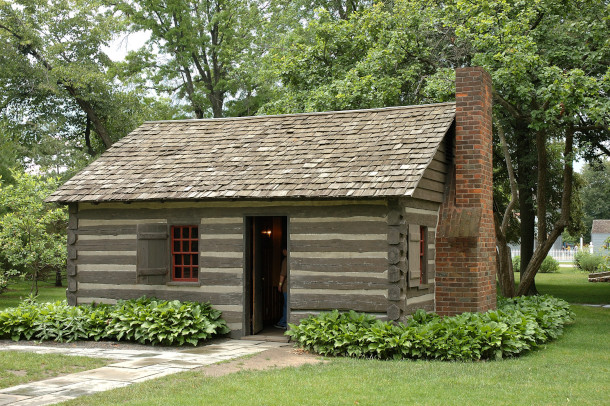
George Washington Carver’s house on a small farm in Diamond Grove, Missouri. The building was later relocated to the Henry Ford Museum in Greenfield Village. (Photo: Chuck Miller, Flickr, CC BY-NC-ND 2.0)
CURWOOD: Of course, Dr. Carver people today think of you and the peanut, that little thing that grows under ground—a ground nut they call it in Africa. What inspired you to do so much with the peanut?
WILLIAMS: Well, let me tell you a little bit about the lowly goober as I sometimes call it. After I'd been in the South for a number of years, I noticed that the cotton farmers there were seeing reduced yields. Cotton takes nitrogen from the soil, over time reducing the soil's ability to nourish the plant. So I decided we needed to come up with a way to add more nutrients to the soil. And I knew that legumes peas, beans, pod-bearing plants, I knew that these could do this. So that's how I arrived at the peanut. Then I had an issue in that folks were growing all these peanuts, but they didn't exactly know what to do with them. I mean, you can only eat so many peanuts. And so we started producing bulletins, and in those bulletins, I would have recipes for my peanut punch. My mock chicken made out of peanut. I would even have a sort of coffee made out of peanuts. You know, we used other real coffee beans with it. But the peanuts just helped it go further.
CURWOOD: What's your favorite peanut recipe Dr. Carver?
WILLIAMS: I'm particular to just a very fine roasted peanut. It's nice, you can have them in your pockets and when you go out on walks, you can take them with you. And you get lots of great nutrition from them. You may know that when I testified before the US House of Representatives Ways and Means Committee, I spoke of my love of the peanut and the sweet potato, and talked about how from those two, you could get most of the nutrition a person needs. And so I like to say that I used the peanut to help deal with poor nutrition, to help deal with poverty, because then the folks could save money if they had things that they could eat themselves that they'd grown, and then also prejudice, because much of my work with the peanut helped bring people together. And I'm really proud of that.
CURWOOD: So talk to me how you dealt with the racial turmoil that was taking hold within your society there in Alabama.
WILLIAMS: The interesting thing about race in the south is that the races have lived together there for a long time, and they really know each other. I found that when you can sit down person to person, you can see that what some people might describe as differences are not really differences at all. And I think my work with the peanut and at the Tuskegee Institute helped show many other farmers that. Because many of the the white farmers, they were able to benefit from what we were doing. They saw through our work, through our industry, that we were just as creative, just as smart, just as hard working as they were. And when we were able to help improve their lives, they thought maybe we were looking at these folks wrong. Maybe we were understanding their capabilities wrong their humanity wrong. When I left Iowa in 1896 some folks were surprised by my decision to move south. But when I was a little boy, a wise woman who took me in called Aunt Mariah Watkins, she told me something along the lines of "lift as you climb". And that was something I never forgot: "lift as you climb". And she told me any book learning that I might get that I should make it a point to share with our people.

A glass of homemade peanut punch, a George Washington Carver sanctioned peanut delicacy. (Photo: Bedinek, Wikimedia Commons, CC BY-SA 4.0)
[RADIO STATIC]
CURWOOD: Dr. Carver, are you still there?
WILLIAMS: Yes, sir. I'm here. Yes, sir. I'm here.
CURWOOD: A little interference here. But talk to me about today. What kind of agricultural future do you envision for our country? You know, what have we been able to achieve since then?
WILLIAMS: I always believe that if we took care of the land, the land would take care of us. And we just need to make sure and ask ourselves, is that what we're doing? Are we respecting the bounty that the land gives us? And so I think those are the questions that I would pose to anyone interested in agriculture today. One of the issues that I first saw when I got to the south, was how horrible, how invidious the system of sharecropping was, because there were all of these barriers put up to people being as good of stewards of the land as they could have been. And I encouraged the farmers there, you know, to plant personal gardens too, in addition to just crops that they might eat or sell, because I thought this was good for the land and it was good for them as individuals. And so with the sharecropping system, the folks who I was most dealing with in Alabama, they were not being respected. And so I think we need to make sure we consider that today the same way we needed to consider it back then.
#OTD in 1942, Dr. George Washington Carver visited Henry Ford to help the automaker develop plastic & rubber substitutes using plants. Ford had a long-standing belief that biofuel & other alternative methods to produce materials were the wave of the future. #ThisDayInAutoHeritage pic.twitter.com/QkplvFiD4t
— MotorCities (@MotorCities) July 19, 2021
CURWOOD: Now, some folks argue that we need another green revolution to be able to feed the growing population, but others say the issue is not so much food production as food distribution and food waste. Talk to me a bit about your concern for food production in today's modern age.
WILLIAMS: I have always believed that we could produce enough to feed us all, if we were smart about what we did and how we did it. And I think today, there's something called the local foods movement. We didn't call it that when I was first working, we were just calling it, producing near you, selling it near you. And we encouraged people to grow things that they needed and that they could use. And some of the distribution problems that we see today, I think might be solved if we look to the lessons from back then in terms of encouraging folks to grow what they can, to be creative in what they grew and how they grew it. And then also in finding ways to share and to make substitutes for things. I think those are just some of the issues that could be addressed.
CURWOOD: Of course, your name George Washington Carver is so important, but what other names or historical figures you think we should be paying attention to?
WILLIAMS: Well let me just say that I have been privileged to interact with and know many brilliant, wonderful people. Beginning in 1896, when Booker T. Washington asked me to come teach at his Tuskegee Institute. A brilliant man, he wrote a number of autobiographies, I would encourage folks to begin with Up From Slavery. That one was really insightful. I also had the privilege of knowing Dr. W. E. B. DuBois. Now, some folks, you know, are aware, that Dr. DuBois and Booker T. Washington had some differences of opinion, but several people forget that at one point, they were on quite friendly terms. And in fact, Dr. Dubois even taught for a summer at the Tuskegee Institute. I had the privilege of knowing the great poet Paul Laurence Dunbar. He came to Tuskegee on a number of occasions, and he even wrote a wonderful poem for the dedication of Dorothy Hall, a building that many years later I would come to live in. I also got to know the great opera singer Roland Hayes, Mary McLeod Bethune, a wonderful educator from Florida. If you don't know the story about how she started that school, by making money washing clothes, it's a wonderful story to learn about. You may have heard of the Kellogg brothers, W. K. and J. H. Kellogg, and I corresponded with both of them for a number of years. I had the privilege of knowing Mr. Henry Ford. He created the Ford Motor Company. And he visited me on a number of occasions in Tuskegee, as you may, you may or may not know this, he built a school near his home in Georgia for colored children and named it after me. And I was really honored that he would do so. I visited him in Dearborn, Michigan. We met, I believe it was 1936 or so at a chemurgy conference. And it's the development of industrial uses for farm byproducts. I think they might call it biotechnology today. And and I think when you study some of these folks, you will see that there were many things that he was wrong about. I think that's the interesting thing that when we look at folks from the past, the folks from the day, that there are lessons that we can learn from them, even recognizing that they're not perfect.
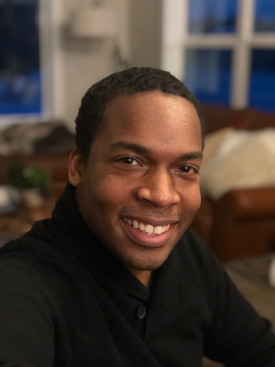
In addition to being an actor and playwright, Williams is also the assistant attorney general of the Iowa Department of Justice. (Photo: Courtesy of Paxton Williams)
[RADIO STATIC]
CURWOOD: Dr. Carver, are you still there?
WILLIAMS: Yeah, I'm here. I'm here.
CURWOOD: So what about yourself? What mistakes did you make?
WILLIAMS: You know, I would say that there were times when I probably could have been more forceful in standing up for the rights of all people, but especially my people. Folks wrote about that at times about me. They said that I was not as vocal as I could have been, I didn't use my voice. I do understand the critique. I do understand what they wanted. Because you know, as you know, I knew a number of wonderful people, people who could make real change and who could do things and there were probably times when I probably could have said more to them about society and about life in general.
[MUSIC: Caratini Jazz Ensemble, “West End Blues” on Darling Nellie Gray (Variations sur la musique de Louis Armstrong), Label Bleu]
WILLIAMS: I do believe I'll have to be leaving shortly. And I wanted to thank you for taking the time to visit with me.
CURWOOD: Well, I appreciate you taking the time to come from the past to the present to visit with us. Thank you so much.
WILLIAMS: Thank you, thank you.
[MUSIC: Caratini Jazz Ensemble, “West End Blues” on Darling Nellie Gray (Variations sur la musique de Louis Armstrong), Label Bleu]
CURWOOD: George Washington Carver was channeled by actor and playwright Paxton Williams. He wrote and frequently performs a one-man play in which he portrays George Washington Carver.
Related links:
- Paxton Williams' Profile
- Biography about George Washington Carver
- George Washington Carver’s peanut bulletins
[MUSIC: Caratini Jazz Ensemble, “West End Blues” on Darling Nellie Gray (Variations sur la musique de Louis Armstrong), Label Bleu]
CURWOOD: Just ahead we continue our celebration of Juneteenth with more green contributions of black and brown people. Stay tuned to Living on Earth!
[MUSIC: Louis Armstrong, “The Faithful Hussar – Live” on Ambassador Satch]
ANNOUNCER: Support for Living on Earth comes from the Waverley Street Foundation, working to cultivate a healing planet with community-led programs for better food, healthy farmlands, and smarter building, energy and businesses.
[CUTAWAY MUSIC: Louis Armstrong, “The Faithful Hussar – Live” on Ambassador Satch]
When Trees Testify: Science, Wisdom, History and America's Black Botanical Legacy
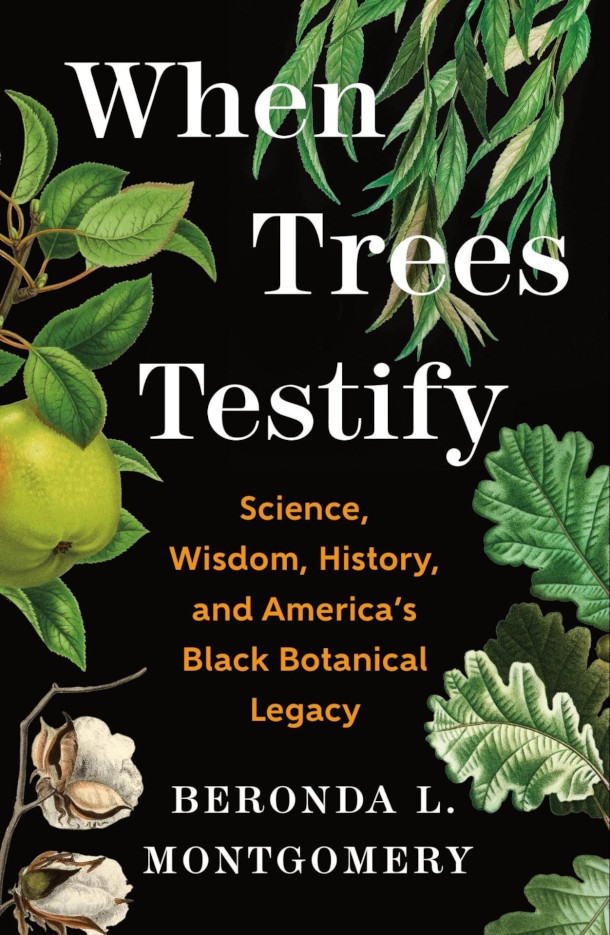
Beronda L. Montgomery’s latest book, When Trees Testify: Science, Wisdom, History, and America’s Black Botanical Legacy. (Photo: Courtesy of Beronda Montgomery)
CURWOOD: It’s the Living on Earth Juneteenth special; I’m Steve Curwood.
When plant biologist Beronda Montgomery sat down to write what became a personal memoir mixed with a botanical history of African Americans, she found her research as a PhD lab scientist had brought her squarely into the world of social science as well. From her studies of how plants respond to light during photosynthesis she started shining a light on the history of extensive plant cultivation by African Americans, including those who endured forced labor. And it illuminated a brilliant array of green knowledge among black and brown people worth celebrating. Beronda Montgomery is the author of When Trees Testify: Science, Wisdom, History And America’s Black Botanical Legacy. So, for Juneteenth, Welcome to Living on Earth, Dr. Montgomery!
MONTGOMERY: Thank you so much. It's a real honor to be here.
CURWOOD: Our pleasure to have you. When Trees Testify tells African American history of enslavement through the lens of trees, what do we see?
MONTGOMERY: I think we see that African Americans' experience in the U.S. has been tied up with trees from the beginning, in terms of having to pull them up to make land, and also the ways in which trees are a part of their life, whether that was going through them, navigating through them, or sometimes the very harsh reality of lynching.
CURWOOD: So trees are, of course, very important to the health of the environment, and they are key agents in the fight against climate disruption, for example. Now you are a plant scientist, a botanist, but your book is well, can I call it a history book, maybe a memoir as well? What's this nexus between science and history, and both public history and personal history, in telling these stories?
MONTGOMERY: You know, I think for me it came to reality that there was a very strong nexus there when I was visiting the former site of a plantation, and saw a tree that was estimated to be 600 years old, and realized that that tree would have been standing there when people were enslaved on the land. That my understanding of the science of it gave me some insights into what that meant, the relationship, and also thinking about my own family's history in the South, so that one tree kind of brought together those areas for me.
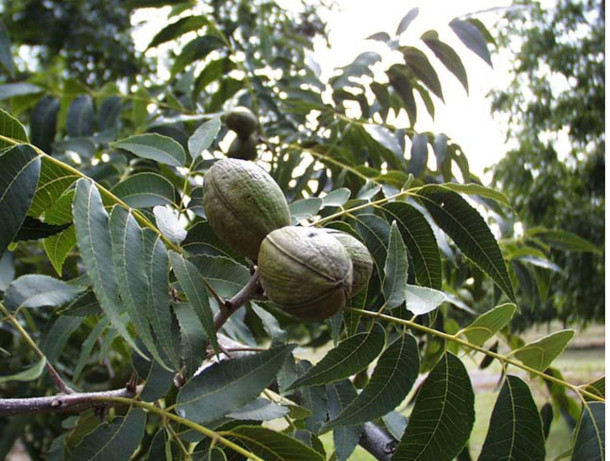
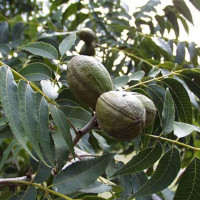
Our guest, Beronda Montgomery, says pecans were a big part of her childhood and hold sentimental value for her. Above, a pecan tree in Washington, D.C. (Photo: Katja Schulz from Washington, D. C., USA, Wikimedia Commons, CC BY 2.0)
CURWOOD: So let's talk a bit about the science that you talk about in here. So there's a 600-year-old tree, actually only would have needed to be 300 years to have been around during slavery. How did this tree capture the experience of slavery that occurred around it?
MONTGOMERY: Well, the tree was standing on the land, and I thought, how beautiful it was that something could live long enough that those enslaved people, and me and my family, who were visiting there, could have been with the same being. That was the first thing, the long-lived nature. But then I also thought about one of the things I study as a scientist, is photosynthesis, and how carbon dioxide and water are combined with the energy of sunlight to make sugars, and those sugars are ultimately used to make the compounds of wood. And so, what occurred to me in that moment, and I shared with my sister and son that the ancestors' breath, that had it been exhaled while they were living with the tree, would be in the wood of that tree; their breath was captured in the tree, and that now we're standing there with that same tree, our breath had a chance to be captured together on a kind of, what I thought about as a recorded carbon archive. And so these long lasting beings gave us a physical connection with them, but also literally our breath was joined together in there with theirs in the wood of the tree.
CURWOOD: So what did your creative scientific mind think about this notion that hey, some of the carbon that's in this tree must have passed through some of my enslaved people who were here before? How did that make you feel?
MONTGOMERY: Initially, I shared it as just a fact of plants, and my sister and son were so in awe of it, it really took me back to think how deeply impactful it was to be able to stand with these beings that the historian Tiya Miles has talked about trees as material witnesses, but it was really in that moment that I understood the materialness of the material witness and how the breath was actually captured there. So I found that very fascinating, and these oak trees have been talked about as witness trees, and it gave that a different meaning for me, that they weren't just witnessing in terms of standing there and observing, but they were carrying forward part of the essence of those people's lives.
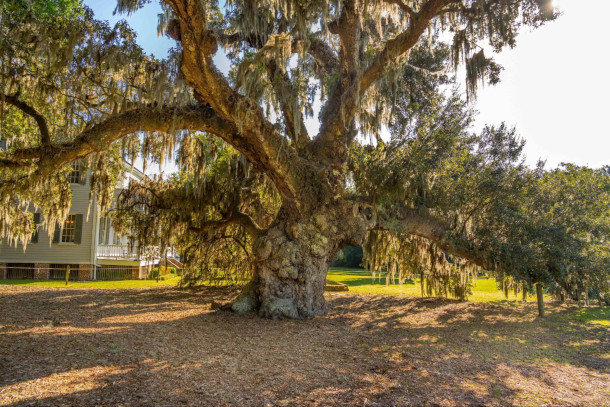
While visiting the McLeod Plantation Historic Site in Charleston, Montgomery was struck by the majesty of the McLeod Oak, which is believed to be more than 300 years old. Established in 1851, McLeod Plantation Historic Site is a 37-acre Gullah Geechee heritage site that reflects some of the most significant chapters in American history. Once sustained by sea island cotton and the labor of enslaved people, the plantation now stands as a place of remembrance and learning, honoring the lives, resilience, and lasting cultural influence of those who lived and worked here. (Photo: Courtesy of Charleston Parks and Recreation)
CURWOOD: Sort of a personal question. I live in a farmhouse in New Hampshire that was built in 1755 and there's trees in front of this house that are maples that are probably 270 or more years old, and we know from the history of this house that a slave lived here, his name was Caesar, and he was bequeathed tools by his master, who also went off to the Revolutionary War. How might Caesar's legacy be in the trees, these old, old maple trees that are here?
MONTGOMERY: Yeah, you know, I think, particularly for trees that we know live towards the farthest edge of their life cycle, they have been well cared for, and so I like to think that, you know, people who were on the land were not only living with the trees, their breath was not only captured in the wood, but there was some care that was taken of those trees, so the legacy is there of living together with, but also sustaining the life of those trees, and many instances you find that some of the wood in the house may have even been harvested by some of the enslaved people and used to build it, so their fingerprints are also on the buildings that are there standing together with those trees.
CURWOOD: So, let's take an excursion a little bit deeper into your scientific background, and talk about epigenetics, that is how environmental circumstances tend to affect how genes get expressed. To what extent, if any, do you think that that big tree in that state, in that former plantation in South Carolina, or in fact the one in our front yard here in New Hampshire? To what extent do you think the experience of slavery might have affected how that tree was able to express its own growth and development, if any?
MONTGOMERY: Yeah, you know, I think that there certainly are likely markers that would have been impressed upon the trees from their living together with people who were enslaved. I mentioned in the book the idea of the fact that if there was a tree that was a hanging tree, that it remembered the weight of those bodies. We know in horticulture that if a branch is bent, that can induce flowering, that can induce differences in the way the branches grow. And I think a lot of times that we think that it's outside the realm of possibility that a hanging tree would remember its strange fruit is because we haven't had scientists who think about those parallels and imagine that the biology is there. I also think about the fact I happened to be visiting the Equal Justice Initiative in Montgomery, and there were some trees where the trees had the roots had been soaked with blood several times, and you imagine that that also changes the soil and the ways that the roots of those trees grow, and so often those kind of changes in an environment are marked in the epigenetics of a tree, and I just wonder, as a plant scientist who is thinking about this through a lens of being the descendant of enslaved people, if there are markers of epigenetic memory that trees would have had living with the enslaved in America.
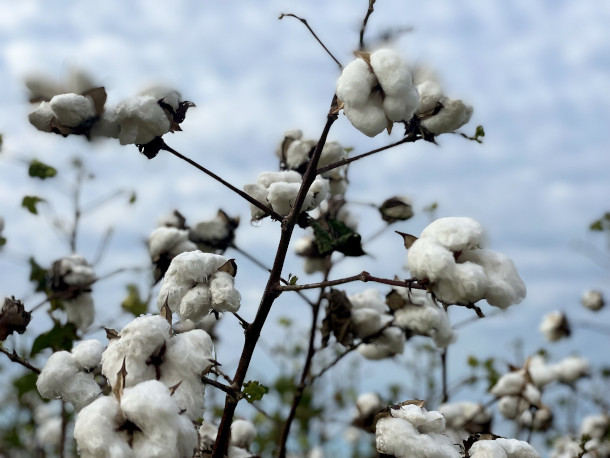
Upon seeing a cotton plant in a greenhouse, Beronda’s mother was transported back to a traumatic time when she had to pick cotton as a child. Above, a cotton plant in Louisiana. (Photo: TealPeacock, Wikimedia Commons, CC BY-SA 4.0)
[MUSIC: Billie Holiday, Ray Ellis And His Orchestra “When It’s Sleepy Time Down South” on Jazz Masters 47: Billie Holiday Sings Standards, A Verve Label Group, UMG Recordings]
CURWOOD: Now, you describe your book as a memoir and a celebration of your family history, growing up in Little Rock, Arkansas, and spending a lot of time with your grandparents out in the countryside of rural Arkansas. Talk to me about your family's history with trees.
MONTGOMERY: So, my, both of my parents, my parents are the children of two women who were best friends, so my maternal and paternal grandmother were best friends, and so my dad and mom grew up in the same area, and both of their lives were really embedded in a rural part of Arkansas, where pecan trees were a huge part of the life. There were wooded areas near where my grandparents lived, and by the time I came along, my paternal grandfather was the caretaker for the trees in the local cemetery. And so trees were a part of my parents' life growing up, but all the way into my grandfather's older age, trees were just a seminal part of our surroundings, but also a part of our cultural and social gatherings, in terms of pecans being ever present in many different dishes as well.
CURWOOD: Let's talk about pecans for a moment here. How much do you like pecans?
MONTGOMER: I love pecans. You know, I love a lot of nuts, but I think pecans do have this kind of sentimentality. In Little Rock, and my aunts and uncles who lived in Chicago, every Christmas, Grandma sent us boxes of pecans. So pecans have this real deep personal connection to my grandmother and my family, but I do love them.
CURWOOD: You have spoken, though, about your mom being affected by dementia, losing her memory, forgetting things. But trees do remember. How can trees be reservoirs of our collective memories, do you think?
MONTGOMERY: You know, I think what's been so lovely, whenever you release a book, you get people who start sharing stories with you, and one of the things that I've been really enriched by is so many people have memories of a childhood tree, or a tree they planted with their grandfather, a tree they climbed, and so I think trees are literal places where so many of us have memories, and some of those are fond memories, and in other cases they're memories of trauma, and I tried to go the full gamut in the book. But I think, you know, one of the things that I've been, as I've been watching my mother's memory be erased, I think one of the things that I tried to do in When Trees Testify is to explore Black histories connected to trees, because as I watch biology erase our memory, I'm living in a country that is trying to intentionally erase the memory of some of us, and those juxtapositions are quite strong for me, and so I think trees become, because they are so long lived, give us these long lasting connections to memories throughout our lifetime.
CURWOOD: It's hard sometimes for people to understand the intergenerational aspects of social trauma - how you carry these things. Tell me the story of what happened when you took your mother on tour of a botanical area you had when you were teaching in Indiana, I believe, and she sees a plant.
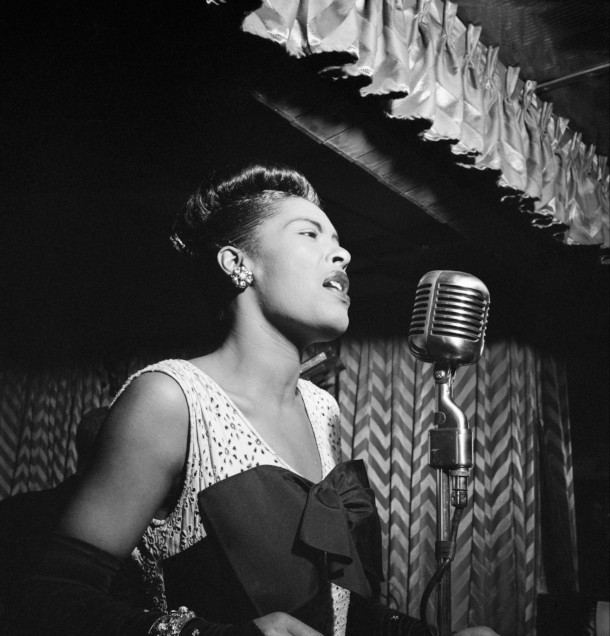
Billie Holiday performs at the Downbeat jazz club in New York City, 1947. In 1939, she released a song based on a poem by Abel Meeropol, “Strange Fruit,” describing the lynchings of African Americans. (Photo: William P. Gottlieb, Wikimedia Commons, public domain)
MONTGOMERY: Yeah, so I was so excited. I had my first professional job after finishing my PhD, and my parents had come to visit. The building that I worked in had an attached greenhouse, and both my parents love plants. My mother loves indoor plants and outdoor; my dad loves outdoor gardening, but they both love plants. So I was eager to take them on a tour of the greenhouse, and we were really enjoying it, you know. We went through the cactus room, my dad loves to be warm, we went and he saw a pineapple that had never grown, and then we got halfway through it, and my mother, who's very gregarious, became very sullen, and her body kind of froze, and when I asked her what was happening, she pointed over her shoulder and said, I never need to see that again. And when I looked, it was a cotton plant in full bloom, and I remember she was rubbing her hands together, and that took me back to the ways that she would talk about when she had to harvest cotton as a youth, she would get scars on her hand. And so both my parents, born in the early 40s in Arkansas, grew up in the Jim Crow time in the Delta region, and so they annually had to be pulled out of school to work in the cotton fields with their parents as day laborers. And so that interrupted my mom's education, and she had a great love for education; she should have been a professor before I. And so the way that just seeing that plant transformed her and took her back to a time of life where she wasn't as free and didn't have as much agency just struck me quite deeply that just the mere sight of something could trigger and pull up all of those memories for her.
[MUSIC: Billie Holiday, “Strange Fruit” on Compilation Billie Holiday, A Verve Label Group release, UMG Recordings]
CURWOOD: So you have a chapter titled Strange Fruit. Thanks to Billie Holiday, the images of lynchings are burned into our memory. Describe the impact of seeing the effigy burning when you were in high school in Little Rock.
MONTGOMERY: Yeah, you know, I think sometimes it is a disappointed but not surprised moment in this country to be continuously confronted with such things, but on that day, which was really about a joy, it was about a football game to see that, and then for it to be set on fire, and it to cause this kind of racial tension was quite disappointing. I think even more than seeing that was the conversations that we had after it that were disappointing, in that even in the 1980s my colleagues and my fellow students and I were still having to explain to some white students and white faculty why that was so hurtful for us to see.
CURWOOD: So, as I understand it, your grandfather was five years old in the town of Elaine, Arkansas, when there was what's known as the Elaine Massacre. Hundreds of Black people killed by a white mob over a period of time that I believe took place in 1919. So, in 2019 there was a tree planted to memorialize that. Tell me the story of that tree, and how that tree tells the story in some respects doesn't.
MONTGOMERY: So, in 2019 a willow tree, a memorial willow tree, was planted in Elaine, Arkansas, to commemorate the 100th year passing of that massacre that had happened in 1919. And they had planted a willow tree, because it had been shared with many Black families that after the massacre in 1919 there was a willow tree near where many of the Black people who had been killed were buried, and so this memorial tree was planted with a placard, and some months later the tree was cut down, and the placard was removed, and that was really a symbol that the area was still struggling with wanting to recognize and acknowledge that this event had happened. What was quite fascinating is that I was living in Michigan at the time, working at Michigan State University, when I saw this story, and I saw willow tree in Arkansas, and was immediately intrigued by the story, and in fact, my family had not known about this massacre, wasn't taught about in the public school, me and all my siblings went to public school, and so it was that hearing of the story in 2019 where we were able to say, wait a minute, my grandfather Hosea was alive and well in 1919, five years old, still living in Elaine. He had passed away by 2019, of course, but it made us understand a connection to this family history, and a connection to this Arkansas history that had not been well known, and I still wonder if I hadn't have, by chance, heard that story, how long it would have taken for us to connect our family's history to this massacre that happened in 1919 and to think about the many ways in which, even though he dealt with it quietly, that impacted my grandfather, and then impacted the rest of us in the family as well.
CURWOOD: What happened during the massacre as far as you understand?
MONTGOMERY: So the massacre started on September 30 in 1919. It was largely associated with the fact that Black farmers, led by Robert Hill, had unionized to demand fair prices for their cotton. September is peak cotton season, and so this would have been the time that it was time for them to get these fair prices. And there was a meeting of the union at a church there near Elaine, Arkansas, and some white Arkansans heard about this, showed up, and there was an exchange of gunfire, and that was translated into there being a Black uprising against white people, and ultimately white Arkansans, white people from Mississippi and other states came, and it resulted in the death of believed to be as many as 800 Black Arkansans and three to five white Arkansans. And so it really was about Black people having the agency and demanding fair prices for cotton that led to this massacre, and it was believed that the farmers, the white farmers, then stole the cotton from the fields, as well as took land. And so it really did affect multiple generations, in addition to those who were killed in the massacre in 1919.
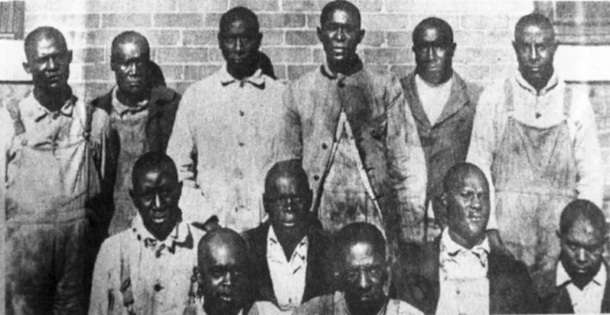
In the aftermath of the Elaine Massacre, 12 Black men were arrested and tried for murder. Six who became known as the Moore defendants and six who became known as the Ware defendants—were found guilty of murder and sentenced to death. The six Ware defendants were freed by the Arkansas Supreme Court. After almost five and a half years and numerous legal efforts by the NAACP and others, the six Moore defendants were released from prison. (Photo: From the Black history photograph collection (BC.PHO.4), courtesy of the Butler Center for Arkansas Studies, Central Arkansas Library System)
CURWOOD: How did you feel when you learned that close to 1,000 Black people were killed by an angry mob just searching for their rights to sell their crops at a fair price?
MONTGOMERY: You know, it was quite infuriating, and you know, when you think about it in the context of 1919 as a whole, where that summer there were massacres across the U.S. Many people are familiar with other towns like Tulsa. This was a period in the U.S. where this was happening, and so in some ways it's not surprising that it happened in Arkansas, but it does really hit close to home when you realize your five-year-old grandfather, you know, you just think about an innocent five year old living through that, and my grandmother, his wife, she and a twin sister were born in August of 1919. So they would have been one month old, and even though they wouldn't have memories of it like my grandfather would have, they were nursed by a stressed mother, and that could have developmental effects. And so, it was just interesting to think about this history that was deep in our family that we were unaware of.
CURWOOD: And to what extent was any justice brought to this situation?
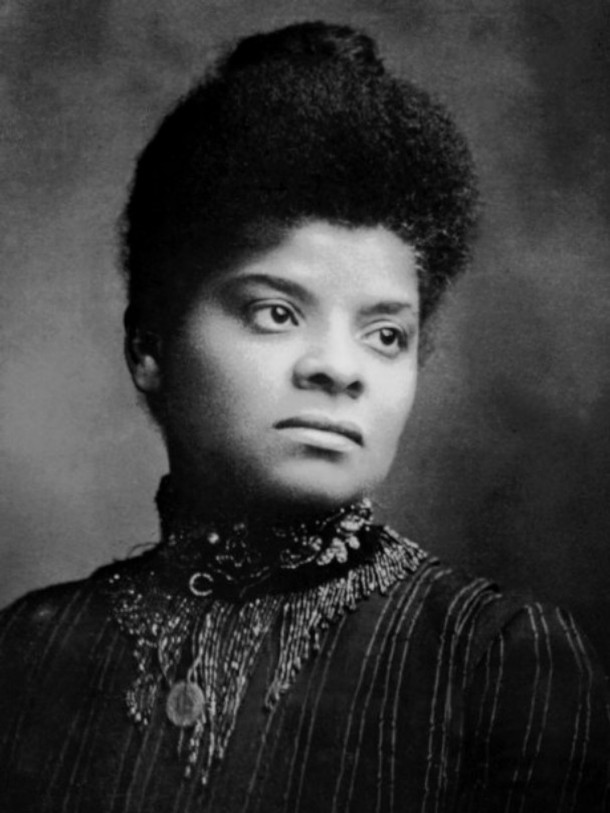
Journalist, sociologist, and early civil rights leader Ida B. Wells wrote about the 1919 Elaine Massacre in Arkansas, when as many as 800 Black people were killed. (Photo: Barnett, Public Domain, via Wikimedia Commons)
MONTGOMERY: So, there were initially as many as 100 Black Arkansans that were arrested, 12 Black men were sentenced to death, and it really became public when Ida B. Wells came to Arkansas, wrote about it, wrote a pamphlet about it, and some famous Black Arkansan legal scholars, like Scipio Jones and others, got involved, and these Black men ultimately were not sentenced to death. And so there was some justice in that regard, but there has continued to be a hesitance to really name and deal with the history in terms of acknowledging it in history books and teaching it to kids in Arkansas. Oh, that's getting better, but it's been a long-term struggle.
CURWOOD: And what about today? What's going on with the willow tree to memorialize this place?
MONTGOMERY: So, there was a second willow tree that was planted, it was poisoned, and so they have considered planting another one, but I think they've been quieter about it, because they have fears. In the time since this has been going on, a public memorial to the Elaine Massacre has been put installed. It is not in Elaine, it's in nearby Helena, West Helena, but there is now a memorial massacre site that you can go and visit, but still dealing with the outcome of people not wanting the memorial there, even as a living willow tree.
Related links:
- The McLeod Plantation Historic Site
- The Elaine Massacre Memorial
- The Elaine Massacre Exhibit at the UA Little Rock Center for Arkansas History and Culture
- Harvard Radcliffe Institute | Learn more about Beronda Montgomery
- Looking for a copy of the book? Consider purchasing through Living on Earth + Bookshop, which supports independent bookstores and nonprofits like LOE
- Oprah Daily | “The Traditional Foods of Juneteenth Carry a Rich History”
- Listen to Part 2 of this conversation
[MUSIC: Billie Holiday, “Strange Fruit” on Compilation Billie Holiday, A Verve Label Group release, UMG Recordings]
CURWOOD: It’s our Juneteenth special and we are speaking with Beronda Montgomery, author of When Trees Testify.… Keep listening to Living on Earth!
ANNOUNCER: Support for Living on Earth comes from the estate of Rosamund Stone Zander – celebrated painter, environmentalist, and author of The Art of Possibility – who inspired others to see the profound interconnectedness of all living things, and to act with courage and creativity on behalf of our planet. Support also comes from Sailors for the Sea and Oceana. Helping boaters race clean, sail green and protect the seas they love. More information at sailorsforthesea.org.
[CUTAWAY MUSIC: Wynton Marsalis “When It’s Sleepytime Down South” on Standards & Ballads, Sony BMG Music Entertainment]
Freedom Trees and The Pecan Master
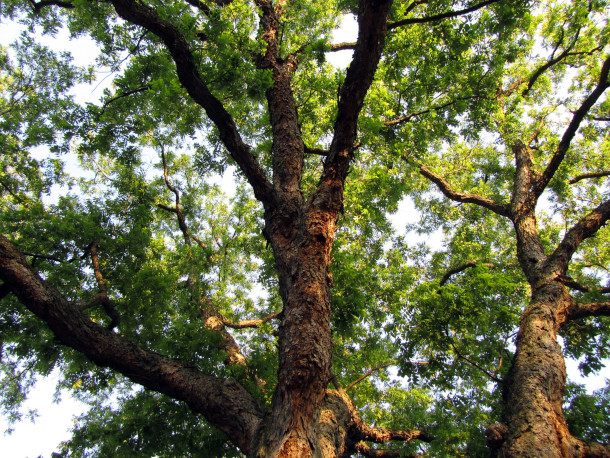
The first grafted pecan tree was based on the agricultural work of an enslaved man named Antoine. Grafting allowed the commercial pecan industry to thrive in the United States. (Photo: Brad Haire, University of Georgia, USA, Wikimedia Commons, CC BY 3.0 US)
CURWOOD: It’s the Living on Earth Juneteenth special, I’m Steve Curwood, celebrating the Jubilee of freedom from slavery here with Beronda Montgomery, author of when Trees Testify.
CURWOOD: As part of dealing with enslavement and at times self-emancipation, trees are part of the story. Talk to us about what Harriet Tubman said about trees like the sycamore.
MONTGOMERY: You know, one of the things that I loved about writing this book was learning even new things about Harriet. So, Harriet had quite a great understanding of trees from having worked in tree fields with her father, and she had learned that sycamores were trees that could lead you to freedom, because these trees are quite distinctive in the way that they're looked by their bark, but they're also near bodies of water, and she had learned to navigate and look for such, what she calls a forest compass, to help lead her in different directions. And so she had a great knowledge and expertise around trees, and I learned when writing this book, Harriet also had a great love for apple trees that I hadn't been aware of. Someone pointed out a children's book for me, and her love for those apple trees was linked to the fact that she had to help grow them when she was enslaved and couldn't eat the apples, and so when she got her homestead in New York, she planted hundreds of fruit trees and was known to offer people apples when they came as a sign of freedom that she could now do that. And so Harriet's engagement with trees is deep and really led to her ability to be the greater liberator that she was in so many ways.
CURWOOD: And talk to me about how does the sycamore help you find your way north?
MONTGOMERY: So sycamores, in particular, are trees that have a very distinctive bark, in that when the tree grows, unlike other trees that may just make rivets and fill in, it sloughs off part of its bark like a snake would an old skin to have a new skin. And so, the sycamore tree often has this very light gray, but also mottled peeling bark that makes it very distinctive. You can see it amongst other trees, and at nighttime, when the moonlight hits it, it's very easy to see, and so if you knew where the sycamores were in the area, and you could find them, you could use them to navigate. But the other thing is that sycamores grow very well on the bodies of water, on the shores of bodies of water, so if you would see a number of sycamores growing together, it was likely that they were near a river or body of water, because they stabilize the soil, and so enslaved people would often look for sycamores to find a body of water that they could pass through, so their scent would be lost in case hounds were used to follow them. Sycamores also have very large trunks that are often hollow, so you could hide within one, or you could hide things within one as you were preparing. So sycamores had very many different ways that they were useful for people who were seeking to liberate.
CURWOOD: So Harriet Tubman loved planting fruit trees, and later in life, and being able to offer apples, apples that she couldn't have eaten when she was a child. Of course, apples are integral to American folklore, as apple pie, as they like to say, right, but apples are, of course, part of the African American story, and in your book, you write about apples playing a key role in a pioneer story, an African American pioneer story in New Mexico. What happened there?
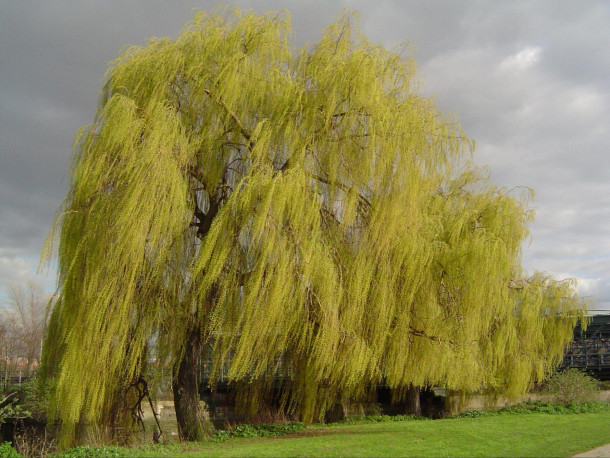
Beronda says willow trees are her favorite trees. (Photo: Louise Joly, Flickr, CC BY-NC-ND 2.0)
MONTGOMERY: I was so happy to come to know about that story, because I wanted to be able to include stories in When Trees Testify that acknowledged the trauma of trees, but also showed the ways in which trees were linked to joy in the pursuit of freedom for African Americans. So there is a town that was known as Blackdom in New Mexico. It was a first black settlement in New Mexico that was founded by Frank and Ella Boyer, one of the couples that founded it, and Frank had been Francis Boyer had been seeking to leave Georgia because he was running into issues protesting their Jim Crow laws, and so they identified New Mexico as a state that had no Jim Crow laws and knew that if they could go there and establish a town they would be able to move freely, at least compared to their life in Georgia. And so Frank and Ella Boyer and other couples started this town and recruited people who had agricultural abilities; they wanted people to be able to grow their own food, but also to be able to grow crops, so that they could use them for cash crops, and some of the first things that they grew were apple trees in the desert. And that was due to their having inherited abilities to do dry farming and to do very good ways of watering in the desert, irrigation in the desert, and so they were able, Francis Boyer and his son were so successful with growing apple trees that they made significant money and were able to loan money to others to be able to come. And Blackdom was founded in about 1903 and they thrived there for a couple of decades before they moved to another town in New Mexico, Ledoux, but it really was central to their being able to pursue freedom in an area that was free of Jim Crow laws that restricted their lives in the Deep South.
[MUSIC: Hal Leonard Jazz Ensemble, “Cotton Tail” by Duke Ellington/arranged by Mark Taylor, on Young Jazz Classics - Grade 3]
CURWOOD: You wrote about rice and pecan cultivation, and you highlighted the knowledge that enslaved Africans brought to America and contributed to the growth of the U.S. economy with those skills, yeah, that enslaved Africans brought more than simple hard labor is key. So, you know, I mean, feels to me it's important to tell those stories. Yes?
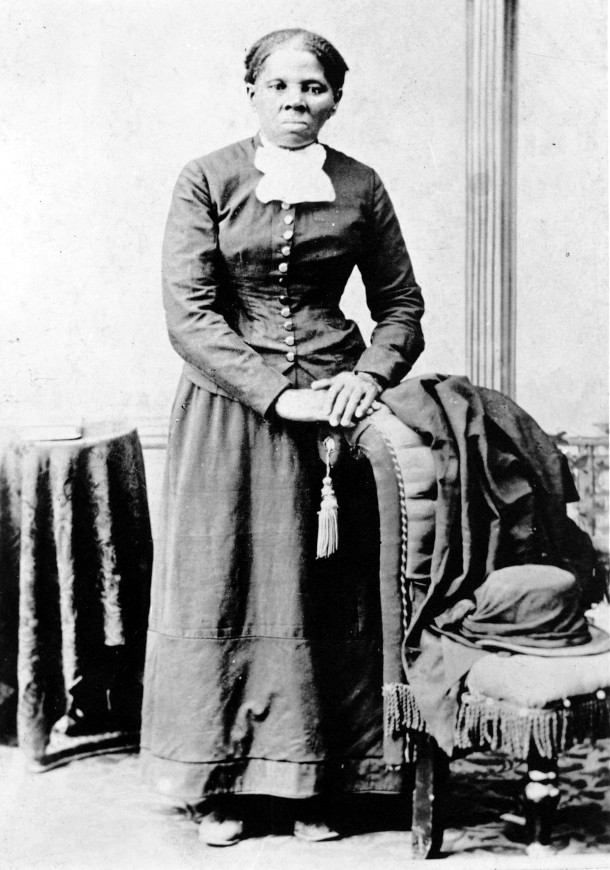
Harriet Tubman was an abolitionist who helped lead thousands of enslaved people to freedom via the Underground Railroad. Schooled in plants and trees, Tubman used her knowledge of sycamores and willows to guide her during her travels northward. Author Beronda Montgomery tells the story of Tubman growing apples on her homestead in upstate New York using knowledge she gained as a child during enslavement. (Photo: Harvey B. Lindsley, Wikimedia Commons, Public Domain)
MONTGOMERY: It's vitally important, and I think some people have started to acknowledge this, particularly in terms of like rice, some of the women that were enslaved from West Africa, they went to areas where they knew there was successful cultivation of rice in those areas, and wanted women to be brought here who could plant and irrigate the rice and allow it to really thrive. And so much of the thriving of the rice industry sits at the hands of those enslaved African women, and this was so well known that enslavers actually paid very highly for women who came for this area; their value was as much as young men, which was how you would really estimate what value was at that time. In terms of the pecan industry, it's known that the first grafted pecan tree, which was one that was the basis of the commercial pecan industry, was actually obtained at the hands of an enslaved man named Antoine, and so pecan trees growing in nature have nuts of very varying size, some that have hardly any nut meat, and some that have a lot, and so they had to really get a variety that would make nuts of the same size with very healthy, large amounts of nut meat, and this happened after Antoine was able to successfully graft a variety that was known as Centennial. So there are many areas in agriculture, like rice, pecans, tobacco, where we can point to the breakthroughs in that leading to commercial industries being founded upon the knowledge of enslaved people, and in that way it started to seem to me that my own personal legacy as a botanist was really founded on an expertise and a kind of pride in carrying on that expertise, and that's one of the things I wanted to be able to share in the book, the ways in which we've overlooked those contributions quite heavily in the U.S. in terms of African Americans' contributions to this country's agricultural wealth and advances.
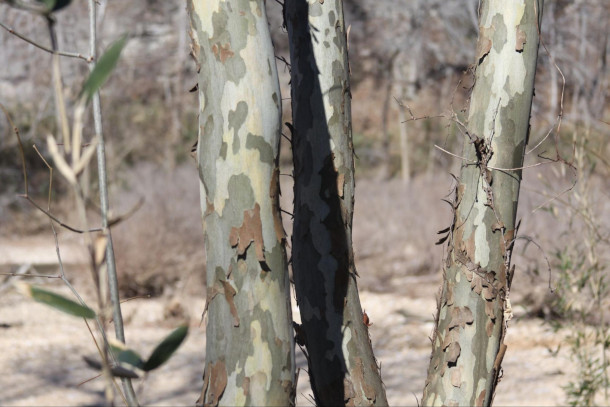
The distinctive bark of sycamore trees served as navigational guides for people seeking freedom from enslavement. Sycamore trees also provided hiding places for people and objects. Above, sycamores in Buffalo National River Arkansas. (Photo: National Park Service, Wikimedia Commons, Public Domain)
CURWOOD: Much more to the story than George Washington Carver, huh?
MONTGOMERY: Absolutely, and I, you know, I want George Washington Carver to be celebrated, but I also want us to have more than one name we can call when people ask what black people have contributed to agricultural in this country.
CURWOOD: Talk to me about what Antoine did to graft and make essentially, I don't know if you call them a hybrid or whatever trees that would then be more commercially valuable. I don't think grafting is a very simple or easy thing to do.
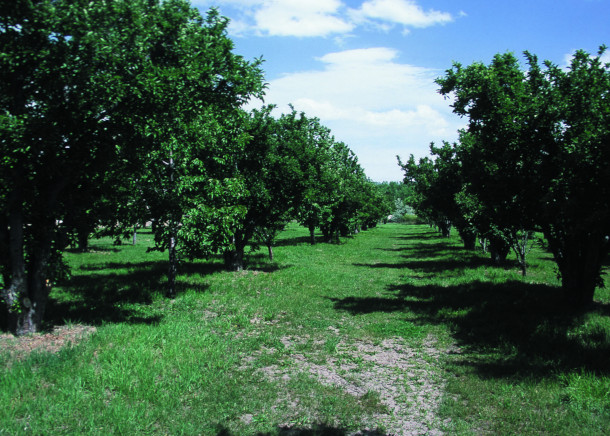
Blackdom, one of the first Black settlements in New Mexico, was a community founded by Frank and Ella Boyer. Their ability to grow their own food, particularly apple trees, allowed them financial freedom during the Jim Crow era, says Montgomery. Above, an apple orchard in Rio Arriba County, New Mexico. (Photo: Jeff Vanuga, Wikimedia Commons, Public Domain)
MONTGOMERY: It's not. I have tried it, and by and large, I've been mostly failure at it. It's very difficult to do because you're taking two separate parts of a plant, a root of one part of a plant, and the stem or top of another plant, and trying to fuse them together, and it's much more likely that you introduce some kind of problems that it's not successful. The reason they needed to do this is that when you got pecan trees that could make these very large nuts, often the tradeoff is that they were susceptible to stress and damage. And so what they wanted to be able to do was to use the top of the tree that would produce the large nuts and graft it onto a rootstock that was resistant to pest in the soil, so that you could have a hardy tree that could still make a lot of nuts. And so Antoine had to do some trial and error. Part of this came from probably long, many generations of observations in the wild, grafting can happen in the wild, in the woods, in certain ways, and if you're observing how that can happen, it can help you understand how to put two parts together. And so he was able to do this, and when you think about, I've done it with lots of advanced tools and sterile cabinets and all kinds of things, and thinking about him being able to do this at a time where he would have had access to fewer tools and technological advances is even more inspiring to think about the dedication and persistence it must have taken for him to be successful at accomplishing that.
CURWOOD: So he would have done it a few times, a few dozen times, maybe?
MONTGOMERY: Probably a few dozen times, and very frequently it doesn't work. And you know, I also think about him doing it under the duress of being tasked with doing that by a slave master, right, by someone who was in charge of him, and so he would have had to do that many, many times under significant stress, but somehow he managed to get it to work, and in fact it was the basis of the pecan industry in the U.S.
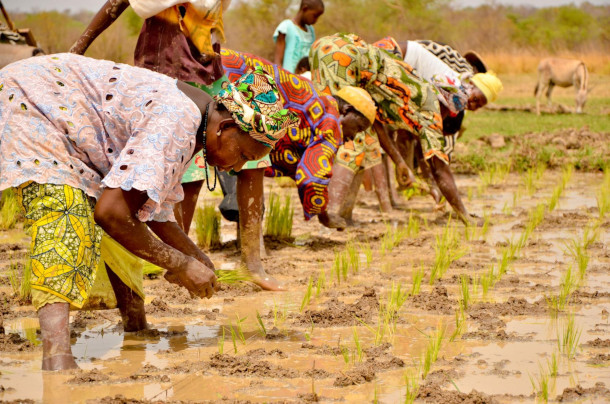
The art of growing rice was integral to West African culture. Enslaved women from rice growing areas like the Gambia were brought to the rice growing areas in the Carolina low country and other parts of the South. Above, people working in the rice fields of The Gambia. (Photo: Sheena, Flickr, Public Domain)
CURWOOD: And we don't know his last name.
MONTGOMERY: We don't know his last name.
[MUSIC: Hal Leonard Jazz Ensemble, “Cotton Tail” by Duke Ellington/arranged by Mark Taylor, on Young Jazz Classics - Grade 3]
CURWOOD: As a botanist, I know you also think about trees and their roots, and of course, you're thinking about African American history and enslavement. What can trees and their roots tell us? How can it enlighten us about the human situation, how people can survive and thrive something like enslavement?
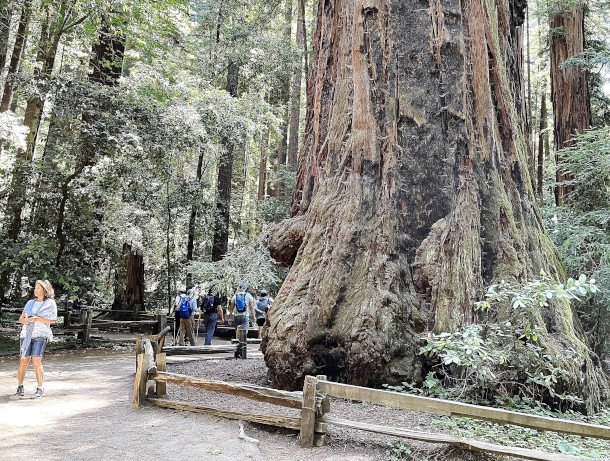
Montgomery encourages everyone to connect with trees and nature to the best of their ability. Above, visitors walk through Henry Cowell Redwoods State Park in California, home to some of the largest trees on Earth. (Photo: Marty Aligata, Wikimedia Commons, CC BY-SA 4.0)
MONTGOMERY: I think when you think about different trees, whether you think about an oak tree that has a really deep central root, or you think about trees like sycamore and willow that have a more robust, networked, shallow roots, I think that the roots of trees adapt to the environments in which they're growing to stabilize themselves. And so they are constantly kind of sensing that environment and adapting, whether they do need to branch out to get themselves stable, or if there's a deep tap root, which is the thing that is keeping you anchored. The other thing that I think a lot about is that the soil and the roots are constantly, there's a communication and a community that's actually happening underground. The roots are not living in isolation, they're often collaborating with bacteria or fungi in the soil, and it's that community together that allows the roots of the tree to have its strongest, most complex, and deepest ability to support the tree. And so I think a lot about there are times where, for me, I think the beauty of being a human is that I'm neither an oak tree or a willow tree, and there are times where I need to put a deep root down because I'm in the right place, and there are other times where I have to have this highly networked and shallow root system to have sustainability, but in both of those cases there is always a community that is the full support of the plant and the tree, and I think that for me that's what was wonderful about being able to look at family stories, in addition to science, is to acknowledge some of that community that has sustained me, and that I hope we all see as a paradigm for how we are sustained in our lives.
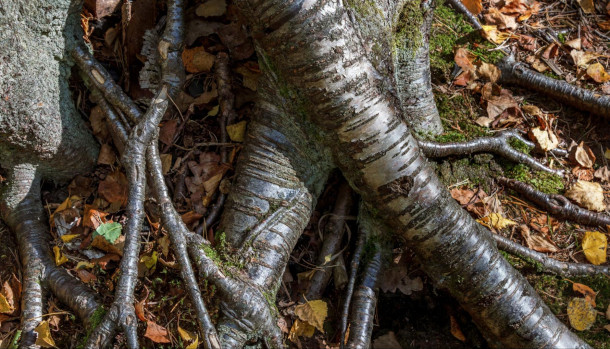
The intertwined roots of two birch trees. Our guest suggests that tree roots can symbolize adaptability, resilience, and community. (Photo: W.carter, Wikimedia Commons, CC BY 4.0)
CURWOOD: Talk to me more about community, as I understand it, many trees have to be with other trees in order to thrive. How true is that?
MONTGOMERY: It's very true. Most trees, there are always outliers. Some trees, like black walnut, appear to like to keep it just for themselves. They will create chemicals in the soil to prevent it, but most trees are very most robust and most resilient to stress and damage when they are in communities both with kin trees and trees that have unique abilities. And so there is a lot of evidence from Indigenous science into Western science showing that diverse communities of trees are often the most robust and the most resilient.
CURWOOD: What do you think it means for people who live where there are no trees in the middle of cities, like concrete jungles around housing projects, and in a number of inner cities?
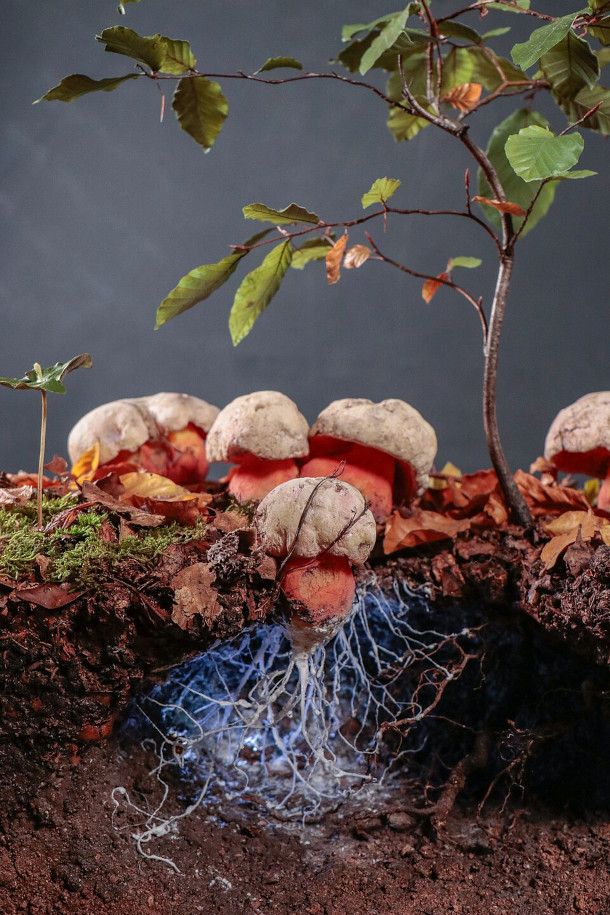
Montgomery also notes that trees are never living in isolation; tree roots often communicate with networks of fungi and bacteria to pass important nutrients through the soil. She likens this relationship to the importance of community in our lives. Above, a diorama of a fungus known as the devil’s bolete, interacting with the roots of a beech tree. (Photo: Sebastian Brandt, Wikimedia Commons, CC BY 4.0)
MONTGOMERY: You know, I think part of that is evidence of a challenge that we've had in this country, I think about Robert Bullard and others who've talked about environmental justice, and often our ways in which we've moved into spaces have caused us to move plant life and other life out, and I think that there are costs to that. I think that it is a deficit when people aren't able to engage with trees, and sometimes they find parks in other places in the city, but for me, I find it a little sad when we don't have those spaces where we have access to trees, the oxygen that they produce, but also the relationships that we can have with them.
CURWOOD: Beronda, what do you hope readers will take away from When Trees Testify?
MONTGOMERY: You know, it's my hope that the stories that I'm able to share and the science that I'm able to share may get people to take a second look at trees and to think about how they think about them as a part of their own lives, to be more aware of the trees that they live with. You'd be surprised how many people don't even know the trees in their yard, or how many there are. I also hope that the idea that our breath is captured in the trees may get people to think about who's lived with the tree before they have, and to have interest in their life, but also, and I know I'm a little bit - my son says I get a little bit too deep, but for me this idea that my breath is captured by the tree has caused me to think about what it means to live a life worthy of that, and I hope that people will just think about, you know, what it means for us to live together with trees on the planet, and for anyone who's been impacted by an old tree, how are you living such that people in future generations might also have that opportunity. So, I want people to think differently about trees and what it means to live together with them.
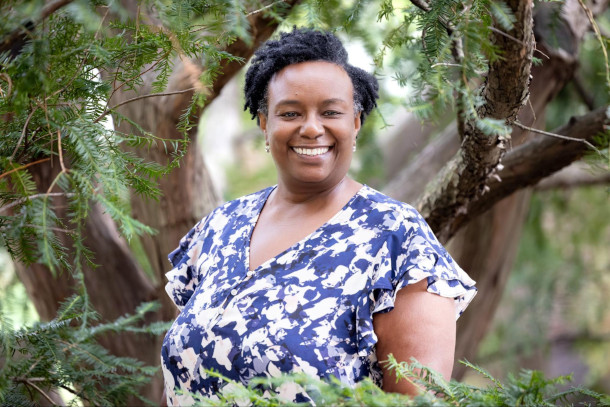
Beronda L. Montgomery is a science communicator, researcher, and author of When Trees Testify: Science, Wisdom, History, and America’s Black Botanical Legacy. (Photo: Courtesy of Beronda Montgomery)
CURWOOD: Beronda Montgomery is the author of When Trees Testify: Science, Wisdom, History, and America's Black Botanical Legacy. Beronda, thanks so much for taking the time to speak with us.
MONTGOMERY: Thank you so much for the opportunity.
CURWOOD: The right to live their own lives that was finally granted to enslaved Americans in the Jubilee of 1865 is celebrated today as Juneteenth. Folks party with music, dance and lots of red foods. Strawberry soda and hibiscus tea, red beans and rice, red velvet cake, watermelon and of course, barbeque. And the sweetest taste is of freedom, finally won to atone for America’s original sin of buying and selling people. Jump for joy!
Related links:
- Harvard Radcliffe Institute | Learn more about Beronda Montgomery
- Looking for a copy of the book? Consider purchasing through Living on Earth + Bookshop, which supports independent bookstores and nonprofits like LOE
- Oprah Daily | “The Traditional Foods of Juneteenth Carry a Rich History”
- Listen to Part 1 of this conversation
[MUSIC: Hal Leonard Jazz Ensemble, “Cotton Tail” by Duke Ellington/arranged by Mark Taylor, on Young Jazz Classics - Grade 3]
CURWOOD: Living on Earth is produced by the World Media Foundation. Our crew includes Naomi Arenberg, Paloma Beltran, Mia DiLorenzo, Jenni Doering, Abby Edgecumbe, Swayam Gagneja, Mark Kausch, Mark Seth Lender, Don Lyman, Ashanti Mclean, Nhung Nguyen, Aynsley O’Neill, Sophia Pandelidis, Jake Rego, Andrew Skerritt, Bella Smith, and El Wilson. Tom Tiger engineered our show. Allison Lirish Dean composed our themes. You can hear us anytime at L-O-E dot org, Apple Podcasts and YouTube Music, And we always welcome your feedback at comments at loe.org. I’m Steve Curwood. Thanks for listening and Happy Juneteenth!
ANNOUNCER: Funding for Living on Earth comes from you, our listeners, and from the University of Massachusetts, Boston, in association with its School for the Environment, developing the next generation of environmental leaders. And from the Grantham Foundation for the protection of the environment, supporting strategic communications and collaboration in solving the world’s most pressing environmental problems.
ANNOUNCER 2: PRX.
Living on Earth wants to hear from you!
Living on Earth
62 Calef Highway, Suite 212
Lee, NH 03861
Telephone: 617-287-4121
E-mail: comments@loe.org
Newsletter [Click here]
Donate to Living on Earth!
Living on Earth is an independent media program and relies entirely on contributions from listeners and institutions supporting public service. Please donate now to preserve an independent environmental voice.
NewsletterLiving on Earth offers a weekly delivery of the show's rundown to your mailbox. Sign up for our newsletter today!
 Sailors For The Sea: Be the change you want to sea.
 The Grantham Foundation for the Protection of the Environment: Committed to protecting and improving the health of the global environment.
 Contribute to Living on Earth and receive, as our gift to you, an archival print of one of Mark Seth Lender's extraordinary wildlife photographs. Follow the link to see Mark's current collection of photographs.
 Buy a signed copy of Mark Seth Lender's book Smeagull the Seagull & support Living on Earth
© Copyright World Media Foundation. All Rights Reserved
Home | Contact | RSS | Donate | Newsletter