

Trump Ices Climate Diplomacy
Air Date: Week of January 16, 2026
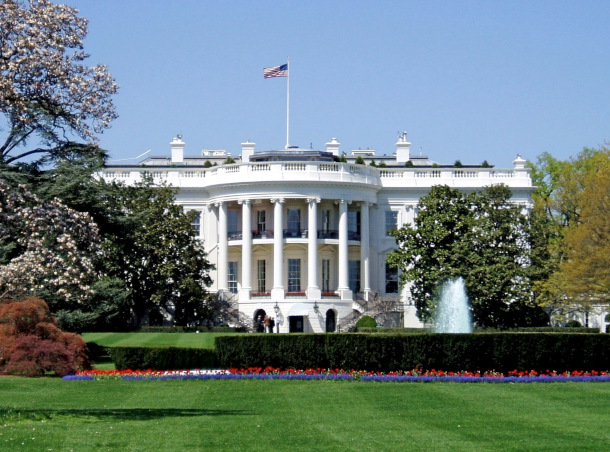
President Trump recently announced the United States’ withdrawal from over 60 international treaties and organizations. (Photo: Matt H. Wade, Wikimedia Commons, CC BY-SA 3.0)
The Trump Administration recently announced plans to withdraw the United States from dozens of United Nations treaties and organizations including the UN Framework Convention on Climate Change, a treaty that was ratified by the US Senate in 1992 and is the key international forum for addressing the climate crisis. Marianne Lavelle, the Washington Bureau Chief for Inside Climate News, speaks with Host Jenni Doering about what this decision could mean for global climate progress.
Transcript
BELTRAN: From PRX and the Jennifer and Ted Stanley Studios at the University of Massachusetts Boston, this is Living on Earth, I’m Paloma Beltran.
DOERING: And I’m Jenni Doering.
The Trump Administration recently announced plans to withdraw the United States from over 60 international treaties and organizations, many of which concern climate change. One of them is the United Nations Framework Convention on Climate Change or UNFCCC, a treaty that was ratified by the US Senate in 1992 and is the key international forum for addressing the climate crisis. The US will also bow out of UN Water, UN Oceans, the International Energy Forum, and the Intergovernmental Panel on Climate Change or IPCC, which provides vital reports on the state of climate science every few years.
Joining us now to discuss is Marianne Lavelle, the Washington Bureau Chief for our media partner Inside Climate News. Welcome back to Living on Earth, Marianne!
LAVELLE: Glad to be here with you, Jenni.
DOERING: What rationale is the Trump administration providing for withdrawing from all of these different organizations and treaties?

An event at COP30, “Connecting solutions and accelerating implementation actions,” took place in Brazil in 2025. One of the treaties the US will exit is the UN Convention on Climate Change, or UNFCCC, which is the treaty which forms the basis for the annual Conference of the Parties climate meetings. (Photo: hlcchampions, Wikimedia Commons, CC BY 4.0)
LAVELLE: Well, the announcement simply said, they are no longer in the US interest. And what that means is the Trump administration has decided it's really not in our interest, not only to have any concern about climate change, but to cooperate and dialog with other nations. And it seems very significant that this happened on the same week as the invasion into Venezuela, which was just a very unilateral move. All of the ground rules that we have, these agreements that really have been the way we function, that we get to influence the direction of policy worldwide. Just the idea that we walk away from that table is really quite dramatic, since we are the country that it took the lead in establishing the world order after the devastation of World War Two, deciding that cooperation is better than war. And on climate change, it's a recognition that this is a global problem that one country cannot solve alone, and often the US role has been to slow down action more than other nations have wanted to move and it's just striking that even that amount of leverage the President has decided is no longer needed.
DOERING: This latest action certainly seems far beyond the withdrawal of the US from the Paris Climate Agreement, which President Trump has done twice now. So what's the impact of the US exiting virtually all international cooperation on climate?
At the start of Donald Trump’s second term, he pulled the United States out of the 2015 Paris Climate Agreement. On January 7th, 2026 President Trump also formally withdrew from the United Nations Framework Convention on Climate Change (UNFCCC, logo shown above) and the Intergovernmental Panel on Climate Change (IPCC). (Photo: UNclimatechange, Flickr, CC BY 2.0)
LAVELLE: I think that most analysts believe that another country, likely China, will go into that leadership vacuum and really be the country that steers the future direction, and that's not necessarily great for addressing climate change. China still is a very big emitter of fossil fuels. However, it also is a huge, huge investor in alternatives to fossil fuels, and world leader in electric vehicles, in solar and wind energy, and just the fact that it will have a stronger hand in leading the way the rest of the world goes will affect us, but we won't really have a say in the negotiations on how fast we decarbonize.
DOERING: What do you think are some potential economic consequences of eliminating the US from these kinds of international conversations about climate?
LAVELLE: Any company that is doing business globally with other countries that do have climate goals in place are going to be at a disadvantage because they won't have their government kind of at the negotiating table, you know, making the case for them. One really clear example of that is that the European countries are planning to put into place these carbon border adjustments, and that could be an area where really negotiation would be needed to be able to export their goods into Europe. So that's just one example of how this really could affect US companies. Most of these multinational companies would like to be selling across all markets, not just in the US.
DOERING: Marianne, what's the practical impact of the US withdrawing from the world's main climate science body, the Intergovernmental Panel on Climate Change, or IPCC?
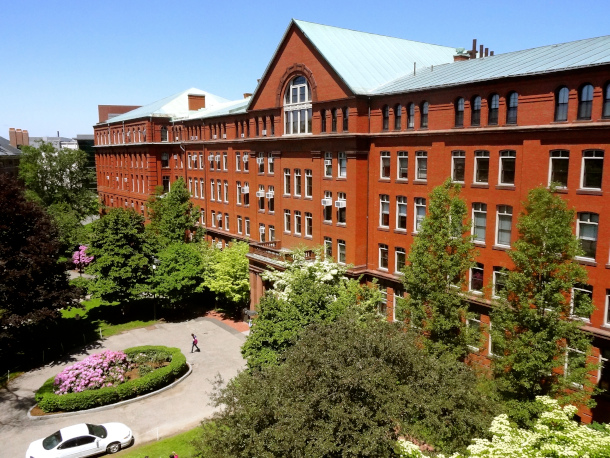
Many U.S. scientists have continued their work with the IPCC despite the federal government’s withdrawal from the UN body. Scientists are often funded by or affiliated with U.S. universities including Harvard University, (pictured above) which have also been under attack by the Trump administration. (Photo: Rizka, Wikimedia Commons, CC BY 3.0)
LAVELLE: Yes, so that's a really interesting question, because right now, there are about 50 US scientists who are participating in the latest assessment. I think they actually had their first meeting in December, and all of the US scientists, and this is for the first time, I believe that this has happened, the US scientists are not government scientists. They're all with other universities or institutions. They're private citizens, really, who are participating. It's kind of a volunteer sort of thing, but this is what they're doing on their own. Does the US have any way of stopping them? I don't think so. But does the Trump administration have leverage over their institutions? Obviously, the Trump administration has done that. We've seen what it did to Harvard and Columbia over the last year, so I think we have to see what's really going to happen. The US scientists have so much to contribute to that assessment. They, in many cases, are leaders in these realms of science. And there's so many realms of science involved, from energy technologies to marine science to weather and atmospheric science. It's not clear that these US scientists can be stopped from participating, but pressure can be put on them, and it can just kind of change the whole cooperative flavor of the IPCC.
DOERING: Now, I know this is a huge question, but what do you think withdrawing from these organizations and treaties means for the climate?

China currently leads the world in renewable energy development, giving it greater leverage to steer global climate action while the U.S. retreats from that world stage. (Photo: Roy Bury, Wikimedia Commons, CC0 1.0 Universal)
LAVELLE: It definitely remains to be seen. It is clear that the Trump administration's bet or wager is that without the United States, the Framework Convention, all of the world action on climate can't really go anywhere. He made that clear when he spoke at the UN last fall. He called Climate Change a con job. He wants other countries to stop their action on climate, and he wants them to buy us natural gas, for instance, and US oil. So that's one possible scenario that, you know, it all falls apart, and we don't have a world that worries about climate change. I think that that's a pretty unlikely scenario. I think despite everything the US has done to drag its feet over the last few years, Europe and Asia have really moved forward into clean energy technologies and decarbonization. I think that that is the future, and it makes the US have less of a hand in shaping the global future.
DOERING: Of course, when the first Trump administration pulled the US out of the Paris Agreement, a bunch of cities, mayors, businesses, organizations, they said, we are still in and they sort of formed a coalition around that. And so similarly, as we see the US pulling out of the underlying UN Framework Convention on Climate Change that dates all the way back to 1992, to what extent do you think local organizations and local governments within the US will try to step up and keep participating in these international forums on climate?
LAVELLE: Well, this was the biggest response that we heard when this happened, was state and local governments saying, we're still in, and we're setting our goals and we're taking action to reduce greenhouse gas emissions, and I know that they will continue with that work. However, what's different this time than last is that the Trump administration is actually aggressively going after the states and local governments to argue in court that they do not have the legal authority to act. For example, there are some ordinances in California that new buildings need to be electric, not using natural gas. The Trump administration sued two of those communities last week. At the same time, the Trump administration is suing New York and Vermont and Hawaii, which are all trying to have climate change laws.
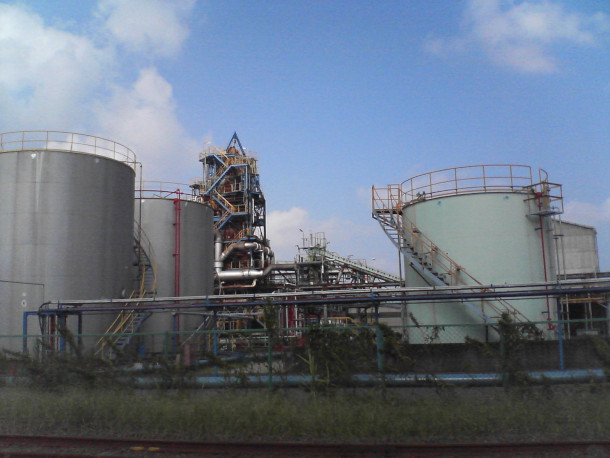
The U.S. remains the world’s largest historical greenhouse gas polluter. Its withdrawal from global climate treaties also raises questions about how the fight against the climate crisis will be financed. (Photo: tokage.shippo, Flickr, CC BY-NC-SA 2.0)
DOERING: Yeah, these are the like "Climate Superfund" laws, I think you're referring to.
LAVELLE: Right, that New York and Vermont have "Climate Superfund" laws. So the Trump administration is saying those laws are illegal. So you have to watch, because this is a really multi-pronged effort. The Trump administration is not just saying, hey, we're not going to do anything about climate change at the federal government. They're trying to stop states from acting. And in a real sense, through this withdrawal from the international treaties and organizations, the Trump administration is trying to stop the rest of the world from acting on climate change. It's like a multi-pronged strategy.
DOERING: And by the way, Marianne, what's the legal basis for the President of the United States to do this alone, to pull out of all of these organizations and treaties by himself? The UNFCCC was ratified by the US Senate in 1992, so for example, does the Senate need to give its consent for withdrawal?
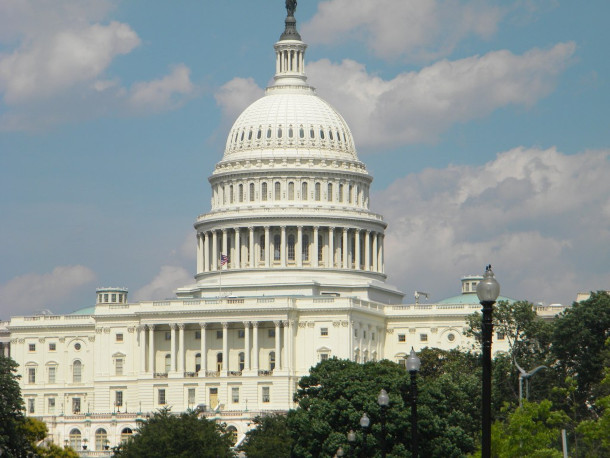
Under the Constitution, the U.S. can join a treaty only if it is ratified by a ⅔ vote in the Senate, but there are no constitutional rules for withdrawing from one. Many scholars have questioned the legality of Trump’s withdrawal from global treaties like the UNFCCC without obtaining Senate approval. (Photo: ttarasiuk, Flickr, CC BY 2.0)
LAVELLE: These are all questions that are yet to be answered, and the fact that the Trump administration is taking this action means that it wants to test the legality or test really the meaning of the constitutional requirement that the Senate ratify international treaties. Under the Constitution, the US cannot enter into a treaty without ratification by the Senate, a vote by more than two thirds of the Senate, but it never has been tested of whether the President can exit a treaty that the Senate has already approved and ratified just on his own. If he can, it really dilutes the meaning of ratification. And the Trump administration most certainly will face a legal challenge over this, and it could very well be an issue that goes all the way up to the Supreme Court. And you know, depending on how it rules, that could really change the landscape on international treaties in the future.
DOERING: What are the stakes of the US, a major economic power, still a superpower, what are the stakes when it comes to us walking away from climate and international cooperation?

Marianne Lavelle is the Washington Bureau Chief for our media partner, Inside Climate News. (Photo: Courtesy of Marianne Lavelle)
LAVELLE: Well, it's very harmful to the credibility of the whole process. If the largest historic contributor to world greenhouse gasses isn't doing anything about its greenhouse gasses, how do you urge other countries to act when it's not going to have any impact compared to the impact if the US reduced its emissions. Also just finance for those countries that did almost nothing to cause the climate crisis but are feeling the worst effects. One of the most hotly negotiated things over the last ten years has been to get some relief and funding for those countries, if for no other reason than to stop the climate migration crisis that is ahead of us if we don't do anything. So there's lots of good, self interested reasons for the United States to be involved in doing something about climate change, and I'm not sure that just asserting, it's not a problem, is going to prevail when, obviously, the impacts are already happening all over the world.
DOERING: Marianne Lavelle is the Washington bureau chief for our media partner, Inside Climate News. Thank you so much as always, Marianne.
LAVELLE: Thank you, Jenni, glad to be here.
Links
The White House | “At UN, President Trump Champions Sovereignty, Rejects Globalism”
Heatmap | “Can Trump Exit a Senate-Approved Treaty? The Constitution Doesn’t Say.”
European Commission | “Carbon Border Adjustment Mechanism (CBAM)”
Earth.org | “A Closer Look at the ‘Climate Superfund’ Laws Trump Is Threatening to End”
Living on Earth wants to hear from you!
Living on Earth
62 Calef Highway, Suite 212
Lee, NH 03861
Telephone: 617-287-4121
E-mail: comments@loe.org
Newsletter [Click here]
Donate to Living on Earth!
Living on Earth is an independent media program and relies entirely on contributions from listeners and institutions supporting public service. Please donate now to preserve an independent environmental voice.
NewsletterLiving on Earth offers a weekly delivery of the show's rundown to your mailbox. Sign up for our newsletter today!
 Sailors For The Sea: Be the change you want to sea.
 The Grantham Foundation for the Protection of the Environment: Committed to protecting and improving the health of the global environment.
 Contribute to Living on Earth and receive, as our gift to you, an archival print of one of Mark Seth Lender's extraordinary wildlife photographs. Follow the link to see Mark's current collection of photographs.
 Buy a signed copy of Mark Seth Lender's book Smeagull the Seagull & support Living on Earth
© Copyright World Media Foundation. All Rights Reserved
Home | Contact | RSS | Donate | Newsletter