

US Leaves Top Climate Science Body
Air Date: Week of January 23, 2026
On January 7th, 2026 President Trump formally withdrew the United States from the Intergovernmental Panel on Climate Change (IPCC, logo shown above). (Photo: Intergovernmental Panel on Climate Change, Wikimedia Commons, CC0)
The Trump Administration is withdrawing the US from the scientific Intergovernmental Panel on Climate Change or IPCC, which reports agreement about the basic scientific facts of global warming and the impact of core technologies to address it. Physicist and climate scientist Bill Hare, a lead author of the IPCC fourth assessment report in 2007, tells Host Steve Curwood about how the fossil fuel industry has long pushed for such an action.
Transcript
BELTRAN: From PRX and the Jennifer and Ted Stanley Studios at the University of Massachusetts Boston, this is Living on Earth. I’m Paloma Beltran.
CURWOOD: And I’m Steve Curwood.
As the Trump administration continues to go it alone in foreign relations, the US is now the only country to say it’s getting out of the scientific Intergovernmental Panel on Climate Change, as well as the climate treaty. The hundreds of scientists and more than 100 countries of the IPCC are behind the official finding that the world should not get warmer on average than one and a half degrees Celsius over preindustrial times. The IPCC reports agreement about the basic scientific facts of global warming and the impact of core technologies to address it. Bill Hare is a leading physicist and climate scientist who was a lead author of the IPCC fourth assessment report in 2007, the year its scientists and Al Gore were jointly awarded the Nobel Peace Prize. He’s now the CEO and founder of Climate Analytics, a non-profit based in Berlin and joins me now. Welcome back to Living on Earth, Dr. Hare!
HARE: Thanks, G'day.
CURWOOD: So before we delve into the US's recent actions, please talk us through why the IPCC was formed back in 1988.
HARE: Well, look, the vision behind the IPCC being formed was to have a place where governments had to agree in common the scientific understanding of climate change. That was the vision that Professor Bolin of Sweden had in initiating the IPCC, that the scientists could do their work, but the question was, would the governments hear the message, and what would they understand? So his idea was to get an intergovernmental scientific body that would do the science and then negotiate an agreed summary of that science between all of the governments. That was the intergovernmental part of it, and his vision then was that there couldn't be a government walking away from that kind of process saying, I didn't know or I disagree, because they all had to sit in one room and agree.
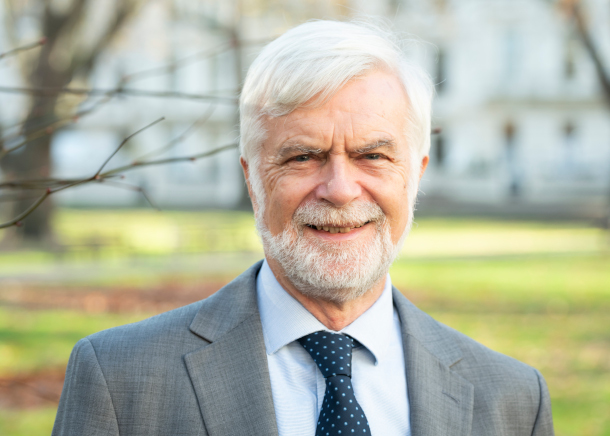
Jim Skea, current chair of the IPCC. The IPCC was formed as a way for governments to develop a consensus around understandings of climate change. (Photo: Orso3553, Wikimedia Commons, CC BY-SA 4.0)
CURWOOD: Why does President Trump want to get out of, or even get rid of the IPCC? Why now? And why is the United States the only country to do so to date?
HARE: Well, look, I would stand back a bit. Look at it from a historical point of view. I don't think this position that Trump has got has just popped out of a clear blue sky this year. It's been, I guess, 30 years in development. We've had a 30-year period now, where there's been an increasing challenging of climate science by the fossil fuel industry, and fossil fuel industry-funded, primarily US, but not only US, think tanks. And during that whole period, of course, the IPCC has been a critical focus of their attention. It's a major threat, was viewed as major threat by those in the fossil fuel industry that were very opposed to action. So to de-legitimize or water down an IPCC report was one of the main games they played in the 90s and 2000s and beyond. So I see it as the logical continuation of that campaign, and that steadily increased, I would say, over the years, and has variously impacted different American administrations, and most forcefully it's impacted on the Trump administration. The Heritage Foundation mapped out what to do about the IPCC, which was more or less to get rid of it and withdraw from it. And that's actually happening, but that isn't really a very modern idea. It's been around for a long time, and it's just now reached the full force of having a president that's willing to do so for the first time in the history of the IPCC.
CURWOOD: Why is the United States the only country to do so now?
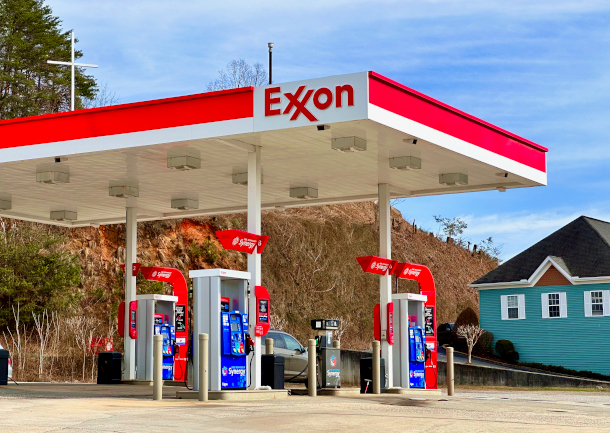
Fossil fuel companies such as ExxonMobil have viewed the IPCC’s research as major threats to their businesses. Our guest, Dr. Bill Hare, suggests that the Trump administration’s withdrawal from the IPCC may signal these companies’ outsized influence in the political process. (Photo: Harrison Keely, Wikimedia Commons, CC BY 4.0)
HARE: Well, I think you've got a really extreme case in the US where big money, and fossil fuel money in particular, has an outsized impact politically on government. I think that's at least looking from the outside and observing the US over many years, I say that is probably the main reason, whereas other governments might not like what the IPCC says, but they don't feel able to walk away from it, and parts of their government, all governments are complicated, parts of government really want to see IPCC reports. They need them. So there's a big momentum behind having an IPCC and an IPCC report cycle from the 100 plus governments that belong to the IPCC, and that creates an interest in it continuing, and the US is a bit of an outlier now, in walking away from it.
CURWOOD: What's the impact of the US getting out of the IPCC? I mean, how big a deal is this?
HARE: Well, it's obviously not good. It's quite bad. There's no doubt about that. Is it catastrophic? No. Is it going to undermine and block the IPCC assessment? No. I look at this in a bigger way. I look at the US withdrawal from the climate convention, climate treaty, the Paris Agreement, IPCC, as a cluster of issues going on that are quite negative. The thing that's not really clear yet is, is this going to be really damaging to the international system of acting on climate change, or is it going to be a nuisance, right? And right now, I would say it looks more like a nuisance than a fundamental problem. We haven't had the US engaged in the climate negotiations now for a year, the system didn't fall over. It's moving forward. I don't see it having the same kind of damage that it would have had 30 years ago. When the IPCC first started, I think the US, UK, Germany, and a few others, Brazil, were really, really important in providing the scientific firepower and governmental backing to get the IPCC going. I think if the US had withdrawn at the time of the second assessment report in 1995 or even the third in 2001, I'm not sure the IPCC would have survived in the way that it has. Now it's 2026, and the IPCC is a much bigger thing. It has a lot more support. Half the authors are from the global south. So many governments see it as a universal source of standard advice on what's going on with climate, what to do about it, how much it's going to cost, how fast we can do it, what the adaptation options are and so on, that it just has so much support, it's going to be very difficult to kill it off, if that is indeed the ambition of those that are behind President Trump's push to exit from it. So I don't think it's going to be really critically damaging right now. I think there's going to be ways of compensating for the US absence. I fear the damage is going to be greater within the US than anywhere else. Why do I fear that? Because I have a lot of friends in the US, a lot of scientific friends, and I fear that what Trump is doing may have very long-lasting consequences. Not going to be really easy to reset and rebuild a lot of the things that have been taken down and destroyed. And economically, I think the US is going to be in a more difficult position in the longer term, because of the pushback to fossil fuels while other countries move on with clean tech. So I think there's different dimensions to how I see it. I see it as a big problem. It's damaging, but I don't see it as a fundamental or catastrophic threat right now.
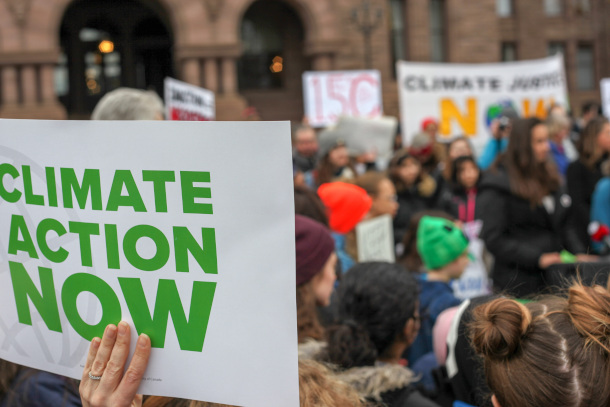
Bill Hare suggests that it is currently unclear whether the U.S.’s withdrawal from the IPCC will stall or limit global climate action. Hare believes that the U.S. is likely to experience threats to its economic stability as it returns to fossil fuels, while other countries move forward with renewable energy. (Photo: Jasmin Sessler, Wikimedia Commons, CC BY 4.0)
CURWOOD: Bill, over the years, the IPCC has been criticized for being a bit too timid with its assessments and in terms of sounding the alarm about what was going on with climate disruption. That has changed, I think, from assessments to assessments. How valid is that criticism and to what extent might it pertain today?
HARE: Well, look that criticism's been out there ever since the IPCC started, in a way, when the first assessment report came along, and I know Greenpeace at the time, I wasn't working for Greenpeace then, was making a big point that the IPCC should be giving a much sharper, risk-based assessment. At the time, I felt that was correct. But I must say, over the years, I've come to understand, or my own feeling is that the IPCC has done a reasonably good job of providing a very solid assessment, given its limitations. By that, I mean, if you're going to have 500 scientists try and agree something, and then you've got 120 governments trying to agree how to describe it. You are not going to get a scary risk assessment, even though you probably should have. On the other hand, the benefit of the IPCC is it does provide a very strong basis for the quite, let's say, strong risk assessments that you can make based on the climate science. Now, I think what you're also hinting at is that the science is moving on, and scientists are getting more and more concerned and alarmed by what they're seeing. And I think that's a fact, and I think you're seeing a lot of progress now on understanding the risks of really extreme events, earth system tipping points, such as meltdown of ice sheets or the collapse of coral reefs. And so now we're observing that, the meltdown of our forests, for example, from drought and fire, putting more carbon in the atmosphere, accelerating warming, these kind of risk assessments, which you could have made back in the 1990s, now are much sharper and much more solidly backed by science than they would have been 30 years ago. I remember George Woodwell from the Woods Hole Center, he's passed away now, but he wrote a whole book about the risk of feedbacks affecting forests and so on. And at that time, it was seen very much as an outlier in the field, didn't really enter the mainstream of IPCC assessments, but the work that's been done in the intervening generation is now showing that we have such a big risk, and we're already seeing it in the atmosphere now as CO2 concentration keeps increasing, even though fossil fuel emissions are flat because of the way in which our natural carbon cycle is weakening. So, yeah, I think the IPCC plays a role. It's a very important one. But you could never expect an intergovernmental body to really come up with a very, very sharp risk assessment unless it's an absolute catastrophe, I'm afraid.
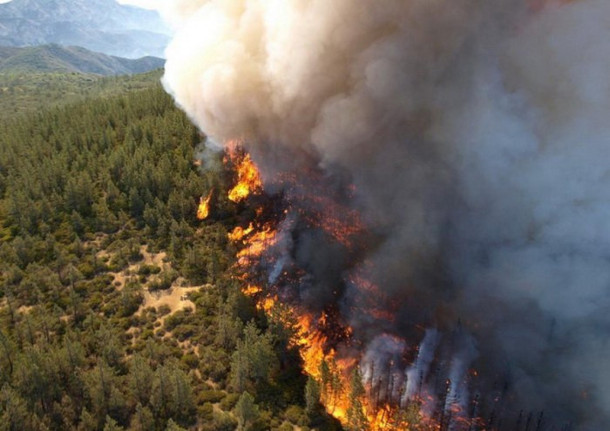
The IPCC has faced criticism that its reports do not state the risks of climate change severely enough, particularly as risk assessments around catastrophic events like wildfires, drought, and melting ice caps now have more solid backing from scientific research. Hare said that he expects to see a greater emphasis on systemic risks in the next Synthesis Report, which will be published in late 2029. (Photo: Salam2009, Wikimedia Commons, CC BY-SA 4.0)
CURWOOD: And today, though, I mean, how close to the risk of catastrophe is the IPCC talking? We're, what, at the sixth assessment report now?
HARE: Well, you can read the sixth assessment report, and there's some pretty strong messages there, in a way, about the risk that we're running. And it depends how you read it. You know, we know that by the time you get to two degrees warming, we're running out of adaptation options in many places. We know that we run the risk of multimeter sea level rise, two degrees warming or a bit above from ice sheet disintegration. Those messages came very strongly through the sixth assessment report in a way they never had before. But the word "catastrophe" was not used because a catastrophe might mean something much bigger than what I've just described. Everyone's going to have their own view about it. It's not really a good, strong scientific definition of what a catastrophe is, apart from maybe the earth running into an asteroid or something like that. So that's, that's always going to be difficult for the IPCC to deal with. But on the other hand, the IPCC has got a lot better at grappling with these issues, I think, and I think we will see a bigger emphasis on these big, systematic, systemic risks, earth system risks coming through this next assessment. There's going to be a lot more work on it, because there's a lot better science now than there was even, say, 15 years ago.
CURWOOD: Bill Hare, what gives you hope, both about continuing the data gathering of the IPCC and its process, but also getting the world to act quickly enough to avoid the worst of the climate disruption that we seem to be on track to experience?
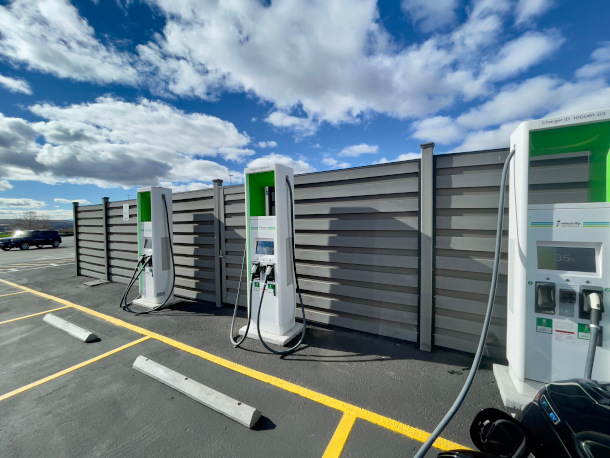
Despite the U.S.’s retreat from the global stage, as of now climate action continues to move forward around the world. Particularly, new mitigation technologies, such as batteries and renewable energy infrastructure, continue to be developed and deployed at a rapid rate. (Photo: Gregory Varnum, Wikimedia Commons, CC BY-SA 4.0)
HARE: You know, that's quite a profound question, in a way, because I think anyone who follows the climate change problem closely or even just reads the news, is entitled to get a bit panicky and scared about what's happening. And I think that's quite a common phenomenon now. So it's quite natural then I think, given what we're observing, for people to be fearful, scared, worried, even fatalistic. The question is, where does hope come from? And hope comes from trying to do something about it, I think. I think it's the message that Jane Goodall left us all, is that you make hope, it doesn't just happen. So I get my hope from seeing what is happening and looking at the at the things that are working and that are happening at scale, and working out how to contribute to making that go faster. And there are some positive things happening out there, particularly in the mitigation space, reducing emissions space. We're seeing the massive rollout of renewable energy globally. We're seeing the acceleration of electric vehicles. We're seeing cost of batteries dropping, which is affecting energy markets from California to Southern Africa in a very profound way. So that's positive. That's happening. It's going to be hard for any one government to stop.
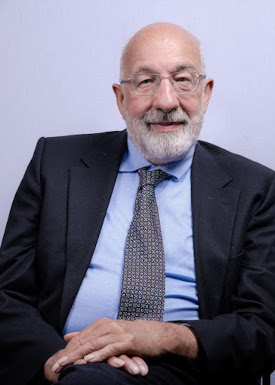
Dr. Bill Hare is a physicist and climate scientist who has contributed to international climate negotiations for over thirty years, including serving as a lead author of the IPCC fourth assessment report. He’s now the CEO and founder of Climate Analytics, a non-profit based in Berlin. (Photo: Climate Analytics)
The fear, of course, on the other side, is it happening fast enough? But I think if one gets too focused on the drama, if I might put it, of the Trump administration, and you could begin to imagine that the actions of the Trump administration and the US could significantly slow down climate action, and they definitely are, in the United States. I don't see a lot of evidence yet of that translating into a slowdown in many other places. It could happen, and probably in some places will happen. But in general, we see still forward movement in the energy markets on the clean energy tech that I've mentioned. So I think there are grounds for optimism. There's also grounds for profound concern, and the way that I get my hope is focusing on what to do about accelerating those things that will make a big difference.
CURWOOD: Bill Hare is a physicist and climate scientist who was one of the lead authors of the IPCC Fourth Assessment. He is now the CEO and founder of Climate Analytics, a nonprofit based in Berlin, Germany. Thanks so much, Dr. Hare, for taking the time with us today.
HARE: Yeah, thanks for the talk. It was great.
Links
IPCC | IPCC Statement on US Withdrawal (8 Jan 2026)
Nature | US Quitting 66 Global Agencies: What Does This Mean for Science? (20 Jan 2026)
Read the full IPCC sixth assessment report published in 2023
Living on Earth wants to hear from you!
Living on Earth
62 Calef Highway, Suite 212
Lee, NH 03861
Telephone: 617-287-4121
E-mail: comments@loe.org
Newsletter [Click here]
Donate to Living on Earth!
Living on Earth is an independent media program and relies entirely on contributions from listeners and institutions supporting public service. Please donate now to preserve an independent environmental voice.
NewsletterLiving on Earth offers a weekly delivery of the show's rundown to your mailbox. Sign up for our newsletter today!
 Sailors For The Sea: Be the change you want to sea.
 The Grantham Foundation for the Protection of the Environment: Committed to protecting and improving the health of the global environment.
 Contribute to Living on Earth and receive, as our gift to you, an archival print of one of Mark Seth Lender's extraordinary wildlife photographs. Follow the link to see Mark's current collection of photographs.
 Buy a signed copy of Mark Seth Lender's book Smeagull the Seagull & support Living on Earth
© Copyright World Media Foundation. All Rights Reserved
Home | Contact | RSS | Donate | Newsletter