

March 20, 2026
Air Date: March 20, 2026
FULL SHOW
SEGMENTS
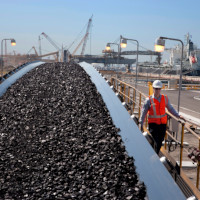
Vanguard Retreats from ESG
View the page for this story
The investment giant Vanguard is retreating from its climate initiatives as part of a $30 million settlement deal for an anti-trust lawsuit brought by Republican state attorneys general. The lawsuit alleged that Vanguard and fellow asset managers BlackRock and State Street, which are still fighting the suit, conspired to kill the coal industry. Vanguard did not admit to wrongdoing but is now barred from participating in climate investment watchdog groups such as Ceres. General Counsel for Ceres, Michael Boudett joined Living on Earth Executive Producer Steve Curwood to explain. (11:42)
Iran War and the Price of Oil
View the page for this story
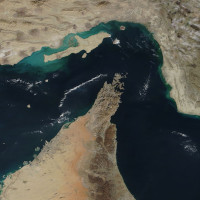
The US and Israel’s war with Iran has stopped many ships from passing through the Strait of Hormuz in the Persian Gulf, a vital shipping corridor especially for fossil fuels, leading to global oil and gas price spikes. Lorne Stockman, the research co-director for Oil Change International, discusses with Host Jenni Doering why US consumers are paying through the roof price despite US dominance on oil and gas production, while oil companies cash in. Meanwhile, countries like Spain with significant renewable energy are enjoying price stability. (10:20)
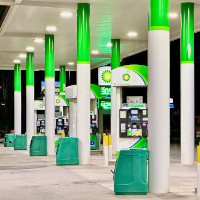
Running Free from Pricey Gas--EVs
View the page for this story
Facing pain at the pump, US drivers looking to buy an electric vehicle now have more and cheaper choices than ever. But with the $7500 federal tax credit for new electric vehicles now gone, you may be wondering whether EVs are the smart buy in 2026. Jim Motavalli, who writes about green transportation for Autoweek, Barron’s and the New York Times shares some insights about EV options, cost and the charging network with Host Aynsley O’Neill. (09:37)

Note on Emerging Science: Lightning-Rod Trees
View the page for this story
An especially tall species of rainforest tree known as the almendro appears to benefit from lightning strikes, according to a 2025 study in the Panama rainforest. Living on Earth’s Don Lyman reports in this note on emerging science that the almendros seem unharmed after lightning strikes, compared to a high mortality rate among other trees and the lightning clears out parasitic vines and competing trees to free up light and nutrients. (02:20)
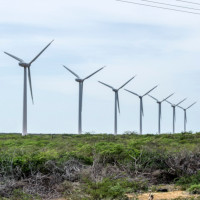
A Vision of a Wind-Powered Venezuela
View the page for this story
Since the US capture of President Nicolás Maduro in early January, there has been a lot of discussion about Venezuela’s massive oil reserves. But it also turns out that Venezuela is ideally positioned to harness abundant clean, renewable energy, particularly from wind. Dr. Paasha Mahdavi, associate professor of political science at UC Santa Barbara and consultant for the Natural Resources Governance Institute, joins Host Jenni Doering to map out this blue-sky vision for a green Venezuela. (12:13)
Show Credits and Funders
Show Transcript
260320 Transcript
HOSTS: Jenni Doering, Aynsley O’Neill
GUESTS: Michael Boudett, Paasha Mahdavi, Jim Motavalli, Lorne Stockman
REPORTERS: Don Lyman
[THEME]
O’NEILL: From PRX – this is Living on Earth.
[THEME]
O’NEILL: I’m Aynsley O’Neill.
DOERING: And I’m Jenni Doering.
The war in Iran highlights the perils of reliance on fossil fuels.
STOCKMAN: The President made a very insensitive statement on his social media accounts when he said, look, it’s great that oil and gas prices are high, because the US produces more oil and gas than any other country, and so we’re making lots of money. But oil companies are making a lot more money, but we are all paying the price.
O’NEILL: And those high gas prices might drive some folks to go electric.
MOTAVALLI: I think it's exactly the right time to buy an EV, specifically because demand is down, prices are lower than they have been, and oil prices are very volatile. It's not likely conflicts are going to go away, and it's not like the climate has decided to take a pause.
O’NEILL: We’ll have that and more, this week on Living on Earth. Stick around!
[NEWSBREAK MUSIC: Boards Of Canada “Zoetrope” from “In A Beautiful Place Out In The Country” (Warp Records 2000)]
[THEME]
Vanguard Retreats from ESG
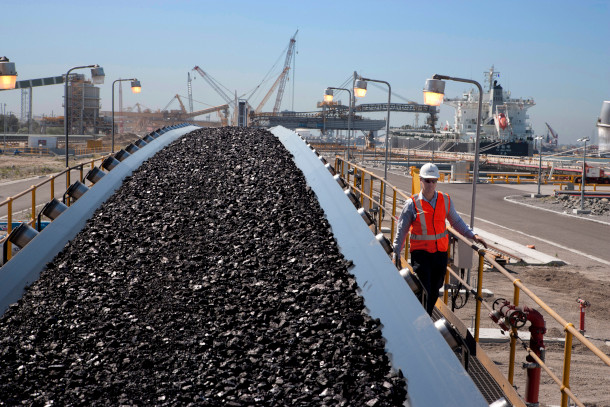
A mining technician oversees a coal export terminal. Republican attorneys general accused Vanguard, BlackRock and State Street of working together to negatively impact the coal industry and raise energy prices. Vanguard has settled the lawsuit but has denied any wrongdoing. BlackRock and State Street are still contesting the allegations. (Photo: Peabody Energy, Wikimedia Commons, CC BY 3.0)
DOERING: From PRX and the Jennifer and Ted Stanley Studios at the University of Massachusetts Boston, this is Living on Earth. I’m Jenni Doering
O’NEILL: And I’m Aynsley O’Neill.
The investment giant Vanguard is retreating from its climate initiatives as part of a settlement deal for an anti-trust lawsuit brought by red state attorneys general, led by Texas AG Ken Paxton. The lawsuit alleged that Vanguard and fellow asset managers BlackRock and State Street, which are still fighting the suit, conspired to kill the coal industry by being involved in climate initiatives that hurt coal companies.
DOERING: Vanguard, which manages more than twelve trillion dollars in global assets, did not admit to wrongdoing but agreed to pay Texas, Missouri, Indiana and ten other Republican-led states about thirty million dollars. Vanguard also agreed to withdraw from the Principles for Responsible Investment network and not participate in any organization that advocates for specific emissions targets or requires climate-focused investment commitments.
O’NEILL: That means it’s barred from participating in the groups Net Zero Asset Managers, Climate Action 100+, and Ceres. Michael Boudett, General Counsel at Ceres, told our Executive Producer Steve Curwood the lawsuit was never really about anti-trust law or financing the coal industry.
BOUDETT: Many politicians feel that there are points to be scored and votes to be won by attacking targets they see as “woke capitalism.” And in my view, that political backdrop has as much to do with this lawsuit as anything else.
CURWOOD: So what was agreed to in the settlement?
BOUDETT: Well the settlement had a lot of terms, some of which are very concerning for those of us in the sustainability movement. One is the large amount of money, I should say, possibly not large in the eyes of Vanguard, which is very, very large, but large to a red state attorney general. But the other terms are, if anything, more concerning. Some of them restrict Vanguard to being purely a passive investor, contrary to its approach in recent years, and some of them restrict what kinds of organizations Vanguard is allowed to join and restrict what kinds of shareholder proposals Vanguard can bring.
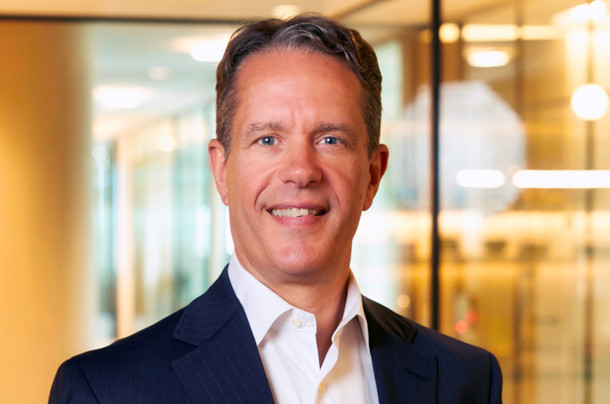
Ceres General Counsel Michael Boudett is concerned that by settling an anti-trust lawsuit brought by 13 Republican state attorneys general, Vanguard gave up its First Amendment right to join organizations concerned with climate and sustainability. Vanguard used to be a member of Ceres, a non-profit advocacy organization that is working to promote the use of more sustainable, cleaner energy. (Photo: Courtesy of Ceres)
CURWOOD: Some say that this settlement that Vanguard has given to these red state attorneys general underscores that for the states that sued, their primary objective is not anti-trust, but it appears to be dismantling participation in climate-focused organizations more than altering day to day investment practices. What does that look like? And why is that a concern?
BOUDETT: Well, it's a concern for many reasons, Steve, and I think that's an accurate observation. It hurts the efficacy of our movement over the long term. You know, the economy follows big money to a degree, and losing influence with large market players is not a good thing for the sustainability movement. The other concern, speaking more as a lawyer, is the First Amendment. I believe that even if the red state attorneys general win this case, they could not get a judge to order a company, “you cannot belong to this association or that association.” That is basic First Amendment, freedom of association principles in play, but Vanguard here voluntarily agreed to do that in a settlement in order to get rid of a case. So that's very concerning from a constitutional point of view as well. And you know, again, we do hope that at least one of these companies continues to fight this case and test it in court.
CURWOOD: So a company like Vanguard has trillions of dollars of assets under management. So while a $29 million payment to have what they see as an annoying lawsuit go away is small, and their scale of doing things for people who invest with them, people at home, perhaps, who have purchased bonds through Vanguard. That's a piece of change. In your view, what is the public and what are consumers and investors losing with this type of settlement?
BOUDETT: Well, they're losing the full benefit of having an asset manager that looks out for their interests, and in our view, part of that role should be talking to companies about their game plan for sustainability and their game plan for climate-related scenario planning and climate-related transition. So you and I, if we own a couple shares in a mutual fund that Vanguard runs, we're not going to go meet with a company, be it Caterpillar or Amazon or whoever. We're not as individuals, going to go meet with that company and say, “Hey, what's your strategy?” We couldn't even get in the door. Vanguard and BlackRock and State Street have the ability to say, ”Hey, collectively, we manage millions of your shares. How about a meeting?” And they'll get that meeting, and they can have a constructive dialogue with the board of directors or the sustainability department of that corporation and have meaningful back and forth. And importantly, Steve, I want to make clear, that meeting centers around profitability as well as sustainability. In other words, if you're a big pension fund or a university endowment or what have you, you want that company to be profitable this quarter, next year and 20 years from now. So you're not telling them, you know, stop doing business because you're harming the planet. Other organizations do that. The kinds of meetings we're talking about are more around, what can you do, consistent with long term profitability, to be more sustainable and reduce your own risk? So a good asset manager would be having those conversations. Vanguard has just promised not to be that kind of asset manager.
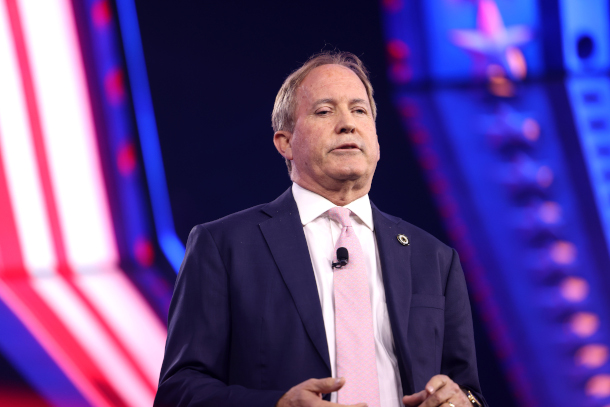
Texas Attorney General Ken Paxton led 12 other Republican state attorneys general in accusing Vanguard, BlackRock and State Street of anti-trust and other violations. In announcing the settlement with Vanguard, Paxton said while Vanguard has taken appropriate action to resolve the case, BlackRock and State Street have continued to ignore state laws, engage in anticompetitive schemes that hurt American energy, and undermine those who use their services to invest. (Photo: Gage Skidmore, Wikimedia Commons, CC BY-SA 2.0)
CURWOOD: Why does Vanguard feel vulnerable on this?
BOUDETT: Well, there are a lot of levers that have been used to influence the big asset managers. They were sent requests for information that were very burdensome from the House Judiciary Committee. Another one is that some states passed laws saying that any asset manager that considered climate related issues, therefore was de facto boycotting the oil and gas industry, so they would go on a boycotter list and be ineligible for handling business in that state, which means important things like being able to manage state pension money in a red state, or bidding for state and local municipal bonds in that state, which is a huge market. So some of them were, in fact, banned by these laws, and very much wanted that business back, and that's another lever that's been used against them.
CURWOOD: Michael, at the same time that Vanguard has agreed to settle this case, there's a former employee at Cushman and Wakefield who's suing that commercial real estate firm for failing to protect its employees' 401K plans from climate related risks. Can you contrast that case to this settlement, please?
BOUDETT: Yeah, it's really interesting that case against Cushman Wakefield that's in Seattle, out in Washington State, and we'll be watching it. Yes, the employee there makes the argument that you, my employer, failed to look out for me because you put on your 401 K Options menu, and many of us have seen these menus where you allocate your retirement contributions. You put on there a fund that did not consider climate risk, and therefore put my money and my retirement security at risk of not considering a whole category of risk. So yes, that makes the argument that an asset manager should, as part of its fiduciary duty, consider all risks, including climate related risks and environmental risks, which is contrary to some of the arguments being made in Texas. It's even more directly contrary, there was a you know, exactly converse case brought down against American Airlines by a pilot, and the pilot argued, you're putting my retirement at risk because you are considering what's called ESG factors, environmental, social, governance factors, the “E” being the most important one to us at Ceres, and that's wrong, and so you've put me at risk. And there was a trial in that case that that pilot won, and there's a district court opinion that later got amended, but it has some, some interesting language. So this case in Washington State argues the opposite, and we'll be watching it closely. It'll be interesting to see as the case plays out, what that fund says about whether it really did consider any climate related risk.
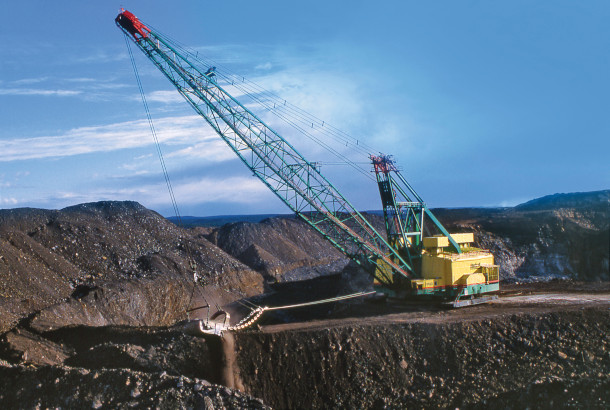
A Marion 8200 working to strip overburden at an opencut coal mine. In announcing the settlement with Vanguard, Texas Attorney General Ken Paxton said “coal is an essential industry to support America’s ever-growing energy demands”, and vowed to “continue to uproot and destroy any attempt by investment giants to push a woke agenda that puts American energy at risk.” (Photo: Peabody Energy, Wikimedia Commons, CC BY 3.0)
CURWOOD: Why should our listeners care about this issue?
BOUDETT: Broadly, most of us hope that our 401K money, and the few of us who have investments beyond that, will be there for us down the road when it's time to retire, and we expect that it will be managed in a way that accounts for risk and minimizes risk. And if companies and asset managers are promising red state attorneys general or other actors out there, we will not think about climate risk. Think about PG&E going bankrupt because of the wildfires in California. I could list many more examples. I won't go on. It's obviously financial. And if you owned shares in PG&E and you lost them in that bankruptcy, you would care a lot. So that's one answer. Then a much more specific answer, Steve, is that people are going to start getting more paperwork coming their way. Because it used to be that your asset manager would take care of all the many, many votes that happen at shareholder meetings, whether it be re-election of the company directors, or whether it be voting on a sustainability related shareholder proposal. We didn't have to think about that because someone else was handling it, and we trusted them to make smart decisions. Now, Vanguard has promised they're not going to play a role in that anymore, and they're going to try and pass through all the voting to individual investors who will now have to deal with all these decisions. They're going to give you a form, and one of the options in that form is going to say, check this box if you just want to agree with management all the time. We hope that many of your listeners choose not to check that box. Management is not always right. Another box will say check here if you would like your shares voted consistent with environmental, social and governance principles. And we hope that many of your listeners will choose to check that box consistent with their values and consistent with smart management of money.
DOERING: That’s Ceres General Counsel Michael Boudett, speaking with Living on Earth Executive Producer, Steve Curwood. On February 26, Vanguard released a statement that reads in part: “We made the decision to settle the litigation filed by the Texas attorney general and other states with our investors’ best interest in mind as it allows us to put this distraction behind us and focus on what matters—giving our investors the best chance for investment success.”
O’NEILL: And in announcing the settlement, Texas Attorney General Ken Paxton vowed to “continue to uproot and destroy any attempt by investment giants to push a woke agenda that puts American energy at risk.” To read the full Vanguard and Texas AG statements visit our website, loe.org.
Related links:
- Reuters | “In Texas, Vanguard Settles Antitrust Lawsuit for $29.5 Million and Renewed Passivity Pledges”
- Read Texas Attorney General Ken Paxton’s press release
- Read the text of the Vanguard settlement agreement
- Vanguard | “Texas Settlement: What Investors Should Know”
- Visit the Ceres website
- Visit the State Street website
- Visit the BlackRock website
[MUSIC: Bill Evans Trio, “How Deep Is The Ocean” on Explorations [Original Jazz Classics Remasters] Concord Music Group Inc.]
O’NEILL: Coming up, what to know if these high gasoline prices have you looking into an electric vehicle. Keep listening to Living on Earth.
ANNOUNCER: Support for Living on Earth comes from the Waverley Street Foundation, working to cultivate a healing planet with community-led programs for better food, healthy farmlands, and smarter building, energy and businesses.
[CUTAWAY MUSIC: Bill Evans Trio, “How Deep Is The Ocean” on Explorations [Original Jazz Classics Remasters] Concord Music Group Inc.]
Iran War and the Price of Oil
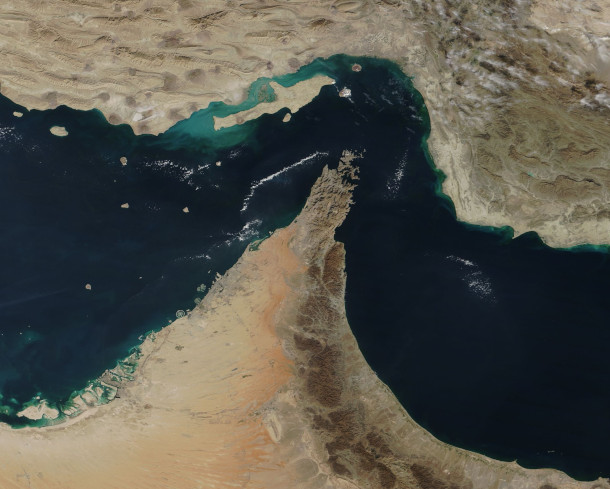
About 20% of the world’s oil is shipped through the Strait of Hormuz, a narrow waterway located in the Persian Gulf that has been closed as a consequence of the US and Israel's war with Iran. (Photo: MODIS Land Rapid Response Team, NASA GSFC, Wikimedia Commons, Public Domain)
O’NEILL: It’s Living on Earth, I’m Aynsley O’Neill.
DOERING: And I’m Jenni Doering.
The US and Israel’s war with Iran that began in late February has slowed and at times stopped ships from passing through the Strait of Hormuz in the Persian Gulf, a vital shipping corridor especially for fossil fuels. Around 20% of both the world’s oil and liquified natural gas, and about a third of the world’s fertilizer all travel through the Strait, and they’ve all been disrupted amid the war, leading to global oil and gas price spikes. Joining us now to discuss how the US-Israel war against Iran is impacting global energy security is Lorne Stockman, the research co-director for Oil Change International. Welcome back to Living on Earth, Lorne!
STOCKMAN: Great. Thank you. It's great to be here.
DOERING: So although most of the oil that passes through the Strait of Hormuz is meant for Asia, we've seen oil and gas prices soar quite a bit here in the US. How are people across the US being impacted by these high prices?
STOCKMAN: Right, yeah. As many people may have seen, it only really took a few days for us to see price rises at gas stations around the country and of course, as time has gone on, that's become more dramatic. That, of course, is impacting people who are simply trying to get to work, trying to get their kids to school. And over time, that is adding to what was really already an energy affordability crisis going on in the US, which was actually more related to gas and electricity, but gasoline prices have been relatively low for the last couple of years. This is now sort of adding another layer on top of an ongoing energy affordability crisis for many people in the US.
DOERING: Now, Lorne in 2022 the Russia-Ukraine conflict also triggered a cost of living crisis. What happened then and how does the chaos caused by this US and Israel military action against Iran compare?
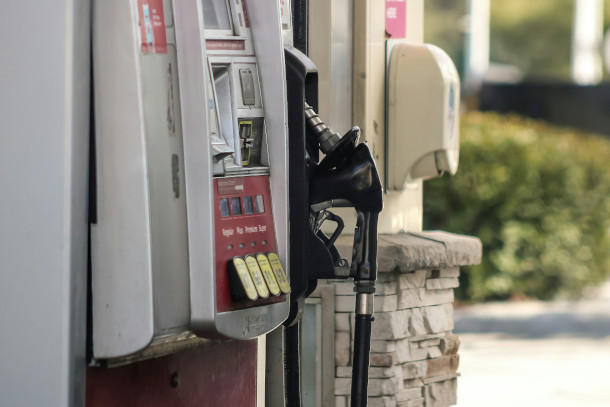
As of March 20, 2026, gas prices have increased approximately a dollar per gallon nationwide as a result of the US and Israel’s war with Iran. (Photo: Dawn McDonald, Unsplash, Unsplash license)
STOCKMAN: Yeah, it's an interesting comparison, actually. So prior to the invasion of Ukraine by Russia in February 2022, there was already a lot of pressure on oil and gas supplies globally. That was partly because the world was coming out of the lockdowns from the COVID pandemic. And so by sort of late 2021 the demand for oil and gas was surging ahead of supply, so we were already seeing some level of supply crunch before Russia invaded Ukraine, and that's why we saw sort of much more dramatic spikes in the oil price than we're actually seeing today. Prior to the US, Israel starting to bomb Iran, the oil market was seen as oversupplied that the growth in demand for oil has actually been slowing in the last year. Supply has been coming on very fast. Outside of the Persian Gulf, mostly in the Americas, in Canada and the US and Brazil and Guyana have been increasing production quite fast and so the market was seen as oversupplied. Now but you know, some people are saying this is the biggest shock, and in some ways it is bigger than in 2022 but the impact depends on how long this goes on.
DOERING: The US produces a lot of oil and gas, exports a lot of that on the global market. Despite that dominance, how vulnerable are we to the pressures on supply caused by this conflict?
STOCKMAN: I think the US is still very vulnerable. It is one of the largest producers and it is exporting into global markets. But that connection to global markets means, when prices rise in the markets that the US is exporting into, the US consumer is now competing with those global markets for that oil and gas. So we saw in 2022, we saw significant increases in the price that US consumers paid for gas to heat their homes in the winter and for electricity, because so much of US electricity, around 40% actually comes from gas fired power plants. So despite being the biggest producer in the world, we're now connected to global markets, and US consumers are in competition with those global markets for the same product. I also think there's an extent to which we have to question whether we'd even be in this situation if the US wasn't a major oil and gas producer. I think there was a certain amount of full security that the Trump administration may have felt in going into this war, which has always been, you know, closing the Strait of Hormuz has always been the nightmare scenario for the oil and gas industry, the oil and gas markets. It's always been the one thing that should be avoided and in fact, the US has spent billions of dollars over the years protecting the Strait of Hormuz and trying to avoid this situation. Now, I think to some extent, this administration felt emboldened by the fact that the US produces more oil and gas than any other country in the world and is an exporter, and perhaps felt that it had some level of security if it did cause a disruption in the Strait. And I think what we're learning is that was a false sense of security, and we're going to see these impacts despite the fact that the US produces all this oil and gas.
DOERING: You know, how does the fossil fuel industry benefit from this volatility and conflict?
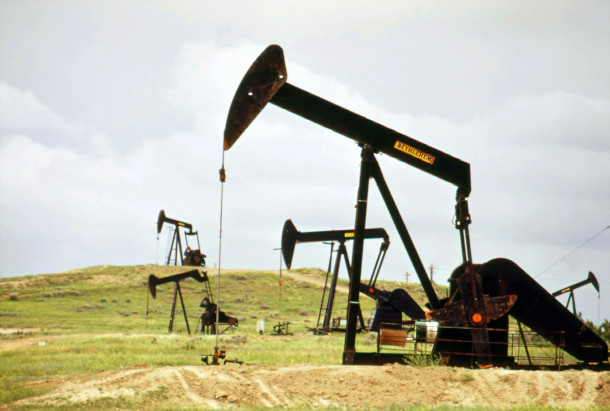
The United States is the biggest oil exporter in the world. The photo shows oil pumpjacks extracting oil in Wyoming. (Photo: Documerica, Unsplash, Unsplash license)
STOCKMAN: So the President made a very insensitive statement on his social media accounts just recently when he said, look, it's great that oil and gas prices are high because the US produces more oil and gas than any other country, and so we're making lots of money, but when we look at who is making the money and who is paying, oil companies are making a lot more money, but we are all paying for that. We're the source of those extra revenues, right? We're paying the price. We saw in 2022 that with the oil prices staying high for much of the year, oil companies got a massive windfall, had record profits, my organization, Oil Change International, we actually did an analysis just of the top American companies, and they received a windfall in 2022 of around $200 billion. In the current crisis, it's a little bit early to say a lot depends on how long it goes on for and how high prices go. But just recently, the Department of Energy reassessed the oil price for 2026 and they raised their expectation for average oil prices from 53 to $73 per barrel, that's a $20 difference.
DOERING: Wow, that's huge.
STOCKMAN: Yeah, they also said, you know, we might have to reassess this, depending on how long this goes on, right? So it could be a lot worse. And just based on that $20 difference, US crude oil producers are in line to make an additional 100 billion dollars over 2026 just on that average $20 difference. That also doesn't include the gas and the natural gas liquids, the other things that they produce from oil and gas wells. So that's just based on the crude oil price. So they're in line to make a massive windfall. In Europe and in the UK in 2022 those governments imposed a windfall tax on the oil and gas industry because they saw that their citizens were struggling with a cost of living crisis that was mainly based in the price of energy, the price of oil and gas. The US hasn't done that.
DOERING: So how do we break this cycle of vulnerability to oil and gas prices rising, falling, rising again. How do we get out of this?
STOCKMAN: Well, we reduce our use of oil and gas, right? And that's been happening. We got this shock in 2022 and certainly in Europe and in some other parts of the world, we have seen significant progress in an acceleration in installations of wind and solar and storage. In Europe, the generation of renewable energy shot up 35% from 2022 to 2024 where we have the latest data. I believe in 2025 it's increased even more. So we're actually seeing, you know, particularly the countries that were hit hard in 2022 are actually just that little bit less reliant already, and I think this will reinforce that even more. Unfortunately, the country that is not going in that direction it's turned around and going in the opposite direction is the United States. This administration is all out on fossil fuels, where gas contributes about 40% of electricity generation. It's really become the sort of price setter in the electricity market in the US. This administration has attacked renewable energy projects, you know, I'm thinking specifically of, you know, the big offshore wind projects that were being built off the East Coast, making sort of illegal attacks that have now been reversed, so slowing those projects down, adding to their costs, and it seems to be intent on doing everything it can to slow down affordable renewable energy and promote fossil fuels. But the rest of the world took that signal pretty seriously in 2022 and I believe this situation is only going to reinforce that momentum away from oil and gas and towards cleaner and cheaper and more secure energy.
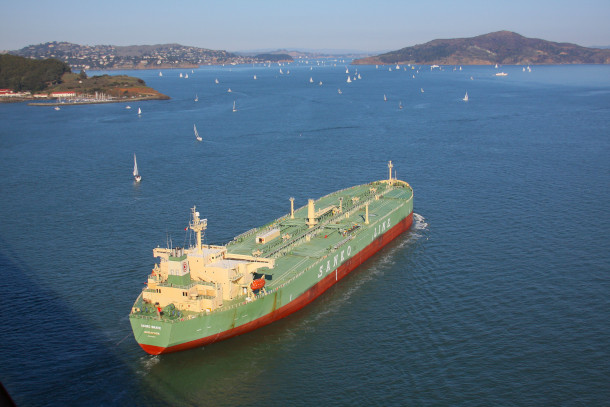
According to market research firm Rystad Energy, American crude oil producers could make an additional 100 billion dollars over 2026 due to rises in prices. (Photo: the_tahoe_guy from San Jose, California, USA, Wikimedia Commons, CC BY 2.0)
DOERING: And to what extent is an economy powered by renewables less vulnerable to this volatility? And why would that be?
STOCKMAN: Well, if you're not reliant on importing fossil fuels, then when these situations come up and the prices spike, you're going to benefit. I mean, actually, it's been quite interesting to look at Spain, you know, we've seen just in the last couple of weeks, electricity prices spiking in some of the European economies, but Spain, which actually has the highest renewable energy penetration on its grid, its electricity prices have been much more stable in the last week or so, with much less volatility and much lower spikes. And that's been noted by some of the other European countries that Spain has managed to kind of disconnect itself to some extent from these crises that we're seeing. So you know, there's a very clear connection between lowering the amount of gas that's flowing into the electricity system and, you know, experiencing lower volatility when these kind of crises take hold.
DOERING: Lorne Stockman is the research co-director for Oil Change International. Thank you so much for joining us today.
STOCKMAN: Thank you.
Related links:
- Inside Climate News | “How Will the War in Iran Affect Your Utility Bills?”
- Read more about Oil Change International’s analysis of how the war with Iran might impact fossil fuel profits
- Inside Climate News | “Iran War Shows That Doubling Down on Fossil Fuels Is ‘Delusional,’ UN Climate Chief Says”
- Read Oil Change International’s response to President Donald Trump’s statement that higher oil prices would benefit the United States
- Keep up with live updates on the US and Israel’s war with Iran
[MUSIC: Tigran Hamasyan, “War Time Poem” on Manifeste, naïve]
Running Free from Pricey Gas--EVs
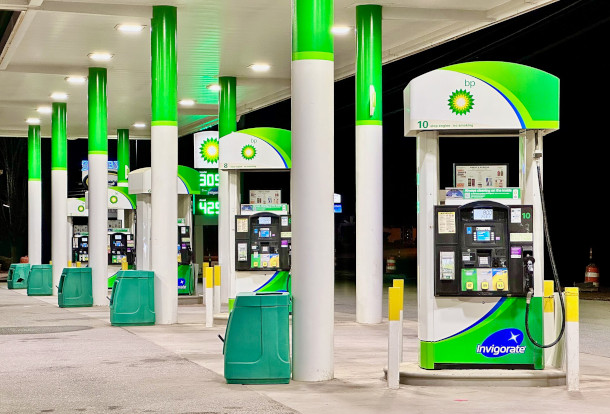
Rising costs at the pump resulting from the war with Iran could push consumers towards electric vehicles. (Photo: Harrison Keely, Wikimedia Commons, CC BY 4.0)
O’NEILL: Pain at the pump might have you dreaming about filling up with electrons instead of gas. US drivers looking to buy an electric vehicle now have more choices than ever and they no longer have to cost you an arm and a leg. But with the $7500 (seventy five hundred dollar) federal tax credit for new electric vehicles now gone, you may be wondering whether EVs are the smart buy here in 2026. Jim Motavalli, who writes about green transportation for Autoweek, Barron’s and
MOTAVALLI: Great to be on.
O'NEILL: Well, so Jim in 2026, if there is a prospective car owner who has a gas car but is thinking that their next purchase might be an EV, what should they keep in mind?
MOTAVALLI: Well, I think there's a lot of reasons to consider an EV right now, and the offerings are probably more attractive than ever before. If you look at the main reasons consumers have had qualms about buying an EV, that had to do with range, and just about every respectable EV is now hovering at or beyond 300 miles of range, and all the EVs have switched to being able to access the Tesla charging network, and Tesla has the best national network of charging stations, and they're pretty much across the country now. You could easily drive an EV across America, or you drive it north or south. Doesn't really matter, there's Tesla stations everywhere, and fear of not being able to find charging has been a major drag on EV sales. Right now, EV sales are really down. They've really sort of cratered. Whether that will continue or not, I'm not sure, and I think we will see a spike in interest because of what people are paying at the pump right now.
O'NEILL: To what extent do you think this drop in EV interest comes from the removal of federal tax credits for EVs? How much did that have an impact on people going well, I'm not sure the money makes sense anymore.
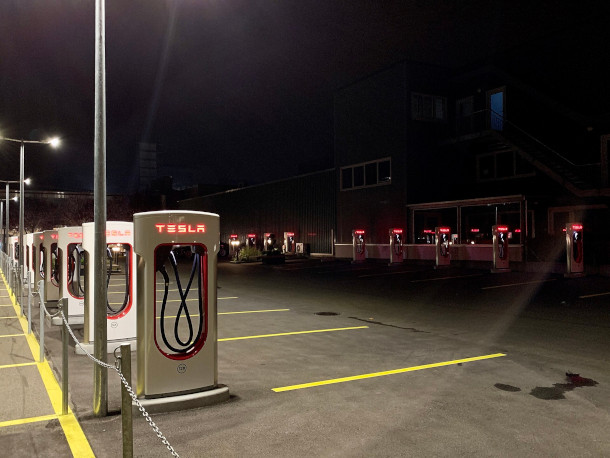
Most EVs are now able to access Tesla’s supercharging network, whose chargers allow drivers to charge their vehicles up to 200 miles in just 15 minutes. (Photo: Ank Kumar, Wikimedia Commons, CC0)
MOTAVALLI: Well, I think unfortunately, we saw a drop off even before that happened. Before Trump took office, one of the first things he did was remove that $7,500 federal income tax credit, but we were seeing a drop off in interest even before that. I also think the federal income tax credit is not as important as it was, because EV prices have come down. If you look at some of the newest options that are in some of the cars that are on the market now, they're actually priced lower than the average price Americans pay for cars. I mean, keep in mind that that price is around $50,000, that's the average price of a vehicle today, and there are a whole lot of EVs that, even without federal subsidies, are well below that. So I think we could actually say we're either close to or at price parity, maybe not all EVs, but there's certainly a lot of available EVs that are below the average of what Americans pay for a car anyway. So I don't think it's critical, that federal income tax credit. It was nice, and I'm sure some people decided not to buy because of that, but in many cases, automakers lowered their prices to sort of compensate for the loss of the federal income tax credit. I think if consumers were to really look at EVs now, they'd see that they're pretty fairly priced, and they could buy a really competent one at prices not exorbitantly more, or even more at all, than a gas car.
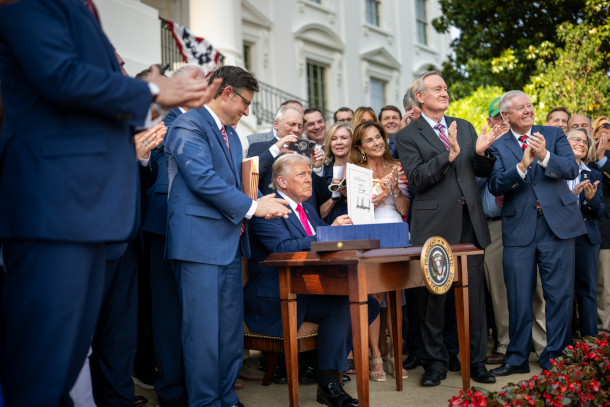
While Trump’s “One Big Beautiful Bill” removed the $7500 tax credit for electric vehicles, interest in EVs had already begun to drop off prior to the legislation’s passage. (Photo: White House, Wikimedia Commons, CC0)
O'NEILL: Well, let's talk a little bit more about the charging network as well. So not only has there been limited charging access, that's been a challenge for EV adoption, but also long charging times. Where does that stand at this moment?
MOTAVALLI: Well, I think the charging companies are doing their best to reduce the amount of time it takes to charge and BYD, which is now the biggest EV producer in the world, Chinese company, took over from Tesla as the biggest producer. They said they can charge an EV, I think it's maybe 10 to 80% in five minutes. And if you could do that in five minutes, then you're not taking appreciably longer than if you were filling up your gas car. Of course, you need a, what's called a DC fast charger. You need a, you can't have that kind of charger in your house. You're not going to be able to produce five minute charges in your home garage. But you don't really need to. Once the car is in the garage and you plug it in, you don't have to stand there waiting for it. At public charging, five-minute charges would be really great.
O'NEILL: Well, and so Jim, if somebody's looking right now and they are considering an EV, what would you say are particular standouts in terms of manufacturers or particular models even?
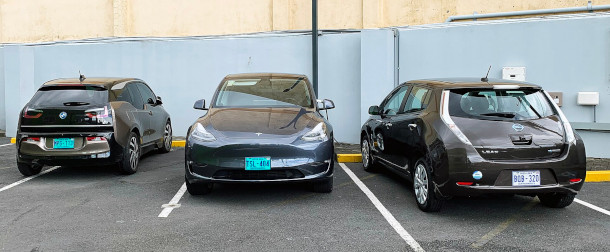
Many car manufacturers have begun to produce mid-range electric vehicles like the Nissan Leaf or Chevy Bolt, making EVs more affordable for the average consumer. (Photo: Mariordo, Wikimedia Commons, CC BY-SA 4.0)
MOTAVALLI: Well, I'm a big fan of the Hyundai IONIQ 5 and 6, which are reasonably priced EVs that will go 300 miles on a charge. And I just happened to borrow one, my brother owns one, I was using his IONIQ 5, and I think it's a terrific car. Another one to consider is the new Chevy Bolt, which has just come out, which is priced under $30,000, has almost 300 mile range, and, rather strangely, will only be offered for one year, as things stand now. But Chevrolet also produces the Equinox, which is a larger EV. That has many of the same specs. The new Nissan Leaf is another one that has finally enough range to be worthy of consideration. So those are some EVs I like, on the lower end of the spectrum. The problem has been there's too many luxury EVs priced at $100,000 or more, and companies like Lucid, for instance, just announced that they're going to be producing sub-$50,000 EVs, when everything they've had so far has been, you know, 80,000 to over 100,000. So, and Rivian also is producing cheaper EVs. That's their next phase after producing high priced ones. They're trying to get in on the, you know, Tesla Model 3 market. Everybody's aiming at that.
O'NEILL: Yeah, and we talked about the Chinese manufacturer BYD. As far as I understand it, they're not available in the United States, correct?
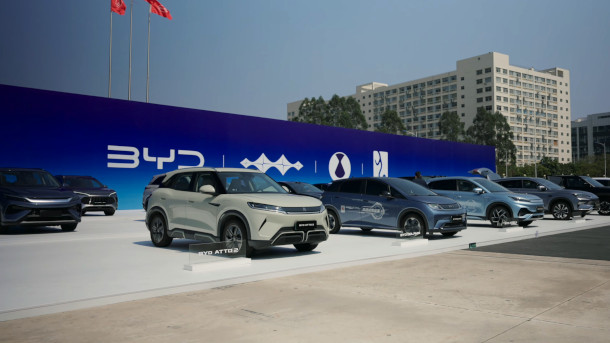
The Chinese electric vehicle manufacturer BYD has recently made a deal with Canada to establish dealerships in the greater Toronto area. BYD’s cars are currently unavailable in the United States because of the costs of tariffs. (Photo: iMoD Official, Wikimedia Commons, CC BY 3.0)
MOTAVALLI: Well, it's because of the tariffs that are put on Chinese-made vehicles. It would be pretty cost prohibitive to bring them in. It's interesting to point out that the Chinese automakers do seem to be making a deal with Canada, and I think we'll see widespread Chinese EV adoption in Canada. We've already seen it in Europe, all over Asia, Central America, Mexico. I mean, Chinese EVs are everywhere in the world but in the United States right now.
O'NEILL: I want to take a moment to talk about the used car market. How great of an option is a used EV for somebody?
MOTAVALLI: That is really something to consider, buying a used EV, because they're very inexpensive right now. It has to do with the fall off in demand for new EVs has also affected the used EV market. So you can get a very good deal on a two-year-old or a three-year-old EV with low mileage on it, maybe 30,000 miles, and loaded with options, a car that would have sold for 50,000 you could buy for 25. And I don't see any reason not to do that. I think that would be a very good idea. Of course, there was a subsidy on used EVs. It's another thing that Trump killed, but you won't be able to get that. But still, you can get a very good deal.
O'NEILL: Looking ahead, given the instability of gas prices from this war in Iran, as well as other future global conflicts, to what extent do you think people should be factoring in this volatility when deciding whether to stick with a gas car or switch to an EV?
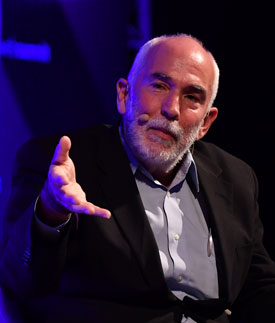
Jim Motavalli is a freelance environmental journalist and blogger for Autoweek, The New York Times, and Barron's. (Photo: Seb Daly, Web Summit, Wikimedia Commons, CC BY 2.0)
MOTAVALLI: I think they should definitely factor it in, because oil prices are very volatile. They go up and down, and it's not likely conflicts are going to go away. I don't know how long the one with Iran is going to last, but there's going to be conflicts over oil as well as the climate imperatives that are still there. It's not like the climate has decided to take a pause. It's like going on hold for this, and I think that will be a major reason. I think EVs are very worth considering right now, even if you're not as worried about the price at the pumps, I think it's exactly the right time to buy an EV, specifically because demand is down. Prices are lower than they have been. The EVs are also way more competent than they were in the past, and some of the early bugs we've seen in EVs have been ironed out. They're likely to be way more reliable than before. I think you'll find your dealership very anxious to make a deal with you on an EV, give you the best possible price, and I don't think you'd feel a whole lot of pain owning an EV now, with the extensive charging network we have, the public charging network. And way greater adoption of EVs, so there's network of support for them, parts availability, all that kind of stuff.
O'NEILL: Jim Motavalli writes for Barron's, Autoweek, and The New York Times. Jim, thank you so much for taking the time with me today.
MOTAVALLI: Always glad to talk to you, Aynsley.
Related links:
- Reuters | “Gasoline Price Hike From Iran War Could Push Consumers Toward EVs, Hybrids”
- International Energy Agency | “Trends in Electric Car Markets”
- Consumer Reports | “Which Electric Vehicles Can Charge at a Tesla Supercharger?”
- Bloomberg News | “China's BYD Open to Building Cars in Canada, Buying Out Rivals”
[MUSIC: The O’Neil Brothers Group, “On the Road Again (Instrumental Version)” on Country Classics on Guitar: I Walk the Line, Shamrock-n-Roll, Inc.]
DOERING: Just ahead, A vision for a Venezuela powered by its abundant offshore wind instead of oil. Stay tuned to Living on Earth.
ANNOUNCER: Support for Living on Earth comes from the estate of Rosamund Stone Zander - celebrated painter, environmentalist, and author of The Art of Possibility – who inspired others to see the profound interconnectedness of all living things, and to act with courage and creativity on behalf of our planet. Support also comes from Sailors for the Sea and Oceana. Helping boaters race clean, sail green and protect the seas they love. More information @sailorsforthesea.org.
[CUTAWAY MUSIC: The O’Neil Brothers Group, “On the Road Again (Instrumental Version)” on Country Classics on Guitar: I Walk the Line, Shamrock-n-Roll, Inc.]
Note on Emerging Science: Lightning-Rod Trees
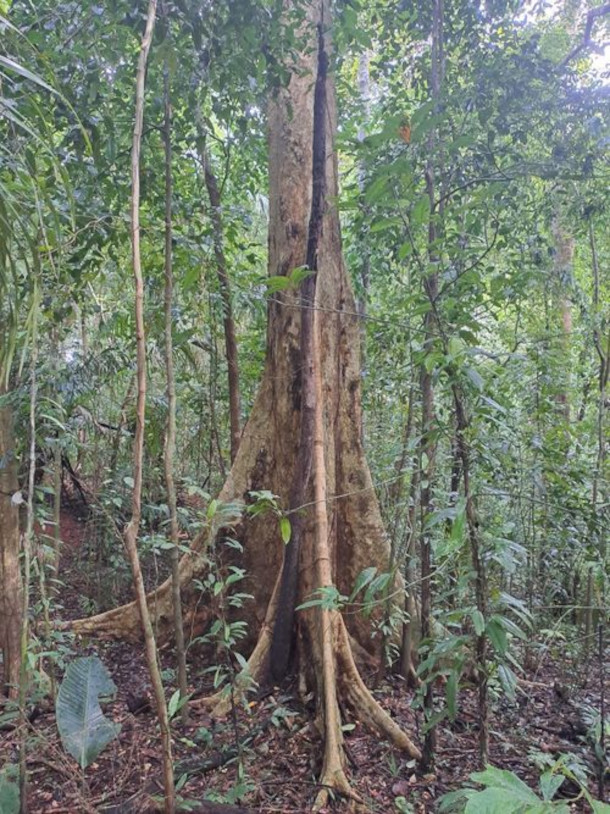
New research indicates that a species of tree called Dipteryx oleifera, also known as almendro trees, shown above, are resistant to lightning strikes and even use them to their advantage. (Photo: keesgroenendijk, Wikimedia Commons, CC BY 4.0)
DOERING: It’s Living on Earth, I’m Jenni Doering.
O’NEILL: And I’m Aynsley O’Neill.
In a moment, we’ll look at how electricity from the sun and wind could provide an alternate power source for the oil-rich nation of Venezuela. But first this note on emerging science from Living on Earth’s Don Lyman about how electricity from the sky helps power the ecology of the rainforest.
[SCIENCE NOTE THEME]
LYMAN: Last spring, scientists who were studying the effects of lightning strikes on tropical forests at the Barro Colorado Nature Monument in Panama reported an unexpected finding — one especially tall species of rainforest tree — Dipteryx oleifera — also known as "almendro", actually benefited from lightning strikes, which killed off parasitic woody vines, known as lianas, as well as competing trees of other species.
The scientists documented one case in 2019 where a liana-covered D. oleifera suffered a powerful lightning strike, which damaged 115 surrounding trees, half of which died within two years. The lianas that covered the almendro tree all died. “It looked like a bomb went off,” said forest ecologist Evan Gora of the Cary Institute of Ecosystem Studies in Millbrook, N.Y. The D. oleifera tree, however, was still standing and healthy. The research team studied 93 trees struck by lightning, including nine D. oleifera. Gora reported that after two years, all the almendro trees were thriving, in stark contrast to 56 percent mortality among the other tree species.
One reason for this resilience is that aside from some ruffled leaves, D. oleifera trees somehow aren’t significantly damaged by lightning. The researchers posit that the tree’s wood might have low electrical resistance to allow the tree to safely conduct electrical current to the ground. The electric shock, however, eliminates most of the parasitic lianas that grow on them. These abundant vines can rob trees of light and nutrients. Vines that are connected from the almendro trees to branches on neighboring trees spread electrical current from the lightning strikes to the adjacent trees, causing them damage. An average of about nine adjacent trees were killed per lightning strike, which frees up space, light and nutrients for the D. oleifera trees. That’s this week’s note on emerging science. I’m Don Lyman.
Related links:
- More from Don Lyman
- Read more about the emerging research here
[SCIENCE NOTE THEME]
A Vision of a Wind-Powered Venezuela
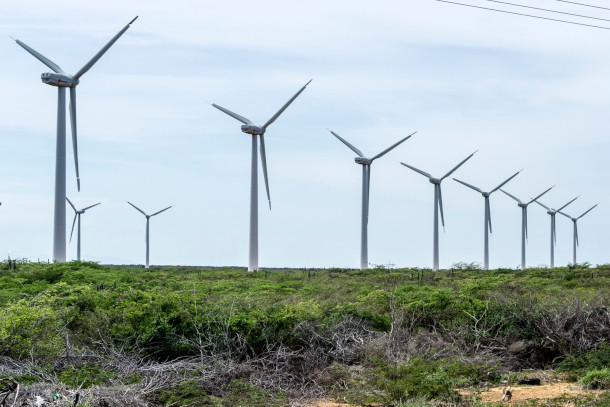
While Venezuela has recently made headlines for its oil reserves, the coastal nation is also uniquely positioned to harness significant renewable energy capacity – ten times the country’s electricity needs – through offshore, shallow-water wind turbines. Above, a wind farm on the Paraguaná Peninsula in Venezuela. (Photo: Carlos Santos Colorado, Wikimedia Commons, CC BY-SA 3.0)
DOERING: Since the US capture of President Nicolás Maduro in early January, there has been a lot of discussion about Venezuela’s massive oil reserves. But when it comes to the energy sector, it turns out that Venezuela is ideally positioned to harness abundant clean, renewable energy, particularly from wind. Joining us to map out this blue-sky vision for a green Venezuela is Dr. Paasha Mahdavi. He’s an associate professor of political science at UC Santa Barbara and consultant for the Natural Resources Governance Institute. Welcome to Living on Earth, Professor!
MAHDAVI: Well, thanks for having me. It's a pleasure to be on.
DOERING: We're so glad to have you. So Venezuela is famously rich in oil, but we wanted to talk to you because we understand that it also has incredible renewable energy resources. What is it about Venezuela's geographic situation that makes it well positioned to harness renewable energy?
MAHDAVI: Well, absolutely. I mean, it's quite fascinating that Venezuela is indeed so well known for its oil industry. It is now being touted as having the largest reserves in the world, but it also has incredible offshore wind potential in particular, in addition to solar potential, as well as some more advanced kind of geothermal, which is the heat underneath the earth. But it's the wind that really catches energy analysts' eyes, because it is tremendously advantageously positioned. In other words, it's really windy in shallower waters, and that matters, because when it's shallower, it's easier to build wind turbines. It has this incredible windiness that a number of other places have as well, the Great Plains in the US, for example. So it's exciting for that reason, and there's lots of other elements of this that are pretty fascinating and, and why some in Venezuela themselves are excited as well.
DOERING: So what kind of scale are we talking about here? I mean, what kind of capacity for wind energy could Venezuela, in theory, harness?
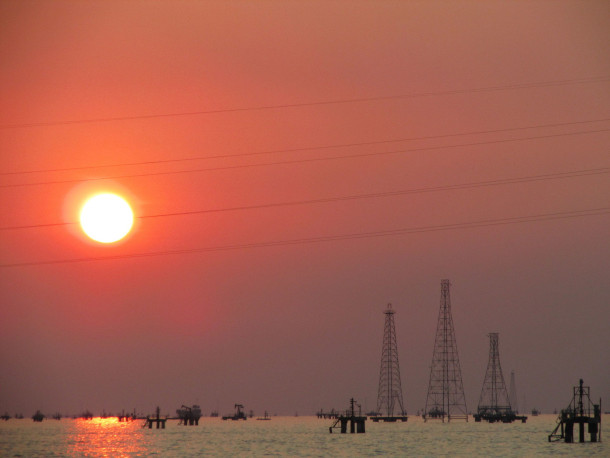
Venezuela’s economy is heavily dependent on oil, making it essential that a clean energy transition would create jobs to replace those lost in the oil sector. Lake Maracaibo, pictured above, is the largest lake in South America and the heart of Venezuela’s oil industry. (Photo: Breddyjgalvis, Wikimedia Commons, CC BY-SA 3.0)
MAHDAVI: So the World Bank does these great analyses across the world. And Venezuela's potential for offshore wind puts that number at 381 gigawatts of capacity. And to put that in perspective, that's 10 times the country's current electricity capacity as it stands of 38 gigawatts. All of the electricity that's produced in Venezuela is 1/10 of the amount that exists offshore. So it's a huge, a huge number in terms of its potential, but getting there is a different question.
DOERING: And by the way, how much renewable energy does Venezuela already use?
MAHDAVI: Almost zero. The catch is hydro power. But we think about hydro differently because of the way that, you know, Venezuela's hydro was constructed and some of the damages that are done, especially when trying to capture hydro power in sensitive areas like the Orinoco River basin or the Amazon places like that. But when it comes to kind of solar, wind, geothermal, effectively, effectively zero.
DOERING: So how might the extracting and refining oil workforce in Venezuela translate to offshore wind from a labor perspective?
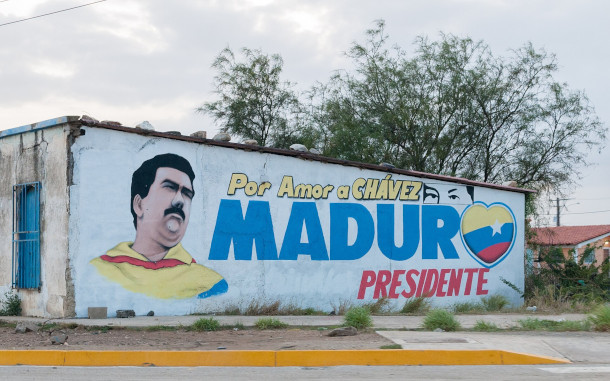
Mahdavi says the biggest roadblock to implementing clean energy in Venezuela is the lack of government support, adding that presidents like Nicolás Maduro and Hugo Chávez have long prioritized oil and gas. (Photo: Wilfredor, Wikimedia Commons, CC0 1.0)
MAHDAVI: I'm glad you asked that, because this is the trillion-dollar question when it comes to how we transition away from oil, which is, how do we ensure a just transition for workers that are impacted? One of the answers comes down to, what are the skill sets that are easily transferable through either minimal training or retraining, or through kind of altering, kind of the existing training pathways when we think about kind of the younger generation, so those who would have trained to be petroleum engineers can be trained to do something, something else. The kind of areas that have the greatest skills transferability when it comes to the renewable energy sector and any kind of decarbonized solution for oil are offshore wind and geothermal. So that's one area where you've got rig hands, engineers, even seismic and a whole number of different elements along the oil workers supply chain that are transferable to the offshore wind supply chain. The other part of it is what offshore wind does, and the whole idea behind creating these offshore wind hubs, Venezuela, let's say, developed 381 gigawatts of wind. That's crazy, but that's 10 times what it currently needs, right? And so what would it do with that? Well, typically, the model is that you create adjacent manufacturing hubs that are effectively getting subsidized electricity, and that's a huge attraction for whether it's heavy manufacturing, medium manufacturing, whatever the case may be, Port capacity, Venezuela is well positioned for both of those things, and that's where workers that are on the more manufacturing side of the oil and gas industry can transfer into and by that, I mean, you know, thinking about refining and processing and things like that. So that's another part of it, which is not in the actual turbines themselves, but the electrons that are generated that can go to power industries that can rehire oil workers that are transitioning away from, from oil and gas.
DOERING: So coming back to this amazing potential for wind energy that Venezuela has, what are the main barriers preventing Venezuela from pursuing this transition to this form of energy?
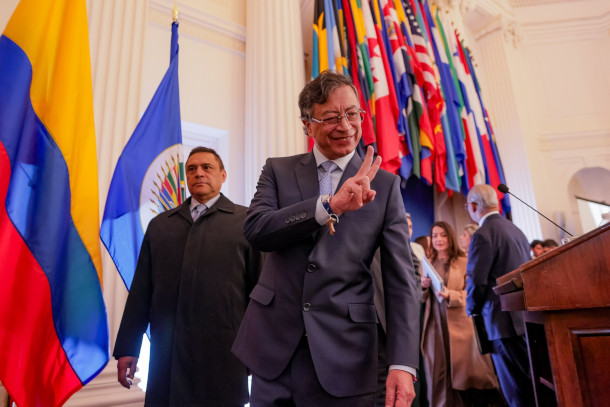
Colombia is an example of a South American nation heavily reliant on oil whose leadership is taking urgent steps towards a green energy transition. Pictured above is Colombian president Gustavo Petro at the White House. (Photo: Joel González, Wikimedia Commons, Public Domain)
MAHDAVI: So there are, effectively, I would say, two big barriers to it. But the biggest roadblock is the government, that in many cases, these national oil companies, yes, they're oil companies, but they march to one drummer, and that drummer is the government and what the government wants to prioritize. And in Venezuela's case, Maduro and Chavez before him, and many before Chavez, prioritized oil and gas over anything else. And so what you get there is a roadblock that's erected by the government's decisions as to what to pursue. And the other barrier is the institutional capacity. And what we mean by that is not just the political will to do this and the government's decision to do it, but its capability of doing so, of having the kind of filled out bureaucracy and having the clear rule of law and the expectations that exist for companies to come invest, for others to do business in Venezuela, to assist the national companies when it comes to offshore wind in Venezuela, you just haven't had that technical capability when it comes from a bureaucratic standpoint of getting this off the ground.
DOERING: Professor, we have to acknowledge that building out a ton of wind energy in Venezuela would not by itself, provide the same kind of exportable energy that its oil resources allow. You can't exactly load electricity into a tanker to ship around the world, at least not at this point, but walk us through how that wind energy might help power economic activity or be turned into other resources that could be exported.
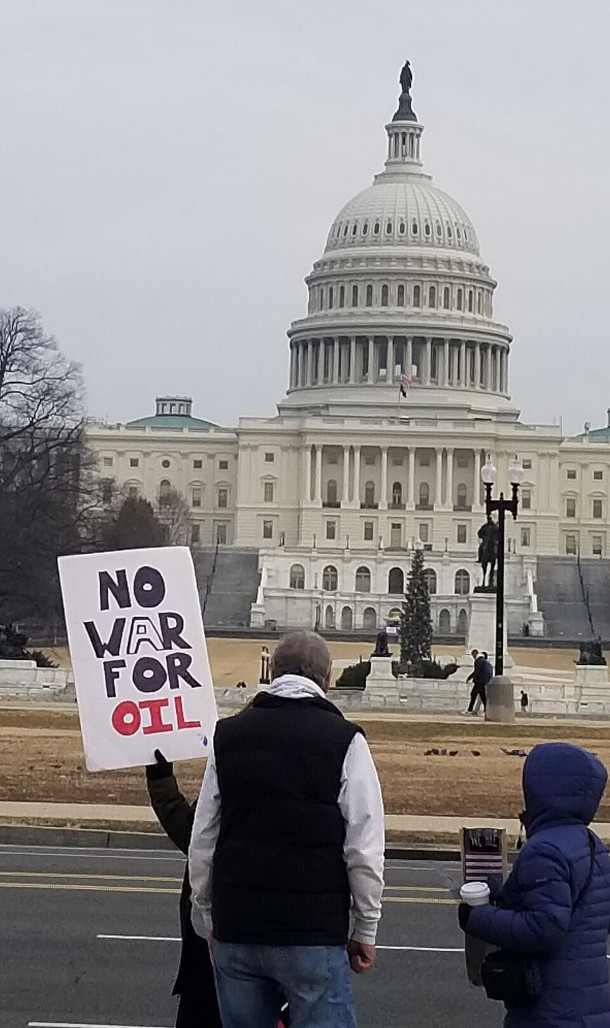
Critics assert the arrest and removal to the US of President Maduro and U.S. military strike in Venezuela were motivated in part by control over the country’s vast oil reserves. (Photo: Mike Licht, Wikimedia Commons, CC BY 4.0)
MAHDAVI: You're exactly right. You can't necessarily export electricity as easily, and they, I say that because there are, you know, opportunities for Venezuela to provide cheap and clean electricity via undersea cable around the Caribbean. But to think about what you do with this, you convert that cheap electricity and reliable electricity. Yes, the wind doesn't always blow, but it blows predictably, and you can pair it with all kinds of new technologies. It's not just batteries. There's other ways to draw out the potential from generating electricity from wind. You put that to use in something that is going to be exportable. And it's interesting, that's the entire story of the Industrial Revolution, because electricity is an energy and that's our lifeblood when it comes to creating economic products. And so that's the way to do it, and that's kind of how a number of other countries have done so when you're not directly exporting the electricity. Norway, for example, does directly export some of that electricity. But you look at, then the opportunities that exist if you think about exporting the clean energy products themselves. So if you start to get into EVs and start to get innovations in how you build wind turbines, look no further than China, and China now is a larger energy exporter by revenue than Saudi Arabia, which is a wild number, because it exports. You count you have to count up a lot of things. It's not just one product, right? You count up its TVs, it's solar panels, it's wind turbines, all of those made more money last year in terms of export revenue than Saudi Arabia's oil and gas sector, and that's a long way away. Takes a long time to get there, but it does to show you that there is a lot of money to be made for governments, economies in the clean energy space, and it's not just the electricity itself, but so many other things that it opens the door to. And it goes back to my point that Venezuela has the human know-how to do that, and that's because it's been an energy producer for a century or more, and that matters, and that's kind of what many are hoping to tap into.
DOERING: Now, what examples do we have of nearby countries in South America that have been working to address the climate crisis while also growing their economies?
MAHDAVI: So the best example is Venezuela's neighbor to the west, which is Colombia. Colombia is an oil and gas producer. It has a national oil company ,Ecopetrol, much like Venezuela has a national oil company, PDVSA. But these are two countries that are taking two very different paths, very much a tale of two cities kind of situation, because Colombia has a president that is seeking to decarbonize and move beyond oil and gas. Part of it is because of the profitability in the long term of Colombia's oil and gas, but the other part of it is a deep belief in solving the climate crisis, but it looks quite different than Venezuela, where the national oil company has been told to just focus on oil and gas, and it has been doing so for well before the latest actions in early January of taking out Maduro, and that's because that was Chavez's vision. That was Maduro's vision is to keep the golden goose laying eggs.
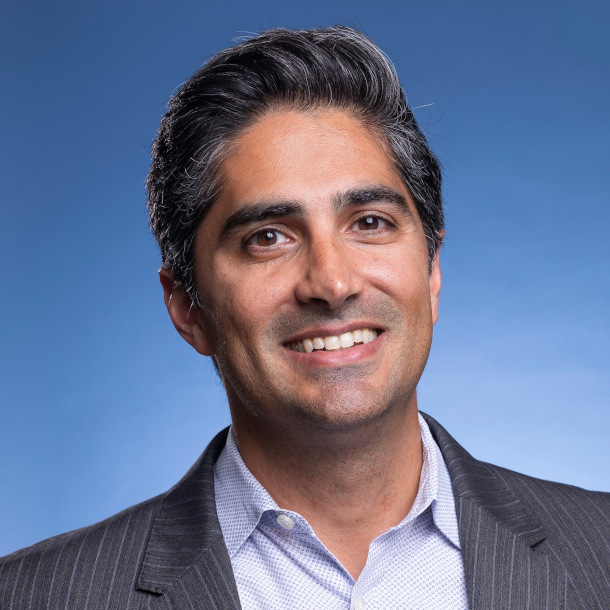
Paasha Mahdavi is an author and Assistant Professor of Political Science at the University of California, Santa Barbara. (Photo: Courtesy of Matt Perko, UCSB)
DOERING: This question of which path Venezuela chooses, it feels like so much bigger than just Venezuela, which, of course, is what we're focusing on here, but this choice that the world faces right now, in terms of the stakes for the planet, for human civilization, how important is it for us all to get this right?
MAHDAVI: It is the most important thing in the world, at least to me. I have two little kids. A lot of people have kids. We think about kids as kind of the next generation. We are already experiencing climate change, so it's not just a future thing, but we have to get it right. And we have these opportunities, these political windows that open up anytime there are new leaders in power to make that change. One of the founding members of OPEC could become one of the, you know, global leaders of clean energy, if it chooses to, because it has the ability to do it, it has the human capital to do it, has the resources to do it. It's a choice. So it's tremendously important, not just for all of us around the planet, but for other countries, to be able to point to, hey, look, Venezuela did it. We can do it too.
DOERING: Pasha Mahdavi is an associate professor of political science at UC Santa Barbara, where his research focuses on the impact of oil and gas resources on governance and environmental politics. Thank you so much, Professor Mahdavi.
MAHDAVI: Thanks so much for having me. I really enjoyed the conversation.
DOERING: By the way, the total offshore wind capacity in the United States is forty-three hundred gigawatts, nearly four times the amount of all the electricity currently generated in the US.
Related links:
- Learn more about Paasha Mahdavi
- Climate Home News | “There Is Hope for Venezuela’s Future – and It Isn’t Based on Oil”
- Learn more about Colombia’s energy transition
[MUSIC: Ensamble Cruzao, “Vino Tinto” on Con Pantalones Largos, Ensamble Cruzao]
O’NEILL: Don’t miss our next Living on Earth Book Club event! On Thursday, March 26th at 5 pm. Eastern, data scientist Hannah Ritchie will join us live on Zoom to discuss her new book, Clearing the Air: A Hopeful Guide to Solving Climate Change in 50 Questions and Answers. So, rekindle your spark of hope and don’t miss this online event on March 26th at 5 pm EDT, cosponsored by our media partner Inside Climate News. It’s free to tune in but you will need to sign up! And you can do that at loe.org/events. That’s loe.org/events.
[MUSIC: Ensamble Cruzao, “Vino Tinto” on Con Pantalones Largos, Ensamble Cruzao]
O’NEILL: Living on Earth is produced by the World Media Foundation.
Our crew includes Naomi Arenberg, Paloma Beltran, Sophie Bokor, Swayam Gagneja, Mark Kausch, Mark Seth Lender, Don Lyman, Ashanti Mclean, Nana Mohammed, Sophia Pandelidis, Jake Rego, Andrew Skerritt, Bella Smith, Julia Vaz, El Wilson, and Hedy Yang.
DOERING: Tom Tiger engineered our show. Alison Lirish Dean composed our themes. You can hear us anytime at L-O-E dot org, Apple Podcasts and YouTube Music, and like us please, on our Facebook page, Living on Earth. Find us on Instagram, Threads and BlueSky @livingonearthradio. And we always welcome your feedback at comments@loe.org. Steve Curwood is our Executive Producer. I’m Jenni Doering.
O’NEILL: And I’m Aynsley O’Neill. Thanks for listening!
ANNOUNCER: Funding for Living on Earth comes from you, our listeners, and from the University of Massachusetts, Boston, in association with its School for the Environment, developing the next generation of environmental leaders. And from the Grantham Foundation for the protection of the environment, supporting strategic communications and collaboration in solving the world’s most pressing environmental problems.
ANNOUNCER 2: PRX.
Living on Earth wants to hear from you!
Living on Earth
62 Calef Highway, Suite 212
Lee, NH 03861
Telephone: 617-287-4121
E-mail: comments@loe.org
Newsletter [Click here]
Donate to Living on Earth!
Living on Earth is an independent media program and relies entirely on contributions from listeners and institutions supporting public service. Please donate now to preserve an independent environmental voice.
NewsletterLiving on Earth offers a weekly delivery of the show's rundown to your mailbox. Sign up for our newsletter today!
 Sailors For The Sea: Be the change you want to sea.
 The Grantham Foundation for the Protection of the Environment: Committed to protecting and improving the health of the global environment.
 Contribute to Living on Earth and receive, as our gift to you, an archival print of one of Mark Seth Lender's extraordinary wildlife photographs. Follow the link to see Mark's current collection of photographs.
 Buy a signed copy of Mark Seth Lender's book Smeagull the Seagull & support Living on Earth
© Copyright World Media Foundation. All Rights Reserved
Home | Contact | RSS | Donate | Newsletter